

Look This Up!


Iran
This was a comment I made in response to a video where Secretary Hegseth responds to a congressman that referred to the current situation in Iran as a quagmire. Here’s what I wrote:
Why is it that Dems only applaud military missions when undertaken by someone in their own party?
I think it’s reprehensible to undermine the mission of those who have volunteered to serve, and then be deployed with a definitive goal and able to report legitimate successes, only to be compromised by a dirtbag politician who only wants to figure out yet another way to piss on our troops, our country, our President, and all those who support him.
If there was ever clearer reason to attack and defeat an enemy that has been actively crying for our destruction for 47 years and whose doctrine dictates the destruction of those who wage war against Allah, it is here and it is now.
If your perspective on militant Muslims is somehow vague and ignorant, in part because you’re looking for yet another reason to criticize the current administration, you’re blind, lost, and arrogant.
That’s neither a political criticism, nor a subjective assessment. We’ve been dealing with militant Muslims since Jefferson’s administration and to favor them over your own country and justify by saying it’s a pointless endeavor and poorly executed is to ignore the results, dismiss the context, and root for an ideology that wants you to cease breathing.
A friend of mine responded and I have his response as well as my rebuttal documented below.
| comment | response |
|---|---|
| Bruce, this current President is 100% responsible for this nonsense in Iran. |
To say that President Trump is “responsible for this nonsense in Iran” is to ignore, not just centuries of history, but even modern day manifestations of radical Islam to dominate and destroy anyone that doesn’t worship Allah. With Iran, you’re not dealing with a country, you’re dealing with a creed that is dedicated to the destruction of the West. It’s specified in the Qur’an. Their doctrine demands the destruction of non-Muslims: But when the forbidden months are past, then fight and slay the pagans wherever you find them, and seize them, beleaguer them, and lie in wait for them, in every stratagem of war. (sura 9:5) And kill them wherever you overtake them and expel them from wherever they have expelled you, and fitnah is worse than killing. And do not fight them at al-Masjid al- Haram until they fight you there. But if they fight you, then kill them. Such is the recompense of the disbelievers. (sura 2:191) Fight those who believe not in Allah nor the Last Day. (sura 9:29) In my original post, I referenced how America has been contending with militant Muslims since the administration of Thomas Jefferson. In addition:
Bottom line: Orthodox Muslim doctrine specifies an unrelenting attack against those who are not Muslims. It has been a present resolve for over two centuries, particularly targeting the US. So, to even suggest that President Trump is responsible for creating the current tension in Iran is to pretend that the problem doesn’t exist apart from the one who is actually doing something about it. The latter half of sura 9:5 commands, “But if they repent and establish worship and pat the poor-due, then leave their way free. Lo! Allah is Forgiving, Merciful.” As a result, Muslim armies must not put down their swords until the time their opposition submits to Islam or Islamic law – that is, until unbelievers either worship or pay a special protection tax and acquiesce to an Islamic political system. For the devout Muslim, war has a divine purpose and a divine outcome – securing the territory in the name of Allah, to whom all must bow. After the enemy submits, the surrender is considered forever binding. If at any time, years or even centuries after the treaty was accepted, a conquered party breaks it, war is to be waged until such time Islamic law is fully reestablished. The Qur’an decrees… And if they break their pledges after their treaty (hath been made with you) and assail your religion, then fight the heads of disbelief – Lo! They have no binding oaths – in order that they may desist (sura 9:12).1 A Modern Day Democrat can’t condemn militant Islam as evil because that implies a standard that exists independently of the way a person thinks or feels – something a MDD maintains as non-existent. |
| The Obama agreement that also included many countries in support, was the EXACT same thing that tRump tried to put in place AGAIN in his first attempt at a new deal with Iran. He screwed this up. There should be no problem in that region. He created it, you and I are paying for it. |
You want to pretend that that JCPOA somehow contained radical Muslim thought and eliminated both Iran’s ability as well as their resolve to build a nuclear weapon. The agreement took effect on January 16, 2016. Yet, Iran never stopped being a leading sponsor of terrorist activity… In 2016, Iran supported various Iraqi Shia terrorist groups, including Kata’ib Hizballah, as part of an effort to fight ISIS in Iraq and bolster the Assad regime in Syria. Iran views the Assad regime in Syria as a crucial ally and Syria and Iraq as crucial routes to supply weapons to Hizballah, Iran’s primary terrorist partner. Iran has facilitated and coerced, through financial or residency enticements, primarily Shia fighters from Afghanistan and Pakistan to participate in the Assad regime’s brutal crackdown in Syria. Iranian-supported Shia militias in Iraq have committed serious human rights abuses against primarily Sunni civilians and Iranian forces have directly backed militia operations in Syria with armored vehicles, artillery, and drones. (UN Refugee Agency) In 2018, Israel discovered a half ton of nuclear weaponization files revealing how Iran had continued their nuclear program after having agreed to suspend all such activities. The JCPOA is an illustration of how the Liberal mindset is more preoccupied with the absence of tension than the actual presence of peace. In the absence of truth, peace is nothing more than being complicit with whatever wrongdoing is being accomplished. It’s either a coward’s way of ignoring a problem, or a fool’s way of convincing themselves that they’ve solved it. Bottom line: The JCPOA and President Trump’s MOU have one major difference: Accountability. The JCPOA relied on inspections and the word of an enemy that meant absolutely nothing. Trump’s MOU has the force of America’s military behind it with a comprehensive plan to financially starve the militants out of existence and rebuild Iran in a way that overwhelms the militant evil that currently dominates that area. |
| War is wrong. |
It depends on why it’s being waged. The Revolutionary War was not “wrong,” nor was the War of 1812, or the Civil War, or WWI, WWII, etc. Evil is wrong. If a war is being waged in order to take what isn’t yours, that’s wrong. But those who would oppose that kind of enemy are absolutely correct in fighting back and defeating that enemy. It’s a noble sounding sentiment to say that “War is wrong.” But in doing so, you condemn anyone who has ever served in the military as either a fool or a fiend, which is both insulting and reprehensible. At the same time, it’s perfectly logical when it comes from a mindset that doesn’t want to acknowledge the reality of an objective moral standard. You can’t condemn something as being “wrong,” if you want to simultaneously say that truth is whatever an individual wants to believe. While that is not necessarily the prevailing mindset of the Modern Day Democrat, it is nevertheless a common conviction within their ranks. |
| This Hegseth guy is a loose cannon, a firehose gone rogue. Not a fan. It’s disgusting that these problems are being created by this administration and then they (and it seems you) blame the Dems. |
I don’t the blame the Democrats for creating the problem, but I do hold them responsible for pretending that the problem is nothing more than a tension that can be eliminated through meaningless negotiations. There are 1.2 billion Muslims in the world. The radicals are estimated to be between 16% and 25% according to most of the intelligence around the world. That means you have between 180 and 300 million people dedicated to the destruction of Western civilization. Just to give you some perspective, the number of people in the US is 320 million. Connect the dots and you have the equivalent to an entire nation determined to see the US cease to exist. That by itself should be enough to give decision makers pause. How can you tell if the Muslim that’s running for office is a militant? Or, how you can tell if a militant Muslim is being honest when they sign a treaty? You can’t.
Militant Muslims have terrorized Western Civilization and America in particular for centuries. Moderate Muslims are conflicted in their ability to denounce orthodox Muslims because it’s not a political dispute that fuels the militant Muslim’s resolve. It is a religious zeal that has targeted America since the 18th century (Shores of Tripoli). See also Western Leaders: Your Time is Up. Secretary Hegseth is a “loose cannon” only in the mind of someone who doesn’t want to acknowledge the way a problem is being addressed and would instead pretend that the problem itself doesn’t exist. |
| It’s not a party thing, it’s cow-towing to large corporate interests. It’s about the redistribution of money upwards into the hands of the already wealthy people and corporations (read: socialism for these two parts of our society). |
To reduce this conversation to a commercial for Socialism is fundamentally flawed. It’s an attempt to distract attention away from a creed that has been promoting terrorism and openly declared itself a threat to Western Civilization and reduce it to nothing more than an opportunity for corrupt individuals to make some money. |
1. “The Truth About Islam and Jihad”, John Ankerberg and Emir Caner, Harvest House Publishers, Eugene, Oregon, 2009, p19
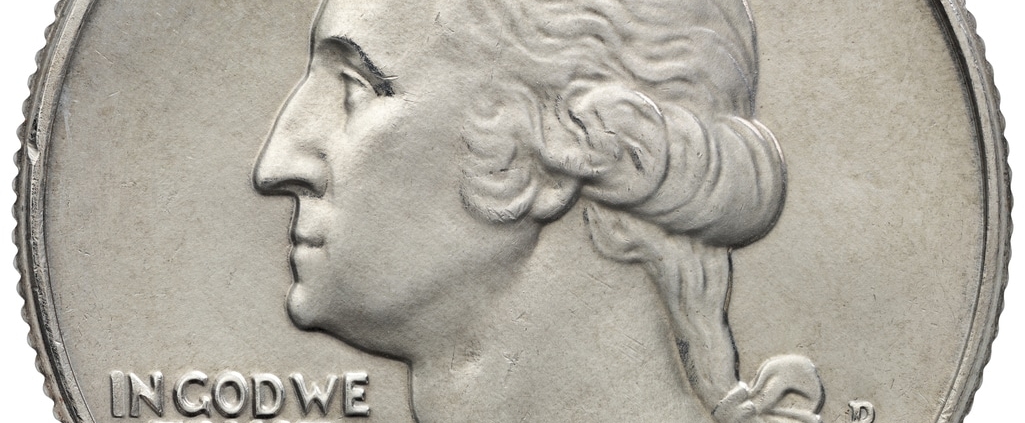
Two Mottos
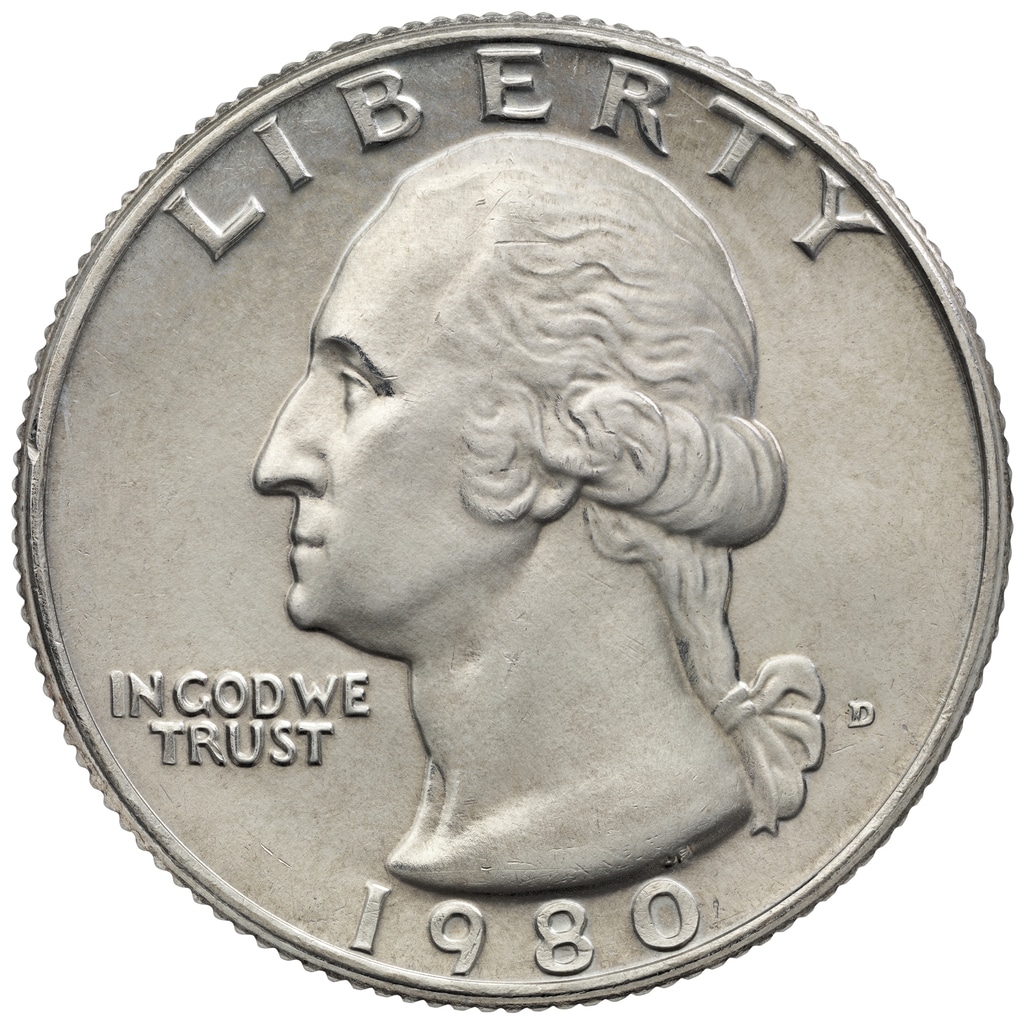 The political conversations that you’re hearing these days can often be categorized beneath two mottos:
- In God We Trust
- You Can’t Force Your Beliefs on Me
Either the individual is accountable to something greater than themselves, or a person is accountable to no one but themselves.
By using phrases that imply a form of oppression, the Modern Day Democrat is able to distract attention away from their resolve to reduce the world to a collection of personal preferences where the truth is based more on how you feel rather than what is real.
It’s not so much about policies or personalities, or even two political parties.
It’s about two mottos…
No Bottom Lines
Anytime you converse with a Modern Day Democrat, you want to begin by clarifying how the define the concept of truth. Ask them if they agree with the idea that what’s true for one person may not be true for another, and they will most likely agree.
You see that supported in the 2025 study published in Personality and Social Psychology Bulletin where it examined the relationship between political ideology and moral absolutism vs. moral relativism across nine different studies (see sidebar).
The study found that:
- Conservatives tended to endorse moral absolutism.
- Liberals tended to endorse moral relativism.
- Conservatives used more absolute moral language than liberals.
- The pattern appeared not just in U.S. data but in a dataset covering 59 countries over 30 years.
- People who endorsed moral absolutism were more likely to support banning practices they considered immoral.
You see that dynamic elaborated on in a speech given by Katherine Maher, President and CEO of NPR (see sidebar). In it she elaborates on how Wikipedia doesn’t pursue the truth as a bottom line, as much as it looks for a positive consensus.
From a distance, this looks healthy. You don’t want to be so resolute with your opinions, that you disqualify yourself from being able to learn and grow based on a more comprehensive perspective.
But there’s a difference between being open minded for the sake of becoming more aligned with what’s accurate, and posing as someone who’s open minded in order to promote the idea that there are no absolutes.
Intellectual Icebergs
This is where Katherine Maher and the Democrat party are revealed as being an intellectual iceberg in that they appear approachable on the surface, but hidden below the water line is something genuinely sinister.
If truth is relative, then…
- I am my own absolute – my right to be happy means I get to make up my own rules and I don’t have to answer to anything other than what I’m comfortable with
- I am a victim – I may be different or damaged, but I am never wrong. When I’m confronted with a reality I can’t dispute without selfish or foolish, by pretending to be in pain, I can avoid having to explain myself or take responsibility for my actions.
- I am justified – I can silence anyone who disagrees with me in that they are not merely mistaken, but genuinely immoral because they’re not telling the “truth,” which qualifies them as a liar.
But, if truth is relative, then…
- You are a hypocrite – you can’t logically disagree with someone without violating your own premise that the truth is whatever an individual wants to believe.
- You are conflicted – when confronted with something that is obviously wrong (a mother killing their own child), you can’t condemn it because of the way you’ve dismissed the reality of objective truth and the obvious difference between right and wrong.
- You are meaningless – if there is no right or wrong, then your words are just mechanical noises that have no real meaning.
Even in the speech given by Katherine Maher, you see the unsustainable aspect of her platform…
Now, that is not to say that the truth doesn’t exist, nor is it to say that the truth isn’t important. Clearly, the search for the truth has led us to do great things, to learn great things. But I think if I were to really ask you to think about this, one of the things that we could all acknowledge is that part of the reason we have such glorious chronicles to the human experience and all forms of culture is because we acknowledge there are many different truths.
And so in the spirit of that, I’m certain that the truth exists for you and probably for the person sitting next to you. But this may not be the same truth. This is because the truth of the matter is very often, for many people, what happens when we merge facts about the world with our beliefs about the world. So we all have different truths. They’re based on things like where we come from, how we were raised, and how other people perceive us.1
You can’t say, “…the truth of the matter is” without contradicting everything you’ve said up to that point by asserting the idea that there are “many different truths.”
An Unacceptable Mindset
On the surface, they are either outraged or oppressed (I am a victim). They are indifferent to what’s real or indisputable because of the way they have empowered themselves to dismiss whatever it is they don’t want to hear (I am my own absolute). And anyone who disagrees can be mocked, maligned, and even murdered, not because they’re wrong, but because they’re a threat to a manufactured reality that can’t be sustained (I am justified).
This is Trump Derangement Syndrome. It’s not so much an objection to a personality or a policy. The same policies could be championed by a Democrat (deportation of illegal immigrants) and they would be applauded as bold leadership. Whether it’s President Trump or any other Conservative, the personality is irrelevant because the same accusations would be made regardless of the individual in the charge.
If the philosophy that drives the legislation includes the idea that the individual is ultimately accountable to something greater than themselves, that is an unacceptable mindset. Regardless of what’s being said or who’s saying it, if it’s coming from a perspective that doesn’t allow a person to proclaim themselves as their own bottom line, it is dismissed first as stupid, then immoral and, ultimately criminal (see the “SIC-ness of the Left“).
I am Never Wrong Because I am Always Hurt
The problem, however, is the inevitable situation you find yourself in, as far being being revealed as either a fool or a fiend, given the transcendent nature of truth and the results that can’t be ignored regardless of the distortions and distractions constantly being circulated in the marketplace.
But, by asserting the idea that they are a victim, the Modern Day Democrat is never wrong because they are always hurt. By communicating every talking point from the perspective of someone who is either outraged or wounded, they’re able to distract attention away from the nonsensical aspects of their platform because of the way you can’t criticize someone who’s in pain without being labeled cruel and hateful. As a result, the Modern Day Democrat is accommodated rather than evaluated.
Medical Realities, the Rule of Law, Moral Imperatives, Historical events, Mathematical certainties, Irrefutable evidence, Divine Absolutes…
None of these are acknowledged by the person who’s determined to see themselves as their own bottom line. They are either antiquated traditions or biased attacks that violate a person’s right to be happy.
If truth is whatever an individual wants to believe, then there is no “correction,” only “oppression.” Their opponents are Nazis, their Republican leaders are tyrants, and their world is oppressive. Anything that has the capacity to reveal the fact that their ideas don’t work and they are the very thing they claim to despise is disputed, not as a valid criticism based on facts and results, but as a personal attack fueled by fear and hate.
You can’t argue with people who think that way because they’re not listening to you. They’re simply waiting for you to stop talking so they can tell you why you should feel sorry for them. Regardless of the facts and the bottom lines you would use to validate your position, it is all dismissed as irrelevant and unreliable propaganda – not because it’s lacking in substance but because it’s a threat to the way in which they have authorized themselves to dictate what’s real according to what they prefer.
This is the dialogue being heard in our society today. It’s not a conversation between two different parties who both want the same thing, only differ in the way it’s obtained. Rather, it’s a contest between two spiritual paradigms summarized as two distinct mottos: “One nation under God,” or “You can’t force your beliefs on me.”
Those Aren’t Words, Those Are Masks
The Modern Day Democrat cheers for America’s enemies. 40% of Democrats believe church has a negative effect on society, and several recent Democrat primary winners have made it clear that they don’t like America or its institutions (see sidebar).
Words like “corruption,” “unconstitutional,” and “racism” are not words as much as they are masks when they’re coming from the mouth of a Modern Day Democrat. They’re strategically selected terms designed to trigger an emotional reaction in order to prevent an objective analysis. When you invoke the idea that you’re “hurt,” or that you’re being violated, the first priority is to medicate your wound rather than question your logic. And the more your logic is revealed as nonsensical, the more you have to assault the character and intelligence of those you can’t dispute. The result isn’t a conversation as much as it’s a demonstration. Even when you’re talking to a solitary person, you’re still interacting with the equivalent to a group of people screaming slogans and waving signs.
Real Results and the Right Questions
So, how do you navigate a situation where you’re attempting to reason with someone who’s unreasonable?
Results.
And while you can be accurate by simply stating the facts, if you want to be effective, you want to ask the question that can’t be answered without your opponent having to state those facts themselves.
The current administration is delivering a collection of policies that have resulted in:
- The lowest poverty level in America on record
- The lowest murder rate since 1900
- Genuine border security
- New foreign direct investment (FDI) in the United States rebounded to $232.2 billion in 2025, marking a 49.5% increase from 2024 levels according to the U.S. Bureau of Economic Analysis.
- Energy Independence – the U.S. became a net energy exporter in 2019 for the first time in nearly 70 years during President Trump’s first administration
- The elimination of Iran’s nuclear program based on military action and measurable accountability as opposed to lies and pointless agreements2
And when you look at the military strategy accomplished by securing an agreement with Greenland, the reacquisition of our oil interests in Venezuela3, coupled with the President’s fearless efforts in providing an ever expanding view of the global corruption and the lies masquerading as necessary measures and credible headlines4 – it’s a great day!
But in order to get to that “great day” idea, you first have to ask those questions that compel an answer that reveals both the truth and the nonsensical efforts to suppress it.
- Do you prefer a higher poverty level?
- Would you rather have more murders in this country?
- If you support open borders, then I’m assuming you leave all your doors unlocked, correct?
- Which option translates to a stronger economy: More jobs or less?
- Which gas station would you buy your fuel from: The one that charges a dollar more per gallon, or the one that charges a dollar less?5
- Would you be comfortable if someone you knew you couldn’t trust was pointing a gun at you just because somebody else said it wasn’t loaded?
Conclusion
The “third party audience” debate technique is an approach that you take where the person you’re arguing with isn’t necessarily your real target. The real target is the undecided or persuadable person watching the exchange. You want to keep that technique in mind when you’re feeling like withdrawing from the conversation, be it on social media or in person, believing you’re just wasting your time or, perhaps making a bad situation worse.
There are impressionable people listening to your voice and, provided you’re telling the truth, they need to hear what you have to say, even if your opponent refuses to listen.
At the end of the day, this is more than Politics. You’ll hear people sometimes saying that our country is engaged in an existential crisis.
We are.
It’s not so much about policies or personalities, or even two political parties.
It’s about two mottos.
Our currency says “In God We Trust.” That is the foundation upon which our founding fathers built the Declaration of Independence. It’s because there’s a God in Heaven and there are Absolutes that exist independently of the way a person thinks or feels that they were able to articulate a cause and not just a complaint.
You take God out of the equation and you no longer have rights, you have demands – demands that can only be met by surrounding yourself with like minded people and silencing those who think otherwise. But even then, you are subscribing to an approach that is a philosophical dead end because of the way you’ve declared yourself to be “right,” despite the fact that you want to simultaneously say that there is no definitive right or wrong.
The candidates we endorse do not have to be pastors, they only need to be able to lead in a way that lines up with what’s true. 3+2=5 regardless of how the number 5 makes you feel. Lead and live in a way that acknowledges the reality of standards and not just situations. Stop trying to reinvent the human experience by thinking you can speak into existence something that is fundamentally flawed and then defend that position by saying “You can’t force your beliefs on me.”
Truth isn’t created with a conviction. For a conviction to be valid, it has to be true and no amount of passion or persecution will ever change that.
Two mottos.
Which one is yours?
1. “The Singju Post”, “What Wikipedia Teaches Us About Balancing Truth and Beliefs: Katherine Maher (Transcript)” https://singjupost.com/what-wikipedia-teaches-us-about-balancing-truth-and-beliefs-katherine-maher-transcript/, accessed September 9, 2026
2. The JCPOA was an agreement put in place by the Obama Administration in 2015 that lifted certain sanctions in exchange for Iran’s commitment to restrict its nuclear program. The problem with that agreement is that it was based on inspections that proved less than credible.
If Iran’s leadership has demonstrated that it cannot simply be trusted to disclose its nuclear activities, and if international inspectors cannot obtain sufficiently comprehensive access to independently establish that Iran has disclosed all relevant nuclear activity, then no agreement can establish with certainty that Iran has abandoned its pursuit of a nuclear weapon. The agreement may constrain Iran’s known capabilities, but the underlying threat remains wherever undeclared activity cannot be ruled out.
3. In 2007, Chavez ordered that all foreign oil companies, including ConocoPhillips and ExxonMobil be transformed into joint ventures and Venezuela would own 60% of the new organization. Both Companies refused, but were nevertheless forced to comply. This has also been the situation in Venezuela under Maduro who had a 25 million dollar bounty placed on his head by President Biden. President Trump’s actions in seizing Maduro were justified on several levels, given the evidence against Mr. Maduro that’s been collected over several years by investigators in Miami, New York, Houston, and Washington who have brought drug trafficking, foreign bribery, and money-laundering charges against several senior Venezuelan officials, members of the military and government-connected businessmen. Maduro’s removal also restores to the American companies that were ousted by Chavez the opportunity to resume operations.
4. There are several instances of fraud and corruption that President Trump has shined a light on that were operating in the shadows. One example is how the financial network that funds Iran’s terrorist operations are based in London. Billions of dollars of wasted and fraud was revealed by DOGE. President Trump introduced a new economic paradigm that put a halt to unfair trade agreements that hurt American manufacturing and positions the overall wellbeing of America as a priority.
5. There are several dynamics to consider when it comes to lowering fuel prices. #1) Destroy an international sponsor of terror’s ability to control the global energy market. This is being done most directly by preventing Iran from controlling the Strait of Hormuz. While the US doesn’t have complete control as of yet, the US Navy is now the agency that enforces maritime safety and control and not the Iranian government. In addition, by virtue of the US control of the Strait, Iran’s ability to export oil has been severely damaged. And that’s just part of a much broader strategy to cripple the current militant regime that governs Iran and create an environment that allows the Iranian people to institute a more democratic government. By destroying the militants that were in power and deploying Operation Economic Outcast, an economic campaign designed to cut off every income stream that is used to subsidize the IRGC, President Trump gives to the Iranians an opportunity to take control over their own country.
For more reading…
I Can’t, You Can, Thank You Very Much…!
I can’t…
“I am the vine; you are the branches. If you remain in me and I in you, you will bear much fruit; apart from me you can do nothing.” (Jn 15:5)
Even when I see myself as “capable,” I’m still utterly dependent on God and He’s the One that’s working in and through me, even when I’m completely oblivious to His Presence and Activity (Phil 2:13).
You can…
Jesus looked at them and said, “With man this is impossible, but with God all things are possible.” (Matt 19:26)
You are limited to the resources you have at your disposal, God is not. God can do anything (see also Eph 3:20-21).
Than You Very Much…
Do not be anxious about anything, but in every situation, by prayer and petition, with thanksgiving, present your requests to God. (Phil 4:6)
Some want to argue, “What’s the point? God’s going to do whatever He wills…”
Many are the plans in a person’s heart, but it is the Lord’s purpose that prevails. (Prov 16:9; 19:21 [see also Num 23:19; Ps 33:11])
And yet, God gives us both the opportunity to ask, seek, and knock (Matt 7:7)…
11 But Moses sought the favor of the Lord his God. “Lord,” he said, “why should your anger burn against your people, whom you brought out of Egypt with great power and a mighty hand? 12 Why should the Egyptians say, ‘It was with evil intent that he brought them out, to kill them in the mountains and to wipe them off the face of the earth’? Turn from your fierce anger; relent and do not bring disaster on your people. 13 Remember your servants Abraham, Isaac and Israel, to whom you swore by your own self: ‘I will make your descendants as numerous as the stars in the sky and I will give your descendants all this land I promised them, and it will be their inheritance forever.’” 14 Then the Lord relented and did not bring on his people the disaster he had threatened. (Ex 32:11-14)
It isn’t so much that God is willing to “bargain,” as much as He’s wanting us to depend on Him and to trust His Purpose.
“Neither this man nor his parents sinned,” said Jesus, “but this happened so that the works of God might be displayed in him.
(Jn 9:3 [see also 2 Cor 1:8-9])
Oswald Chambers said this about prayer:
To say that “prayer changes things” is not as close to the truth as saying, “Prayer changes me and then I change things.” God has established things so that prayer, on the basis of redemption, changes the way a person looks at things. Prayer is not a matter of changing things externally, but one of working miracles in a person’s inner nature. (My Utmost for His Highest)
We’re going to run into trouble (Jn 16:33) and at that point, we can look at our situation exclusively from a human perspective or choose to see it as an opportunity for God to move.
He may not “move” the way you want Him to. It’s easy to wonder why Paul had to terrorize Christians before he became one (Acts 9:1-2). Why did so many boys have to die in order to satisfy Herod’s fear that his rule was getting ready to be overthrown (Matt 2:16-18)?
David asked a similar question in Psalm 73:3. But the bottom line is that there’s a plan…
“For my thoughts are not your thoughts, neither are your ways my ways,” declares the Lord. (Is 55:8)
…and it’s because there’s a plan and not just a “problem,” that we can confidently keep our hand in His and say…
I can’t.
You can.
Thank You very much!
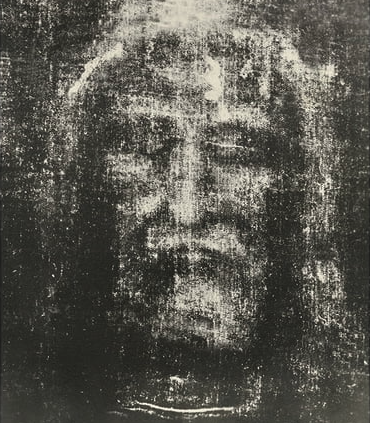
The Shroud of Turin
 It’s Not Just the Image of His Face
The Shroud of Turin is often pictured in a way that suggests it’s no more than a piece of cloth that covered a man’s face that looks suspiciously like the way Jesus is often portrayed in paintings etc.
But it’s actually 14 feet 3 inches long and 3 feet 7 inches wide. It’s not just the image of a man’s face. It’s a cloth that has imprinted on it the image of man who was buried after having been crucified and beaten in a way that matches the wounds inflicted upon Christ.
It was first documented in 1349 in Lirey, France, it was presented by French knight Geoffrey de Charny. Yet, many believe its journey began much earlier: possibly passing through Jerusalem, Edessa (modern-day Şanlıurfa in Turkey), and Constantinople before arriving in Western Europe.1
From a distance, it looks interesting, but not necessarily compelling. It’s difficult to imagine that this was one of the actual “cloths” referred to in John 20:3-4:
At that, Peter and the other disciple went out, heading for the tomb. 4 The two were running together, but the other disciple outran Peter and got to the tomb first. 5 Stooping down, he saw the linen cloths lying there, yet he did not go in. (Jn 20:3-4)
Nothing Short of Amazing
But there have been a number of studies done on the Shroud and there are several aspects of this artifact that are nothing short of amazing. Take a look:
- The pioneering work of forensic botanist Max Frei-Sulzer revealed that the Shroud contains pollen from least fifty-eight species, many of which are unique to Jerusalem and bloom during the Spring when Christ was crucified.
- Mineral analysis of limestone dust from the feet region matches samples from ancient tombs in Jerusalem.
- Dust from the feet area of the Shroud contained a specific calcium carbonate from travertine aragonite limestone, similar to dust taken from a tomb in Jerusalem.
- If you look closely at the image, you’ll see a patch of hair missing from the chin, which matches the way in which Isaiah 50:6 references how a person’s beard would be plucked out as a sign of disrespect – possibly part of the way the Pharisees mocked Christ at His trial (Lk 22:63-65).
- The fabric of the Shroud is a quality textile that aligns with descriptions of fine burial cloths in the Gospels. Notably, the cloth is pure linen – unmixed with wool or cotton as prescribed by Jewish purity laws (Leve 19:19) and referenced in Matthew 27:59.
- The image on the Shroud isn’t painted, stained, or imprinted by any known artistic technique. Microscopic analysis shows that the image rests only on the outermost fibers of the linen threads – less than one micron deep. No pigment, binder, directionality consistent with brush strokes has been found.
 Scientific consensus has proven the image is that of a real human form of a scourged, crucified man. It is not the product of an artist. The bloodstains are composed of hemoglobin and also give a positive test of serum albumin. The hemoglobin confirms that it’s actual blood and not paint. Scientists using ultraviolet light and chemical tests can find faint “halos” of serum albumin surrounding the darker red hemoglobin stains. This pattern only happens when liquid blood from an open wound physically soaks into the threads.
- Further studies revealed high bilirubin levels – a yellow a yellow waste product created when red blood cells break down, typical with severe trauma prior to death. This would’ve been nearly impossible to fabricate from an artist’s perspective.
- 372 visible scourge marks are visible, although total lacerations are estimated at 700.
- Head wounds consistent with a crown of thorns.
- Nail wounds through the wrists and not through the soft tissue of the hands.
- Nail wounds in the feet through the calcaneus (kal·KAY·nee·uhs [see image to the right])
- A side wound with blood and clear fluid later found to have flowed posmortem
- Two prominent shoulder abrasions that correspond to the carrying of the cross
- No evidence of broken bones
 A VP-8 Image Analyzer measures the gradients embedded in a 2 dimensional image. A painting can mimic depth and distance by incorporating shadows, but a photograph is different because of the way it naturally captures the differences in the way an object reflects the light. When the VP-8 Image Analyzer was used on the Shroud, it revealed a perfectly symmetrical image of a man.
Paolo Di Lazzaro and his team at ENEA Labs in Rome spent five years tyring to answer what formed the image on the Shroud…He is a physicist of the first order. His life’s work has focused on laser, power, and energy, and his lab worked with flax grown from first-century seed stock. After hundreds of failed attempts, they concluded it would take a burst of 34,000 watts of radiant engery delivered in one 40-billionth of a second to create the image – and that’s only to match the superficial coloration of the outermost linen fibers. No one has that technology. No one.2
When you consider the odds that one man could be crucified and exhibit every major characteristic of Christ’s crucifixion, the result is 1 in 200 billion.3

Faith is the Assurance of Things…
We do not have access to recorded interviews or footage of the Resurrection, let alone the actual Person of Christ. Still, we have an enormous amount of circumstantial evidence to validate the Reality of the empty tomb, not to mention the testimony of creation (Rom 1:20).
But while that is compelling, we still have to exercise faith (Rom 10:17; Heb 11:1)…
1) What does the possibility of you being able to look at the actual burial cloth of Christ do to your everyday perspective on yourself and the world around you?
2) If you were to have lived back then, would you have believed? Would you have been willing to die for your belief?
3) If Christ would show up at your front door, would you be surprised that He was, in fact, real?
4) Does “proof” make faith easier, or do the implications resonate as unsettling?
Conclusion
The Shroud of Turin, for some, is a gamechanger. Faith becomes almost mandatory, given the substance of all the Shroud represents. But, at the same time, there are authorities who insist it’s a medieval forgery.
There’s scene from the move “Ben Hur” where the lead character played by Charlton Heston locks eyes with Jesus and recognizes Him as Someone who, not only helped him in a desperate moment of need, but also as Someone greater than a mere human being.
 It’s a reaction that seems understandable given the way a relationship with Christ can sometimes become either too familiar or something that’s maintained at a distance.
Regardless of whether or not the Shroud actually covered the corpse of Christ, we want to always remember we serve a Real God that you could’ve listened to in real time, and the miracles He performed benefited people you could’ve talked to in person.
Let’s never fail to be in awe of Who we worship and never lose the complete confidence that when we trust and obey, we follow and honor a real Savior.
1. “Magis Center”, “Scientific Insights into the Shroud of Turin”, https://www.magiscenter.com/blog/science-and-the-shroud-of-turin, accessed September 10, 2026
2. “The Jesus Discoveries”, Jeremiah J. Johnson, Bethany House, Minneapolis, MN 2026, p26
3. Ibid, p26


