

What If?
 Wouldn’t it be great if there was a resource out there that got your entire congregation genuinely interested in studying the Word of God, spending time in prayer and being genuinely engaged and not just present when it came to church attendance?
I want to believe that what I’m getting ready to propose could do just that.
Now, I know what you’re thinking… You’ve been leading long enough to know that campaigns and strategies rarely deliver when it comes to facilitating an enduring commitment to spiritual maturity.
I know.
But let me ask you a question: If you were to create a billboard that promoted a relationship with Jesus Christ and you couldn’t reference heaven or hell or how Jesus helps you with your problems, what would that billboard say?
Most people find it hard to come up with something right out to the chute. Intuitively, they know there’s more to Christianity than just a “go to” Resource when you’re at the end of your rope. But conventional church culture typically predicates everything it does in terms of evangelism and discipleship on the assumption that you’re in desperate need of Divine Assistance.
And we are.
Anybody with even a rudimentary knowledge of God’s Word can reference Romans 6:23 and John 15:5 as far as our being destined to eternal damnation and the fact that, apart from Christ, we can do nothing.
But more often than not, that’s where our “marketing” stops. And while it’s absolutely needful to recognize our spiritual and practical destitution apart from our Redeemer, it’s just as crucial to embrace the Purpose, Peace and Power He makes available to us that’s designed to be applied in a way where we reek of excellence in everything we do, think and say.
Everything.
If you were to apply Colossians 3:18 in the way you perform at work, you would be more than the kind of person an employer would hire… You’d be the kind of person they would promote.
Second Corinthians says that God is able to make available to you all that you need so that you can knock it out of the park in “all things at all times.”
Salvation was never intended to be relevant only in the context of your funeral arrangements or as a Divine Emergency Kit. You want to be on top of your spiritual game so that at the end of the day, you’re…
- …not just smart, you’re wise
- …you’re not just busy, you’re productive
- …you’re not just moral, you’re excellent
You’re the kind of person people want to work with and work for. You light up every room you walk into and it’s not because of who you are but because you’re given the One Who lives inside of your free reign over every aspect of your life.
Do you see where this is going?
Christianity is not just playing defense where you’re constantly bracing yourself for the next temptation or the next attack. It’s about moving the ball down the field, putting points on the board and not being satisfied with merely being “nice,” but being stronger, deeper and better than you could ever hope to be on your own.
And that is how you get the masses fired up about reading the Word of God and drawing nearer to their King! You show them the Practical Result of Discipleship so they’re perceiving prayer and Bible Study as invitations and not just obligations. Show them that billboard that has things like…
- Prepare to Win
- It’s All Good
- He Will, He Can, He Does and He Is
- More Than You Know
- On Your Feet
And mind you, this is not a “prosperity gospel!” In the end, it’s not about you. It’s about Him in and through you and it’s that ever increasing desire for more of Him that translates to a greater degree of excellence in the way you perform, the way you speak and in the way you think.
And that’s what Muscular Christianity is all about.
It’s not just fitness. It’s a paradigm. We’re not looking at diet and exercise as yet another means by which we can gratify ourselves. We’re establishing a Source of Inspiration that motivates us beyond that point where we would otherwise make concessions.
We’re making a point of ensuring that everything we do, think and say rates the Approval of our King and that’s going to apply both to the gym and to the dinner table.
We’re going to surround ourselves with Accountability Partners and in that way deploy a Biblical strategy that applies to every discipline we engage and not just our workout schedule. And we’re going to pop the hood on the Word of God and get to a place where we can explain what we believe and why we believe it.
We’re going to develop a perspective that intentionally blurs the lines that would otherwise distinguish the sacred from the secular and we’re going to unpack the Reality that says we become and we accomplish so much more when we realize that it’s not about us and it’s all about Him.
You ready to do this?
You want to fly solo or do you want to do this in a group setting?
You want to kick this off with an introductory session, or how about a Sunday morning service?
Click on any of the links for more information.
Muscular Christianity 90 Day Fitness Plan
➢ the book on amazon.com
➢ the Training Regimen
➢ Loose Cannon Fitness
90 Day Bible Study Guide
➢ description
➢ the book on amazon.com

Move. Become. Now.
 I’ve always been inspired by Caleb. You meet him for the first time in Numbers 13. He was a standout from the tribe of Judah and was selected as one of 12 men to go out and explore Canaan. Their report was positive in terms of the land itself, but the inhabitants represented an overwhelming obstacle and all but two of twelve were convinced that God had led them into a no win situation.
Caleb was 40 at the time. While he and Joshua were confident that God could do as He promised, they would both have to endure the years of wandering that were part of Israel’s sentence for their contemptuous treatment of God’s Character. Israel’s opportunity to claim what could’ve been theirs 40 years prior takes place in the first part of the book of Joshua with the conquest of Jericho. In chapters 10-13, you see a list of victories that Israel accomplished as part of her campaign to conquer the Promised Land. In every one of these undertakings, Caleb is suiting up. According to today’s view of guys in their sixties and seventies, he should be reminiscing about his exploits rather than spearheading new ones. But he’s out there nevertheless and in chapter 14, he says in verse 10: “So here I am today, eight-five years old! I am still as strong today as the day Moses sent me out; I’m just as vigorous to go out to battle now as I was then.” Read more

I Despise My Own Life: How to Handle Depression
Sadness, Regret and Reflection
 With Robin Williams’ recent death comes a wave of emotions: Sadness, regret and also reflection.
Robin didn’t die due to an accident. He intentionally took his own life. In order to justify suicide, you have to reach a point where you’re willing to elevate your assessment of yourself above all others, including God’s. To call it “selfishness” isn’t really accurate because it implies an immature preoccupation with yourself and that’s not the situation here. Rather, it’s a dark resolve to ignore every perspective on your self and your world apart from your own.
According to your Heavenly Father, you have value, you have hope and you have a future. As long as God continues to allow your heart to beat, you have a difference to make and therefore a reason to get up and get moving. Read more
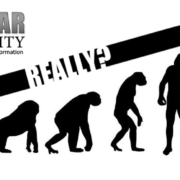
G-R-A-V-I-T-Y
 If you’ve never heard “Gravity” by James Brown, you need to check it out. That is some sanctified funk, right there!
So, here’s my thought: Darwin’s theory of evolution is based on the idea that the species that are in existence today originated from a single life form. He says as much in his book “Origin of Species:”
…all the organic beings which have ever lived on this Earth may be descended from some primordial form.
Now, before we go any further, let’s clarify a couple of things about the subject we’re about to engage: First off, those who subscribe to Darwin and his Theory of Evolution can be grouped into two distinct categories:
• the first group is purely scientific in that they don’t associate anything spiritual or metaphysical with this debate. They’re simply attempting to decipher what it is that constitutes the most plausible explanation for the origin of the cosmos and life as we know it. They’re not personally invested in any one theory to the point where if they’re confronted with evidence that elevates one theory over the other, they don’t perceive it as an intellectual assault or a personal affront. Rather, they’re just considering the different viewpoints that exist as though they were perusing the various food items at the local Farmer’s Market.
• the other group has a far greater stake in the discussion in that they recognize its philosophical essence. Should man be nothing more than the byproduct of random chemical and genetic interactions, then he is at liberty to define every aspect of his existence. There are no Absolutes, morality is relative and the quality of one’s life is defined based on whatever criteria best matches their personal preferences. Should the concept of a personal Creator be introduced into the mix, then you have accountability as well as a standard to consider.
Convinced that a supernatural explanation for the origin of life inevitably includes an uncomfortably limiting and intrusive dynamic, the disciples of Darwin resolve to refuse any notion of a god resulting in the boundaries of sound scientific reasoning sometimes being stretched and the rules governing a respectful, academic discussion occasionally being suspended.
But it’s needful to recognize that Evolution is not a sound scientific theory. However volatile a topic it may be for some, the ramifications are too significant to gloss over as inconsequential. The manner in which the curtain closes on this issue determines an individual’s philosophical disposition towards God – whether He is or isn’t. That being the case, let’s take a look at Darwin and consider three of the main shortcomings of Darwinian thought as well as the defense the advocates of Darwinism present as a rebuttal.
An Anglican Naturalist…
 Charles Darwin lived from 1809-1882. The son of a medical doctor, Darwin started his formal education with an aim towards following in his father’s footsteps, but his interest in botany and natural history became so intense that his studies began to suffer. His father responded by sending him to Christ’s College in England where it was determined that he would become an Anglican priest. Darwin did well and graduated in 1831. Not long after, however, Darwin joined some friends aboard the HMS Beagle. The ship’s mission was to chart the coastline of South America. Darwin was to go on this two year voyage as an amateur naturalist and collect specimens and make observations.
The two year voyage became a five year enterprise. During this time, Darwin excelled. His copious notes and detailed observations were sent home and circulated among those who could appreciate his work. By the time the Beagle returned home, Darwin was already a popular figure within the British Naturalist community and any thoughts of pursuing the ministry were sidelined by, not only his passion for science, but also his ever increasing skepticism when it came to the accuracy of Scripture.
At Every Turn
Darwin’s experiences aboard the Beagle culminated in a theory he elaborated on in his book “Origin of Species.” Published in 1859, it caused a sensation both within scientific and theological circles. It challenged the accepted notion that the world was a created entity. And while much of his theory was conjecture, it became the primary intellectual foundation upon which atheists built their platform.
While Darwin refrained from elaborating on the theological implications of his ideas, there was no denying that if you extended his line of reasoning to its inevitable conclusion, the result was a “god-less” universe. This is why the Theory of Evolution inspires such passionate debate. At the end of the day, you have an amateur Naturalist with a degree in theology who proposes a credible sounding theory about the origin of life based on his extensive observations of the natural world. By itself, it’s not that significant. But because of the philosophical and theological machinations it put in motion, it’s a zealously guarded cornerstone in the mind of the individual who is decidedly secular and a heretical school of thought to the believer.
For the individual resolved to highlight the flaws in Darwin’s reasoning, they have before them a task that’s not as easy as it might appear. While there are flaws in his reasoning, his verbiage is compelling and his ideas resonate on the surface as sensible. And Darwin was thorough in his notes and observations. Even when he seemed on the threshold of conceding some scientific shortcomings, he was careful to provide for himself a theoretical escape that allowed him to keep his hypotheses intact. For example, in a letter to his friend Dr. Asa Gray in 1857 he says:
Those who might jump on a comment such as this in order to “catch” Darwin doubting the authenticity of his theories will be quickly countered by the champions of Darwinian thought by saying he was referring to a specific idea that he had yet to solidify with sound scientific research – that it wasn’t directed to his theory as a whole.3
In another instance, Darwin referenced the complexity of the human eye as being so intricate, that to speculate it had evolved from a chaotic scenario into the precise instrument that is today was “absurd…”
That would seem to be a dealbreaker right there. But then his advocates go on to point out that while Darwin may have appeared to be bordering on conceding an intellectual flaw, he was merely articulating a preface to his proposed resolution to said quandary:
In other words, if you can perceive different types of eyes that represent varying theoretical stages of development and complexity, you have enough in the way of evidence to subscribe to the notion that the eye could have, in fact, evolved from the same primordial soup that all of life originated from.
At virtually every turn you will find Darwin has included a protective clause that prevents his theories from being dismantled. The absence of a fossil record to prove the existence of intermediary life forms is explained away as a result of an “imperfect geological record.”
At one point, he says, “If it could be demonstrated that any complex organ existed, which could not possibly have been formed by numerous, successive, slight modifications, my theory would absolutely break down.6 But then he goes on to say that the early stages of said organs are simply not available to examine. In other words, although the evidence doesn’t exist today, his theory is sound enough to assume that it did exist at one point.
This is the nature of the Darwin debate. The objective evidence that can be studied and used to conclusively validate Darwin’s theory of evolution is very limited, yet his conclusions are zealously guarded with either a theoretical look to the future or a quick assertion that any opponent of Darwin is basing their objections on an incomplete analysis of his observations.
Over 150 Years Later…
We are now over 150 years removed from Darwin’s first edition of “On the Origin of Species” and it’s not so much that the same questions remain as much as it’s a situation where the same flaws persist and are even more glaring then they were in 1859. You would be hard pressed to find a scientist that would balk at the claim that any one species has not underwent some changes over the course of earth’s history. But you do, however, encounter a very sharp division, both in academic circles as well as in the lay community, when you propose the idea that all of life is related, even to the point where human beings can supposedly embrace apes as their predecessors and can look to a fruit fly as a distant cousin.
That is the core of Darwin’s theory – that is the foundation upon which Natural Selection is built. It’s not whether or not there have been changes within a particular species, but that every species is related having evolved from one common life form:
But if you theory is to have any merit, it has to be consistent with, not only the evidence that currently exists, it also has to conform to the way in which the laws of Nature effect the data you submit. If you’re having to re-tool the rules that govern the natural world in order for your theory to resonate as credible – if you have to contradict the testimony voiced by the artifacts we currently have – you don’t have a scientific theory, rather, you have a cultural myth.
When Christopher Columbus asserted that the world was round, he was basing his hypothesis on anomalies that could be seen and measured. His proposed voyage was not founded on theories that contradicted the physical givens that could be observed, nor was it dependent upon outrageous claims that could not be validated.
Columbus is revered today, not because he went against the grain of true science, but because he had the courage to champion it. Advocates of Darwin like to position themselves as enlightened thinkers and jokingly refer to those who subscribe to Intelligent Design as IDiots. While there are some very educated and articulate Darwinians that can flood the debate with all sorts of biological and chemical minutiae, they are incapable of providing a plausible response to at least three fundamental questions. And the responses they do give, once the imaginary numbers and theoretical values are revealed, do little to convince the unbiased onlooker that theirs is the club consisting of the more intellectually advanced.
Let’s take a look at those three questions.
Those Three Questions
What is Your Starting Point?
In Mathematics a “set” is a group of values. A “Null Set,” or an “Empty Set” has no members. It doesn’t even have the value of zero within it, which makes it a little difficult to envision, but the bottom line is that with the “Null Set,” for lack of a better way of putting it, you have complete nothingness.
However the advocates of Darwin want to insist that the universe and all of life originated from a random collection of raw materials that, by pure chance, combined and interacted in a way that resulted in a single cell organism, they leave out one very important question that deserves an answer…
Where did the raw materials come from?
If your evolutionary theory is going to be perceived as having any substance, you can’t assume the pre-existence of the materials you’re going to need in order to construct a more complex life form. Furthermore, the laws that govern the way in which your raw materials combine and interact with one another do not exist if you start with the cosmological equivalent to the “null set.” If you start with absolutely nothing, not only do you not have the raw materials called for in your theoretical recipe, you’re also lacking the ordered manner in which they relate to one another.
Physics, gravity, biology, chemistry – none of these dynamics or their associative properties exist when your starting point is devoid of any kind of system or force that would dictate how that matter would behave. So, regardless of how you attempt to theorize how things may have begun, unless you can first explain the origin of your rudimentary matter as well as the existence of the natural laws that produce the changes you propose, your theory has no worth in that it’s founded on dynamics you can’t account for.
The defense that is made by the proponents of Darwinism is captured in an article that appeared in Discover magazine featuring MIT physicist Alan Guth:
At first glance, this looks like a possible explanation as to how the universe could’ve literally “popped” into existence as a result of purely random forces. But there are flaws in this argument on two fronts.
First of all, the subatomic particles referenced in the article are theoretical entities and it’s not even clear that they actually exist.
Secondly, and even more importantly, a quantum vacuum is not “absolute nothingness.” It’s actually a sea of fluctuating energy – “…an arena of violent activity that has a rich physical structure and can be described by physical laws.”9
So, you still have this huge gap in the Darwinian model in that you have no starting point and can therefore not theorize that matter, let alone a life form, can be initiated without first being able to convincingly explain the origin of your raw materials as well as the laws that dictate the manner in which they relate to one another.
How Do You Account for the Difference Between the Mind and the Brain?
Darwin attempts to explain the origin of a human being as nothing more than a series of physical mutations that, over time, resulted in not just the evolved physique / figure of a person, but also all of the intangibles that make that person who they are; their personality, their will – their conscious self.
To fully appreciate what’s being discussed here, pause for a moment and consider what the human experience would look like if it were defined in nothing other than materialistic terms. First off, you would have no free will. If a human being was nothing other than just a conglomeration of “stuff” – his flesh and nothing more – than the manner in which he or she would interact with their surroundings would be entirely predictable. Just like you can observe a cloud on a windy day – the way that it moves and dissipates according to the gusts of air that blow it about – it has no say in the direction it goes, it simply responds to the forces that influence it.
The human mind is more than just the physical and chemical output of the brain. A computer synthesizes information and outputs an accurate result based on that data, and that is what you have in the context of a human being when you limit his capacity to what a Darwinian model proposes.
But when a person is presented with a situation, it’s more than just a suite of problem solving faculties that is brought to bear. The manner in which that situation is addressed is effected by that person’s feelings, their personality and their will. Whereas digital intelligence is limited to whatever lies within the scope of purely objective information, a human being doesn’t just process data. Everything that makes that person unique not only influences their response, but attaches a quality of “right” or “wrong” to that decision which often exceeds the scope of that which is nondiscriminatory as well.
A computer does not know compassion, a hard drive doesn’t experience joy, and a CPU isn’t conscious of itself. These are intangible entities that cannot be quantified and yet they are very much a part of the human experience.
Some scientists maintain that consciousness and the subjective elements of the mind came into being once the human brain reached a certain level of complexity. The problem with that, however, is that they’re declaring that matter has within it the capacity to become both material and non-material. At that point, they’ve redefined the essential constitution of matter and while panpsychism is not a new theory, it borders on the absurd given the lack of evidence to support it.
As an aside, the concept of morality is also among those things that Darwin proposes as something that has evolved based on a process where the common good becomes the standard for defining the difference between wrong versus right. The moral sense, Darwin claimed, “first developed, in order that those animals which would profit by living in society, should be induced to live together.”10 He goes on in his book “Descent of Man” to say that, “No tribe could hold together if murder, robbery, treachery... were common; consequently such crimes within the limits of the same tribe ‘are branded with everlasting infamy’; but excite no such sentiment beyond these limits.”11
In other words, everything we regard as a society to be fundamentally right and / or good is the result of simply having identified what is best for the community at large.
 But morality is more than just a matter of engaging in social mathematics. Not everything about morality can be quantified, and, again, if you extend Darwin’s line of reasoning to its inevitable conclusion, you have scenarios such as Hitler’s approach to the Jewish race being accepted as a reasonable response to a desire to see the German people flourish and a supposedly inevitable progression of a more advanced human being overwhelming his weaker counterpart.
Vernon Lyman Kellogg was an accomplished biologist and Professor of Entomology at Stanford University. He served as Director of Hoover’s Humanitarian American Commission for Relief in Belgium from 1915-1916 during the height of World War I. Kellogg had the opportunity to frequently dine with members of the German Supreme Command as well as some of the more celebrated intellectuals within the German academic community. He published a book entitled “Headquarters Nights,” which was an account of his conversations with these individuals. His shock and disbelief are well documented as he heard and processed the “scientific” basis for the German resolve to conquer and dominate.
At one point, he expounds on his encounter with Professor von Flussen, a biologist whose academic credentials he admired, but with a worldview he found repulsive. About Flussen, he says:
Kellogg goes on to say:
 What’s interesting is that the wheels of Darwinian thought that Kellogg was observing during the time of World War I had been spinning at a lethal tempo for some time prior to 1915. In 1903 the Herero tribe in South West Africa staged an uprising against their German taskmasters who had set up a colony in that area. The Herero disposition was understandable given the cruel and inhumane way in which the Germans treated them based on their feeling of racial superiority.
In response, the German government deployed General Lothar von Trotha along with 14,000 troops to not only defeat the Herero tribe, but to exterminate them completely. Von Trotha was ruthless, but what made his actions even more heinous is the Darwinian doctrine he used to justify his actions.
In a local newspaper article, General von Trotha expressed how much of his thinking had been influenced by Darwin by saying, “At the outset, we cannot do without the natives. But they finally have to melt away. Where the climate allows the white man to work, philanthropic views cannot banish Darwin’s law ‘Survival of the Fittest.'”14
And Von Trotha was not some isolated case of non-sensical extremism. He was in the company of a great many people who had bought into the Darwin doctrine of racial supremacy which was an extension of moral evolution. Bear in mind that the original title of Darwin’s book “On the Origin of Species” was “On the Origin of Species by Means of Natural Selection, or the Preservation of Favoured Races in the Struggle for Life.” Add to that the bestselling commentaries on Darwin’s work such as the one authored by Friedrich Hellwald, a member of Germany’s “Society for Racial Hygiene,” and you have a very compelling and a very popular mantra.
In his 1875 bestseller, “The History of Culture in its Natural Evolution,” Hellwald said:
Some will attempt to defend the notion that Darwin’s perspective on morality as being a flawed interpretation of his phrase “survival of the fittest.” While the phrase was not coined by Darwin himself, he did use it in his fifth edition of “Origin of Species” and deployed it as a way to illustrate the way a species either improves or dies according to its vitality and ability to adapt.
At this point, Darwin isn’t referencing anything that could be construed as an obvious justification for genocide. But later, he contrasts the way Natural Selection processes and filters those species that are authentically superior to the way in which man tends to administrate and care for livestock.
Make a mental note of his comment “…he does not rigidly destroy all inferior animals.” There’s an implication, here, that says man’s approach to living things is sometimes contradictory to the way in which Nature would weed out inferior members of a species. Now look at this comment made towards the beginning of Chapter Four:
In other words, the natives that have been forcibly removed or subjugated by European nations were already destined for destruction by the laws of Nature simply because they were not as well “modified” as their foreign conquerors. Now look at Darwin’s comment that he makes in his book “Descent of Man”:
What’s significant about this comment is that Darwin defines the Australian and African natives as being inferior to the Caucasian. This isn’t taken out of context, nor is it some outrageous interpretation of a Darwinian statement. From Darwin’s scientific perspective, he sees certain races as inferior to others.
Finally, consider this statement, again coming from Darwin’s “Descent of Man”:
The essence of what Darwin is saying here is that human sympathies, in the context of benevolence and medical care, can sometimes run contrary to the positive and inevitable direction of Natural Selection. And while we can’t, in good conscience, refrain from extending aid to the sick and inferior, we can at least hope that they will refrain from marrying and propagating their kind.
Did Darwin ever explicitly endorse or commend genocide? No. But while he may not have started the fire, he most certainly provided the match and the fuel by establishing a “scientific” basis for racial supremacy as well as a quasi-clinical sounding justification for expediting the demise of the weak and infirm based on the predetermined elimination that would occur at the hands of Natural Selection.
Just as it is an exercise in futility to suggest that the human mind is nothing more than a data processor comprised of flesh, it is just as futile to try and distill morality down to a mere formula. There is an intangible nobility that characterizes true morality that is neither defined nor experienced by engaging in a cold analysis of purely objective criteria. Darwin’s approach to morals begins and ends with a calculation as opposed to an aspiration and for that reason, not only does his theory fail, but it can, and often does, lead to a moral disaster.
How Come the Cell Comes in a Box Marked “No Assembly Required?”
In 1859, Darwin did not have access to the molecular world like we do today. It was assumed that as we were able to view more and more the cellular landscape, the less complex the data would become. In fact, it’s the exact opposite.
A typical cell requires ten million atoms to construct. In his book, “The Way of the Cell,” Franklin M. Harold describes the cell as a high tech enterprise, complete with…
Pause for a moment and ponder the biological pecking order of what we’re talking about. While an atom can be broken down into its nucleus and the electrons that orbit around it, the atom is considered the smallest and most basic building block of life and matter. When atoms combine, the result is a molecule. For example, when two Hydrogen atoms combine with one Oxygen atom, the result is a molecule of water.
A cell is an ordered system of molecules that runs via a horrendously complicated collection of micromachines that must have the right shape and operate at the right strength and in the right manner. The thing that makes the cell so problematic to Darwin’s theory of evolution is that there’s no possible way in which its detailed functionality can begin at a point that’s any less intricate. In other words, in order for a cell to function, it has to have all of its parts, there is no “less evolved” option available.
Michael J. Behe, PhD is Professor of Biochemistry at Lehigh University. He illustrates the above anomaly using a mousetrap. He shows how each of the parts of a typical mousetrap – the wooden platform, the spring, the metal bar that does the mouse in – all of these parts are arranged in a very specific way in order for the trap to function. Remove any of those parts, and you no longer have a working mousetrap. You may have a great paperweight, perhaps, but you don’t have a working mousetrap.
 The same is true with a cell. Remove any of the components of a cell and you don’t have a less efficient cell, nor do you have a partial cell. What you have is a non-functioning cell. And what’s true for the cell as a whole is also true for the components that comprise the cell itself.
 A great example is the flagellum (pronounced flah-GEL-uhm) The flagellum is a picture of astounding efficiency. Discovered in 1973, it’s much like a propeller in that it propels the bacterial cell through its environment. Its approximately 2 microns long. A micron is 1/20,000 of an inch. Most of its length is represented by the actual propeller. The other element of the flagellum is the motor which is pictured to the right. While the flagellum is a couple of microns long, the actual motor is about 1/100,000th of an inch. Its size is significant given the fact that it spins at 10,000 revolutions per minute and can stop spinning within a quarter turn and instantly begin spinning in the opposite direction. Harvard Biophysicist Howard Berg called it “the most efficient motor in the universe.”
Dr. Behe coined the phrase “irreducible complexity” in his book “Darwin’s Black Box” to describe the scenarios referenced above, as far as the existence of functionality that cannot be arrived at gradually. In other words, you either have a working flagellum with all of its intricacies or you don’t. There’s no such thing as a “flagellum lite.”
According to Darwin, this is a deal breaker based on his comment that if any complex organ existed which could not possibly have been formed by numerous, successive, slight modifications, his theory would completely break down. The cell and the flagellum are examples of those kinds of “complex organs.”
Dr. Kenneth Miller is a Professor of Biology at Brown University. He disagrees with Behe and defends his argument by saying:
 TTSS (Type III Secretion System) is like a biological syringe in that it senses, probes and injects its toxins into its target cell. You can see by looking at the diagram to the right that the TTSS has certain similarities to the flagellum. Indeed, when you look at its composition and overall shape, it looks like a precursor to the flagellum and that’s what the proponents of Darwin submit as a rebuttal to the claim that the flagellum represents an case of irreducible complexity.
There are two problems with Miller’s argument however in that while you have a “truly valuable biochemical machine,” you don’t have a flagellum, you have a completely different apparatus. It’s like removing the spring from a mousetrap and celebrating the fact that you now have a fully functioning paperweight. You still have an outrageously improbable scenario before you as far as that mousetrap being able to perform according to the way it was designed apart from a starting point where there’s “no assembly required.”
In addition, Miller’s assertion overlooks the findings that have been recently published which states that the TTSS is not a precursor to the flagellum, rather the flagellum is a precursor to the TTSS. This is completely contrary to the theme of evolution which positions the more complex organism at the tail end of an ever improving process. In this instance, the flagellum comes before the TTSS, not the other way around which disqualifies it from being a part of the flagellum’s supposed evolutionary process.
Conclusion
 There is a strong disdain among some proponents of evolutionary theory for those who would attempt to substantiate Intelligent Design on the basis of science. In their mind, anyone who references life as a supernaturally initiated enterprise is an irresponsible steward of scientific methodology in the way they substitute “faith” for true “analysis.”
Yet, it is profoundly obvious that while the evolutionist regards himself as rational and firmly rooted in empirical scholarship, in actuality his foundation is comprised almost entirely of fictitious conjecture and outlandish forecasts. With the wave of an academic looking hand, complex functionality simply emerges and whatever is needed in order to remain consistent with the givens that characterize the material world is simply excluded from the debate and replaced with irrational predictions that their claims will one day be validated.
Darwin put that strategy on the map when admitting how the then fossil record failed to authenticate his theory. Today, the fossil record is far more advanced and while some will be very quick to state that we have numerous examples of transitional life forms, the fact is we don’t have fossils as much as we have fossil fragments.
“Java Man” – an icon that is very familiar, given the way that it has been published and touted as “proof” of our common heritage with monkeys – consists of a partial skull, three teeth and a femur. It was later determined that the femur didn’t belong with the skull cap and today there is a now a huge amount of skepticism, even among evolutionists, that doubt Java Man is credible evidence that man evolved from apes.23
In 2001, another skull was found in Africa. Sahelanthropus proved to be problematic however, in that it seemed more human like despite the fact that it was seven million years old as opposed to other fossils that were five million years old. If Darwinian thought is accurate, there should be a progression, not a regression as far as how a species evolves.
So, in addition to the creative imagination that had to be deployed in order to associate a human being with the lone skull of an oversized monkey, the fact that it was more evolved than its younger counterparts further weakened Darwinian theory.
Henry Gee, the chief science writer for Nature magazine in 1999 summed it up well when he said:
And while the archaeopteryx (pronounced ar-key-OPT-er-ix) unearthed in 1859 is a fully formed skeleton and initially heralded as a transitional life form that bridged the gap between birds and reptiles, it has since been determined that is an extinct species of bird based on its bone structure, breeding system, lungs and the distribution of their weight and muscles.25 In addition, the archaeopteryx is another case of an older yet more evolved life form than the younger fossils its typically associated with. Again, the gospel of Darwin is revealed as less than conclusive.
But regardless of how some want to debate the details of evolution, the bottom line is that evolution is founded on the pre-existence of certain materials and the laws of Nature which govern them. Regardless of how dogmatic the champions of Darwin may be, their arguments will always be tainted by an imposing insufficiency in that their starting point requires an entity that is both uncaused and possesses the capability to institute the manner in which the natural world operates. In other words, their theory is ultimately predicated on something eternal and supernatural.
In a recent court case, a Pennsylvania school system was handed a ruling from a judge that said the discussion of evolution in the classroom was not to include any mention of Intelligent Design on the basis that evolution is “science” and Intelligent Design is “religious.” Yet, when you look at the inexplicable force that is exquisitely ordered and continuously advancing the quality and intricacy of life, as well as the initialization of the cosmos requiring a dynamic not limited to time or space, evolution is revealed as a theory that is inadmissible without first addressing that which authored the parameters in which evolution could conceivably operate – and that is a “religious” conversation.
The bottom line is that evolutionists are not engaging in a noble effort to find a truth that has yet to be discovered as much as they’re refusing to embrace the Truth that’s already been revealed. Romans 1:20 says:
For since the creation of the world God’s invisible qualities—his eternal power and divine nature—have been clearly seen, being understood from what has been made, so that people are without excuse. (Rom 1:20)
Whether you’re a believer or a disciple of Darwin, your paradigm is based on your response to the above verse. It is a “religious” issue and the fact of the matter is when you remove God from the equation, the result is scientific confusion, moral disaster and, ultimately, spiritual death.
G-R-A-V-I-T-Y.
That’s how you spell perhaps the most succinct and effective rebuttal to the doctrine of evolution. Explain the origin of the universe and not just the origin of species, account for the materials and laws that govern Darwin’s processes, name the uncaused and unlimited entity that initiated gravity and everything else his theories are founded on, and perhaps then we can discuss not only the One Who spoke into being the universe you study, but more importantly the God Who offers you the life you desire.
1. “On the Origin of Species,” wikipedia, http://en.wikipedia.org/wiki/On_the_Origin_of_Species, accessed February 7, 2015
2. “Darwin Correspondence Project”, http://www.darwinproject.ac.uk/letter/entry-2109, accessed February 7, 2015
3. “Darwin Correspondence Project”, http://www.darwinproject.ac.uk/six-things-darwin-never-said, accessed February 7, 2015
4. “What Did Charles Darwin Say About the Human Eye?”, Christian Apologetics and Research Ministry, https://carm.org/charles-darwin-on-the-human-eye
5. Ibid
6. “On the Origin of Species”, Charles Darwin, Penguin Classics, London, England, 2009, p173
7. “Darwin Online”, http://darwin-online.org.uk/Variorum/1859/1859-484-c-1860.html, accessed February 9, 2015
8. Brad Lemley, “Guth’s Grand Guess,” Discover (April 2002)
9. Dr. William Lane Craig quoted by Lee Strobel in his book “The Case for a Creator”, Zondervan, Grand Rapids, MI, 2004, p101
10. “Page:Descent of Man 1875.djvu/121”, “Wikisource”, https://en.m.wikisource.org/wiki/Page:Descent_of_Man_1875.djvu/121, accessed July 20, 2025
11. “Page:Descent of Man 1875.djvu/133”, “Wikisource”, https://en.wikisource.org/wiki/Page:Descent_of_Man_1875.djvu/133, accessed July 20, 2025
12.”Archive.org”, “Full text of “Headquarters Nights; A Record of Conversations and Experiences at the Headquarters of the German Army in France and Belgium”, http://archive.org/stream/headquartersnigh00kell/headquartersnigh00kell_djvu.txt, accessed February 27, 2015
13. Ibid
14. “Forgotten Genocides: Oblivion, Denial, and Memory”, edited by Rene Lemarchand, University of Pennsylvania Press, Philadelphia, PA, 2011, p65
15. “Merchants of Despair: Radical Environmentalists, Criminal Pseudo-Scientists and the Fatal Cult of Anti-Humanism”, Robert Zubrin, Encounter Books, New York, NY, 2012, p47 (https://books.google.com/books?id=KOUgwdA3BWgC&pg=PA47&lpg=PA47&dq=just+as+in+nature+the+struggle+for+existence+is+the+moving+principle&source=bl&
ots=yDlJRSvRTC&sig=l6NbArTKEp962lNknqqBPvEObs4&hl=en&sa=X&ei=4djxVL6yEdDjsATvgYGABQ&ved=0CB8Q6AEwAA#v=onepage&
q=just%20as%20in%20nature%20the%20struggle%20for%20existence%20is%20the%20moving%20principle&f=false)
16. “On the Origin of Species – Sixth Edition”, Charles Darwin, https://www.andrew.cmu.edu/user/jksadegh/A%20Good%20Atheist%20Secularist%20Skeptical%20
Book%20Collection/Charles%20Darwin%20-%20The%20Origin%20of%20Species%20-%206th%20Edition.pdf, accessed March 4, 2015
17. Ibid
18. Ibid.
19. “Descent of Man” https://www.andrew.cmu.edu/user/jksadegh/A%20Good%20Atheist%20Secularist%20Skeptical%20Book%20Collection/(e-book)Darwin%20-%20THE%20DESCENT%20OF%20MAN%20(1).pdf, accessed March 3, 2015
20. Ibid
21. Franklin M. Harold, The way of the Cell (Oxford: Oxford University Press, 2001) 329
22. “The Flagellum Unspun”, http://www.millerandlevine.com/km/evol/design2/article.html, accessed March 10, 2015
23. “The Case for a Creator”, Lee Strobel, Zondervan, Grand Rapids, MI, 2004, p62
24. “In Search of Deep Time”, Henry Gee, Simon and Schuster, New York, NY, 1999, p5
25. “The Case for a Creator”, Lee Strobel, Zondervan, Grand Rapids, MI, 2004, p57

The Good Works of Tim Tebow
 Can someone who’s not saved be “nice?” Can they do things that could be categorized as “good works?” Sure. At least from a human standpoint. But there’s more to a good work than the action itself. Take a look: Isaiah 64:6 says:
All of us have become like one who is unclean, and all our righteous acts are like filthy rags. (Is 64:6)
Human beings evaluate actions as they resonate according to our limited powers of perception. God, however, sees the heart. An unregenerate heart cannot produce anything that is processed as “holy” or “good” by God. We are spiritual corpses and even on our very best day, we are light years removed from what is acceptable to a Perfect and Holy King. But as born again believers, our identity is defined according to the Perfection He awards us and now our “actions” are welcomed as “works.” Here’s where it gets good… Tim Tebow scores a touchdown. When he does that, is it nothing more than an addition to the scoreboard, or is it more than that? John 15:16 says:
You did not choose me, but I chose you and appointed you so that you might go and bear fruit – fruit that will last – and so that whatever you ask in my name the Father will give you. (Jn 15:16)
Because Tim makes a point of referencing his Heavenly Father as the Source of his talent and success, those touchdowns endure beyond the context of the game. Reason being is that the focus of those who are taking the time to notice Tim is now on his God and not just his throwing arm.
That’s the difference between an “action” and a “good work.” The “action” is simply the output of a human resource that is, by default, limited and flawed. The “work” may be the same kind of action from a human standpoint, but because it’s done with eye towards glorifying one’s Heavenly Father and is empowered by the Strength coming from God, it now resonates through all eternity as a good work and as fruit that will last!
Approach your day from a perspective that intentionally perceives the Divine elements that transform your actions into “works” and let that shape your outlook. It’s a different kind of day when you’re aware of your activity as being more meaningful than simply getting something done.
Go get ’em!

SCiPP (pronounced “Skip!”)

SCiPP
It’s difficult not to notice a common thread amongst all of the criticisms leveled at President Trump. Regardless of the subject matter, it seems to come down to one thing that’s far more profound than mere Politics.
It’s the extent to which you’re willing to acknowledge a bottom line that exists independently of the way an individual thinks or feels.
There are two ways in which a person is going to process themselves and the world around them.
They’ll see things either in the context of Standards and Consequences or…
Preferences and Power.
Think of it as “SCiPP” (pronounced as “Skip”).
This simple acrostic captures the tension that exists in our society today, regardless of the topic or the parties involved.
On one hand, you have a standard that functions either as a boundary or a benchmark. It can be a situation where if you cross that line, you’re responsible for your actions and you have to suffer the consequences. Or, it can be a standard of excellence that if you meet or exceed that standard, you’re able to enjoy the benefits.
Standards and Consequences.
On the other hand…
You have a perspective that’s determined to dismiss any concept of having to answer to something other than what you might prefer in that moment. And because you can’t logically defend what you believe and why you believe it without sounding either selfish or foolish, you instead work to secure the power necessary to ensure your preferences are prioritized above any standard that might otherwise apply.
Preferences and Power.
Again, it doesn’t matter what you’re talking about.
You’re either looking at what’s real or the way you feel.
Standards and Consequences. Preferences and Power.
SCiPP.
Whatever the Topic May Be
Whether the topic is Illegal Immigration, Transgenderism, Abortion, Voter Fraud, the Separation of Church and State, or Militant Islam, the schools of thought that argue back and forth will inevitably fall into one of those two camps.
| Standards and Consequences | Preferences and Power |
| Illegal Immigration | |
| National sovereignty is acknowledged and due process is applied accordingly both to those who have no criminal record as well as those who are engaged in criminal activity and / or are categorized as international terrorists. | Border security is ignored and any criminal activity that would qualify an illegal immigrant for immediate deportment is overlooked. |
| Does the Attorney General have the legal authority to deport illegal immigrants engaged in criminal activity? | |
| Transgender | |
| You can’t change the way the human species is designed just because you’re not happy with who you are. | I can change who and what I am by changing my pronouns. |
| Question: Can a person change their gender by changing their pronouns? | |
| Racism | |
| I can’t shoot myself in the foot and then blame all my pain on the person or the principle that told me not to pull the trigger to begin with. | As long as I can successfully position myself as a victim, I don’t have to answer any questions or take responsibility for my actions. |
| Question: Do you base the way a person is evaluated on their color or their conduct? | |
| Abortion | |
| If you have an abortion, your baby doesn’t get a chance to live. | It’s not a baby until I decide it is. |
| Question: If you have an abortion, does your baby get the opportunity to live? | |
| Voter Fraud | |
| Fraud is defined according to the lack of integrity in the way votes are cast. | Fraud is defined according to whether or not I win the election. |
| Question: Is voter fraud defined according to the person being elected or the votes being cast? | |
| Separation of Church and State | |
| The separation of church and state was designed to limit government’s influence on Christianity, not the other way around. | I don’t have to pay attention to anything I’m not comfortable with. |
| Question: What is our national motto? | |
| Militant Islam | |
| You can’t take what doesn’t belong to you. | Whether it’s a life or a piece of property, I can take whatever I want. |
| Question: What’s the difference between a thief and religious zealot if they’re both taking what doesn’t belong to them? | |
In order to have a double standard, you have to have a standard to begin with. This is why it can be so exasperating to talk with someone whose disposition is based on Preferences and Power. There are no standards, only situations.
All the boundaries otherwise established by logic, common sense, the rule of law, and historical truths are now subordinated to the idea that there are no realities apart from what the individual is willing to acknowledge. Evidence to the contrary is dismissed as either unreliable or irrelevant and truth isn’t an objective reality, as much as it’s a matter of opinion.
Facts Don’t Matter
Confronted with this scenario, you can’t hope to successfully champion what’s true simply by enumerating a list of facts.
The only facts they’re willing to acknowledge are those that can be manipulated to reinforce their bias, and their “fact checkers” evaluate what’s being said using only the criteria that translates to their desired conclusion. Nothing is “true,” in the context of being an absolute. There’s only what an individual is willing to acknowledge according to their personal preferences.
Everyone’s capable of ignoring what’s true in favor of what’s preferred. It’s human nature to protect yourself from either getting hurt or even corrected. No one wants to admit they’re wrong. But there’s a difference between someone who’s not convinced and the person who simply wants to be in control.
You can see that distinction in the way a person responds to something that’s being said. The person who wants to be in control can’t defend their perspective without being revealed as both selfish and nonsensical. So, instead of attempting to refute the substance of what’s being said, they assault the character of the one who’s speaking. By casting those they can’t refute as being ignorant villains, they are now perceived as sophisticated victims, and you can’t criticize someone who’s in pain.
This is the signature tactic of the person who sees themselves as their own bottom line. I can’t get you to agree with me, so I get you to feel sorry for me by insisting that the only people who criticize me are either stupid or sinister, and this is how they obtain the power necessary to force society to adopt their insanity all in the name of being “sensitive.”
But you can reveal the flawed nature of their approach by asking the right questions.
33 as it is written, “Behold, I am laying in Zion a stone of stumbling, and a rock of offense; and whoever believes in him will not be put to shame.” (Rom 9:33)
Bottom lines – absolute truth – isn’t welcome in the bind of the person who sees themselves as the gauge by which all things are measured. This is why there’s so much animosity in our culture today when it comes to anything that implies a Standard that exists independently of the way a person wants to process themselves and the world around them.
The Right Questions
When you ask a question, you control the conversation. A question requires an answer and a weak response is impossible to conceal. While it may not change the mind of the person you’re talking to, those who are listening are impacted and for that reason you want to always be ready to defend what’s True, not only with the data that reinforces the substance of your platform, but with the questions that can’t be answered apart from acknowledging a reality greater than the manufactured world you prefer.
Every one of the perspectives listed in the “Standards and Consequences” column in the chart above can be stated as a question. That’s what you see documented in the row beneath each issue. By asking the right question, it can be a game changer in the way it compels an answer that must recognize an empirical standard in order for it to make any sense.
Conclusion: These Are Spiritual Contests
Divisions (1 Cor 1:10) and Darkness (2 Cor 4:4) are spiritual contests (Eph 6:12) that aren’t won by reason alone. Wisdom is available (Jas 1:5), but it has to be chosen and it is not an option to the person who refuses to consider anything other than what they want to see.
You can’t convince someone of the truth if they’re philosophically invested in a lie. You’re not challenging their logic as much as you’re challenging their authority to define what’s right according to what they prefer.
But you can nevertheless be effective in the way you champion what’s true by first of all recognizing the way people define truth.
Standards and Consequences vs Preferences and Power.
By identifying their mindset, you can be better prepared to ask the right questions and not just present all the relevant evidence.


