Is Homosexuality Sinful? | Part I

There’s a graphic floating around Facebook that’s entitled, “So You Still Think Homosexuality is Sinful?” and it goes on to use a flowchart to suggest that it’s both logical and sensible to embrace Homosexuality as an acceptable lifestyle, even from a Biblical standpoint (see image to the right).

The first red flag is that it doesn’t reference any specific chapter or verse. Beyond that, there’s some stuff there that sounds plausible, but after you pop the hood and do some digging, you discover that it’s not credible at all.

Here we go:

Objection:  Jesus Never Uttered a Word About Same Sex Relationships.

Overruled: Jesus endorsed the Law as being valid and in so doing established homosexuality as being a sin. In addition, Jesus was God in the flesh and in light of the fact that God dictated the whole of Scripture, it is therefore nonsensical to claim that Christ had nothing to say on the matter.

Jesus Endorsed the Old Testament as Being Valid Correct. Jesus never taught on the subject, but Jesus endorsed Old Testament Law as being valid in Matthew 5:17 and that would include God’s specific outlawing of homosexuality. Take a look:

Do not lie with a man as one lies with a woman; that is detestable. (Lev 18:22 [see also Lev 20:13])

Homosexuality is Referenced as a Sin Throughout Scripture In addition, it’s referenced in the New Testament which demonstrates that this is a moral sin that rates a special emphasis in God’s mind in that it shows up throughout Scripture and not just in the New Testament.

In the same way the men also abandoned natural relations with women and were inflamed with lust for one another. Men committed indecent acts with other men, and received in themselves the due penalty for their perversion. (Rom 1:27)

Do you not know that the wicked will not inherit the kingdom of God? Do not be deceived: Neither the sexually immoral nor idolaters nor adulterers nor male prostitutes nor homosexual offenders (1 Cor 6:9)

We know that the law is not meant for a righteous person, but for the lawless and rebellious, for the ungodly and sinful, for the unholy and irreverent, for those who kill their fathers and mothers, for murderers, 10 for the sexually immoral and homosexuals, for kidnappers,[a] liars, perjurers, and for whatever else is contrary to the sound teaching (1 Tim 1:9-10)

Jesus is God Another thing to consider is that Jesus is God in the flesh:

I and the Father are one. (Jn 10:30 [see also John 1:1-2; 5:17-18;Heb 1:3])

When Jesus says, “I and the Father are One,” He’s saying that He and God are the same thing. The Greek word means “one and the same,” not “one person, “ but akin to two different names for the same thing. That’s why Calvary worked because it was God Himself Who was paying the penalty for our sins and not just a noble substitute. So if Jesus is God and vice versa, then to suggest that Jesus never said anything about homosexuality is pointless. 2 Timothy 3:16-17 says the entire Bible is God-breathed so Jesus’ perspective on the subject is well represented throughout the Bible in that it is God’s Word and Jesus is God.

Objection: The OT also says it’s sinful to eat shellfish, to wear clothes woven with different fabrics and to eat pork? Should we still live by OT laws?

Overruled: God’s condemning of homosexuality is not limited to the Old Testament Law as has already been mentioned. In addition, the portion of the law that is being referenced here is the judicial law which was fulfilled in Christ. The moral law, however, endures and that includes the condemnation of homosexuality.

Homosexuality is Referenced Throughout Scripture Two things: First off, homosexuality is condemned throughout Scripture so to limit one’s scope to the Old Testament alone and attempt to justify homosexuality by saying it’s an Old Testament law and therefore obsolete is to ignore the way in which it is addressed in the New Testament:

In the same way the men also abandoned natural relations with women and were inflamed with lust for one another. Men committed indecent acts with other men, and received in themselves the due penalty for their perversion. (Rom 1:27)

Do you not know that the wicked will not inherit the kingdom of God? Do not be deceived: Neither the sexually immoral nor idolaters nor adulterers nor male prostitutes nor homosexual offenders nor thieves nor the greedy nor drunkards nor slanderers nor swindlers will inherit the kingdom of God. (1 Cor 6:8-10)

We know that the law is not meant for a righteous person, but for the lawless and rebellious, for the ungodly and sinful, for the unholy and irreverent, for those who kill their fathers and mothers, for murderers, 10 for the sexually immoral and homosexuals, for kidnappers, liars, perjurers, and for whatever else is contrary to the sound teaching. (1 Tim 1:9-10 [HCSB])

While the Old Testament Law Pertaining to Ceremonial and Judicial Specifics Were Fulfilled in Christ, the Moral Law Still Applies In addition, it’s important to realize that while the ceremonial and judicial aspects of Old Testament Law having been fulfilled, the moral law still applies. Here are the OT passages that are deal with the wearing of clothes made of two different fabrics and the eating of shellfish:

Of all the creatures living in the water of the seas and the streams, you may eat any that have fins and scales. 10 But all creatures in the seas or streams that do not have fins and scales—whether among all the swarming things or among all the other living creatures in the water—you are to detest. (Lev 11:9-10)

Keep my decrees. Do not mate different kinds of animals. Do not plant your field with two kinds of seed. Do not wear clothing woven of two kinds of material. (Lev 19:19)

And the pig, because it parts the hoof and is cloven-footed but does not chew the cud, is unclean to you. You shall not eat any of their flesh, and you shall not touch their carcasses; they are unclean to you. (Lev 11:7-8)

Why God prohibited the consumption of some animals or the wearing of certain types of clothing is speculative. But there are a couple of things about what was going on historically that allow these directives to make some sense.

Israel was surrounded by pagan nations whose practices included the combining of fabrics and different types of seed as part of religious rituals. Moses Maimonides (1135 – 1204) wrote that: “the heathen priests adorned themselves with garments containing vegetable and animal materials, while they held in their hand a seal of mineral. This you will find written in their books.”1

So there’s good reason to believe that one of the reasons that God directed the Israelites to not mix seed or fabrics or different kinds of animals is because by doing so you were engaging in behaviors that were recognized as idolatrous.

As far as why you were to not eat marine life lacking in fins or scales, again it’s possible that due to the diet of the typical pagan, which included shellfish, God was putting up some guard rails that would make it difficult to even eat with those who despised the Lord.2

The point that’s being made the “So You Think Homosexuality is Sinful?” crowd is that if all of these instructions were valid in antiquity, yet not relevant in today’s world then why should God’s command pertaining to homosexuality be any different? If we no longer concern ourselves with combining different types of fabric or abstaining from eating certain types of food, why should homosexuality be an issue?

In the New Testament, Jesus addressed the dietary restrictions that had been established through Moses by saying that it wasn’t what went into a man that made him unclean, rather it was what came out of him that reflected the true condition of his heart. Consider the following:

17 After he had left the crowd and entered the house, his disciples asked him about this parable. 18 “Are you so dull?” he asked. “Don’t you see that nothing that enters a man from the outside can make him ‘unclean’? 19 For it doesn’t go into his heart but into his stomach, and then out of his body.” (In saying this, Jesus declared all foods “clean.”) (Mk 7:17-20 [see also 1 Tim 4:3-5])

Jesus often qualified the Law by quoting it and then elaborating on it in order for people to get beyond the letter of the Law and instead obey the spirit and the original intent of the Law. That’s what he was getting at in Matthew 5:17:

Do not think that I have come to abolish the Law or the Prophets; I have not come to abolish them but to fulfill them. (Matt 5:17)

Some will mistakenly interpret Jesus’ quoting the Law as His having a disdain for what He had Moses document centuries before in that He would often add some commentary to what was on the books. Here’s the thing: The word, “fulfill” doesn’t mean to fill out, as in to add something that was lacking. Rather, it means to fill up. In other words, the law was perfect in its content and purpose which was to identify sin. Paul states that in Romans 7:12 when he refers to the law as holy, righteous and good. Without the law, we wouldn’t recognize sin for what it is nor could we appreciate the need for a Savior and that was the ultimate purpose of the law.

When Jesus said that He wasn’t seeking to abolish the law, He was highlighting the fact that He was the Savior that law had been pointing to since its conception. He says in Matthew 5:18:

I tell you the truth, until heaven and earth disappear, not the smallest letter, not the least stroke of a pen, will by any means disappear from the Law until everything is accomplished. (Matt 5:18)

In this one verse, you have an amazing collection of Truths that represent the substance of the gospel. When Jesus died on the cross, the ceremonial part of the Law was fulfilled in that no sacrifices would ever be needed again to atone for sin because Jesus was God’s one time, sacrifice for sin. You see that in 1 Peter 3:18:

For Christ died for sins once for all, the righteous for the unrighteous, to bring you to God. He was put to death in the body but made alive by the Spirit, (1 Pet 3:18)

The judicial aspect of the law was the way in which God uniquely dealt with Israel (Lev 26:46; Ps 147:19). It’s in the context of this law that you find the dietary restrictions and instructions pertaining to apparel. But when Israel rejected the Messiah and put Him to death, that was the end of Israel’s distinction as “God’s people” and the beginning of the church which was comprised of both Jews and Gentiles. Hence the abrogation of judicial law, not that it was destroyed but fulfilled in Christ.

Take a look at some of what John MacArthur offers in the way of commentary on this issue:

Look at it this way; this is thrilling. Look at the judicial law and all the various rules that governed the behavior of Israel, all their legal codes, all the things they were supposed to do. Leviticus 26:46, “The statutes and ordinances and laws which the LORD made between Himself and the children of Israel.”

God made special laws with Israel. In Psalm 147:19, “He declares His word to Jacob, His statutes and His ordinances to Israel. He has not dealt so with any nation.” In other words, God had peculiar laws for Israel; this is His judicial law which set them apart. They had certain dietary laws, certail laws of dress, of agriculture, laws within their relationships with certain things they had to do. These set them apart.

You say, “How did Jesus fulfill that?” When Jesus died on the cross, that was the final, full rejection by Israel of her Messiah, right? That was it. And that was the end of God dealing with that nation as a nation. The judicial law that He gave to Israel passed away when God no longer dealt with them as a nation anymore and Jesus built His church. Praise God, someday He will go back and redeem that nation again and deal with them again as a nation. But for this time, when Jesus died on the cross, the judicial law came to a screetching halt. There was no more national people of God. There would be a new man, cut out of Jews and Gentiles, that would be called the church. The judicial law came to an end. That’s why Matthew 21:43 says, “Therefore I say to you, the Kingdom of God will be taken from you.” (http://www.gty.org/resources/sermons/2209/christ-and-the-law-part-1)

The one aspect of God’s Law that still applies, however, is His moral law. Not that we need to concern ourselves with the penalty that comes when you disobey His moral law, but as far as how it defines what is right and what is wrong – that aspect of God’s moral law is still binding. John MacArthur elaborates on that point when he says:

The same thing is said in Romans 6:14, and we could spend forever on this principle. “For sin shall not have dominion over you, for you are not under the law.” What does he mean, that you don’t have to do anything any more? Do you not have to live a moral life or obey God? No! What he means is that you are no longer under the power of the penalty of the law. It can’t kill you anymore; you can only die once. That’s all, only once. Christ died on the Cross, and you, by faith, died in Him. That pays the penalty, so in that sense, you are no longer under the law. That is, the law has no power to slay you. The law had a penalty, the wages of sin is death, and Christ took the penalty. (http://www.gty.org/resources/sermons/2211/christ-and-the-law-part-3)

The whole judicial system was only good as long as Israel was God’s people. When that was over, the system was over. The ceremonial system was only good until the final sacrifice came, and when it came, then the system was done away. That only leaves one element of God’s law abiding still, and what is that? The moral law. That’s what undergirded everything. That will be with us until we see Him face to face. (http://www.gty.org/resources/sermons/2209/christ-and-the-law-part-1)

So to imply that the Old Testament laws which no longer apply to the New Testament church include God’s ruling against homosexuality is neither Biblical let alone logical.

Proceed to Part II by clicking here

The God Delusion vs The God Conclusion | Part Two: What About Prayer?

Dawkins 1 | God 0

Richard Dawkins, in his continued attempt to mock the legitimacy of the Christian faith, references something he refers to as “The Great Prayer Experiment.” He explains…

..the physicist Russell Standard (one of Britain’s three well-known religious scientists, as we shall see) has thrown his weight behind an initiative, funded by – of course – the Templeton Foundation, to test experimentally the proposition that praying for sick patients improves their health.

Such experiments, if done properly, have to be double blind, and this standard was strictly observed. The patients were assigned, strictly at random, to an experimental group (received prayers) or control group (received no prayers). Neither the patients, nor their doctors or caregivers, nor the experimenters were allowed to know which patients were being prayed for and which patients were controls. Those who did the experimental praying had to know the names of the individuals for whom they were praying  – otherwise, in what sense would they be praying for them rather than for somebody else? But care was taken to tell them on the first name and the initial letter of the surname. Apparently that would be enough to enable God to pinpoint the right hospital bed.

The very idea of doing such experiments is open to a generous amount of ridicule, and the project duly received it. As far as I know, Bob Newhart didn’t do a sketch about it, but I can distinctly hear his voice:

What’s that you say, Lord? You can’t cure me because I’m a member of the control group?…Oh, I see, my aunt’s prayers aren’t enough. But Lord, Mr Evans in the next door bed…What was that, Lord?…Mr Evans received a thousand prayers per day? But Lord, Mr Evans doesn’t know a thousand people…Oh, the just referred to him as John E. But Lord, how did you know they didn’t mean John Ellsworth?…Oh right, you used your omniscience to work out which John E. they meant…1

The study that Dawkins references was done in 2006. The two groups were further divided into three sub groups:

  • people that knew they were being prayed for
  • people that were being prayed for and did not know it
  • people that received no prayers and didn’t know it

The results of the study were clear cut. There was no difference between those being prayed for and those who were not. There was a difference in the amount of suffering however, in that the people who knew they were being prayed for suffered more than those who weren’t being prayed for and had no clue.

Bottom line: Prayer doesn’t work, God isn’t real and to believe otherwise is either complete stupidity or an example of a blind faith that resolves to believe regardless of the quantifiable evidence that exists to refute it.

Dawkins: 1 | God: 0

A Weak Response

Dawkins cites several theologians who embarrass themselves by attempting to explain the results in the context of how God either uses suffering to accomplish His Purposes or such studies are pointless in that they attempt to quantify God – which you can’t do.

It’s not that they don’t have a point. God does use suffering to strengthen a believer’s faith (Romans 5:3-5; 2 Cor 1:3-7). But it also says that you mourn with those who mourn (Rom 12:15). It is encouraging to know that God has a Purpose and He can be trusted when you’re going through a hard time, but you telling someone they should be “happy” when something terrible has happened is not always helpful.

And saying that you can plot the Reality of God on a graph or prove His existence on a calculator is no different than saying you can package love in a shoebox or reproduce peace in a test tube.

God is more than a “result,” just like a person is more than a photograph. Still, you should be able to expect some kind of material evidence to support the validity of the Christian faith and when a clergyman responds to a test like this by saying people should welcome suffering or God can’t be “proven,” their responses sound pretty weak and Dawkins’ argument appears to be all the more compelling.

If God’s real, and prayer supposedly is a person asking God for something, then it follows that, in a study such as this, you should see some kind of evidence that God is at least listening. No? Dawkins concludes by assuming that the “faithful” will soldier on, despite the lack of evidence and proof, and wait it out until they get the result they want.

But Wait

It’s interesting because, while the study Dawkins cites occurred in 2006, there’s an article in Newsmax magazine entitled, “Studies Prove the Healing Power of Prayer” that references several similar studies that produced much different results:

  • The American Journal of Public Health studied nearly 2,000 older Californians for five years and found that those who attended religious services were 36 percent less likely to die during that period than those who didn’t.
  • A study of nearly 4,000 older adults for the U.S. Journal of Gerontology revealed that atheists had a significantly increased chance of dying over a six-year period than the faithful.
  • Crucially, religious people lived longer than atheists even if they didn’t go regularly to a place of worship.
  • The American Society of Hypertension established in 2006 that church-goers have lower blood pressure than non-believers.
  • Scientists have also revealed believers recover from breast cancer quicker than non-believers, have better outcomes from coronary disease and rheumatoid arthritis, and are less likely to have children with meningitis.
  • Research at San Francisco General Hospital looked at the effect of prayer on 393 cardiac patients. Half were prayed for by strangers who had only the patients’ names. Those patients had fewer complications, fewer cases of pneumonia, and needed less drug treatment.They also got better quicker and left the hospital earlier.

So, which studies do you believe? And why does Dawkins not acknowledge other similar studies that actually reinforce the utility and the Power of prayer? That’s a question that may not ever get a satisfactory answer, but let’s take a minute and look at Scripture.

In Jesus’ Name

First of all, God is not a vending machine. You don’t simply put in your “prayer coin,” pull a lever and expect Divine machinations come to life, spit out the result you want, in the timeframe you’re expecting.

He’s God, you’re not.

The Bible makes some pretty broad sounding guarantees when it comes to prayer.

7“Ask and it will be given to you; seek and you will find; knock and the door will be opened to you.8For everyone who asks receives; the one who seeks finds; and to the one who knocks, the door will be opened. (Matt 7:7-8)

On surface, it looks like if you position your appeal just right, you’re gold! Whatever you want, whatever you need – it’s yours. But look at John 14:

13 And I will do whatever you ask  in my name , so that the Father may be glorified in the Son. 14 You may ask me for anything  in my name , and I will do it. (Jn 14:13-14)

 “In my Name” is more than just a poetic compliment to your prayer. “In the Name of Jesus,” or “in Jesus’ Name” invokes a dynamic that establishes the Priority and the Precedence of God. Specifically, His Will:

14This is the confidence we have in approaching God: that if we ask anything according to  his will,  he hears us.15 And if we know that he hears us—whatever we ask—we know that we have what we asked of him. (1 Jn 5:13-14)

And that’s not a “hidden clause.” That’s consistent with the kind of approach you would expect in a wise, father figure. A child can approach their Dad for anything they want, but the Dad isn’t going to respond in the affirmative if the child asks for a machine gun. Take a look at Matthew 18:19-20:

9 “Which of you, if your son asks for bread, will give him a stone? 10 Or if he asks for a fish, will give him a snake? 11 If you, then, though you are evil, know how to give good gifts to your children, how much more will your Father in heaven give good gifts to those who ask him! (Matt 7:9-11)

You see where this is all going?

God sees you and your life laid out before Him in a way that’s not limited by the constraints of time and space. He knows what’s best from womb to tomb.

Ask.

Absolutely!

But ask knowing that should He say, “No,” or “Wait,” it’s not Him being cruel and it’s certainly not a prompt to doubt His Reality. Rather, it’s a cue to remember His Sovereignty which is Ultimately founded on an unconditional love and an uncompromising commitment to our welfare.

You Don’t Talk to Your Father That Way

When Satan was attempting to get Jesus to make some compromises, he honed in on, what would naturally be, a logical means by which Christ could recruit the attention and the admiration of those He sought to save by throwing Himself down off the top of the temple and emerge unharmed (Matt 4:5-7). Jesus responded by quoting Deuteronomy 6:16,  saying that you don’t put the Lord your God to the test.

That passage in Deuteronomy is referring the scenario in Exodus when the Israelites were on the march and had come to point where they were without water. Despite very recent demonstrations of God’s Power and Presence in the context of all the miracles He had done in their midst, here they are now asking, point blank, “Is God among us or not? (Ex 17:7)”

Kind of like the study Dawkins wants to use to demonstrate the Reality of God. “You do what I want you to do, when I want you to do it, and I’ll give you a second look…” That doesn’t sound like a reverent request as much as it sounds like a belligerent demand. It’s almost like a child approaching their Dad insisting that unless he gives them that machine gun, they’re going to throw a fit. Things like “You don’t love me!” or “You’re not my real Dad!” are shouted in response to their father’s refusal to meet their demand.

Whether they’re legitimate expressions of indignation or strategic phrases deployed for the purpose of securing a specific outcome, either way, it’s wrong. Especially if what the father is withholding from his child is something that could prove harmful.

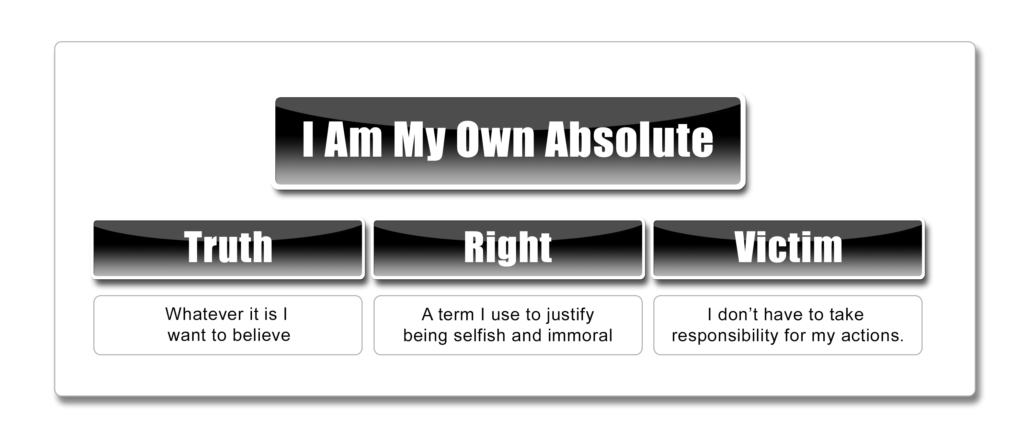
Yet, that’s the approach some take with God. It’s not healthy let alone appropriate. You don’t talk to your Father that way. There’s a degree of audacity represented by a human being looking at God and saying, “Oh yeah? Prove it!” Yet, from Dawkins’ perspective, there’s nothing audacious about it because he views humanity as being an absolute in and of themselves.

The cross is foolishness to unbelievers (1 Cor 1:18) and it makes sense. If you’re not convinced that you need forgiveness, then what’s the purpose of a Savior? If you answer to yourself and yourself alone, then the notion of a God is at once ridiculous and intrusive. That was the mindset being addressed by Jesus when He responded to the Pharisees who were demanding a sign by saying, “wicked and adulterous generation asks for a sign! But none will be given it except the sign of the prophet Jonah.” (Matt 16:4) It’s similar to the way God responded to Job who, seemingly had every reason to be indignant with God, by saying, “Who is this that darkens my counsel with words without knowledge? Brace yourself like a man; I will question you, and you shall answer me.” (Job 38:3)

Do you smell what’s on the stove?

Brace Yourself Like a Man

Consider the created order (Rom 1:20), contemplate the miracle of grace (Rom 5:8). Recognize who and what you are before your King and appreciate the gift that He’s given to you, as far as your ability to ask for things in prayer, (Matt 7:7-12; Heb 4:16).

Park there for a minute.

It’s a gift!

You need to be careful to process it as something that has been given to you by God and not a license to make demands of God. You don’t talk to your Father that way and should you feel inclined to be a little indignant, remember Who set the planets in motion and initiated the pumping action of your heart.

Most of all, be mindful of the fact that the One you’re getting ready to criticize is the One Who secured a “non-guilty” verdict for you by dying on the cross.

Brace yourself like a man…

A Privilege to be Revered

Perhaps the most succinct refutation of Dawkins’ outlook on prayer in that it is not a practice to be evaluated by man, rather it is a privilege to be revered by man. And to abuse it as a means to test God is to make the focus of your prayer your own arrogance.

In that moment you’re not conversing with the Almighty as much as you’re just talking to hear yourself speak (Matt 6:5-15). Perhaps that’s why He taught us to begin our conversations with Him by saying: Our Father in heaven, hallowed be your name, YOUR kingdom come, YOUR will be done, on earth as it is in heaven (Matt 6:9-10 [emphasis added]).

Your Kingdom, Your will, because…

You’re God.

Click here to read “The God Delusion vs The God Conclusion | Part One: FIT.”

1. “The God Delusion”, Richard Dawkins, Bantam Press, Great Britain, 2006, p86-87

The God Delusion vs The God Conclusion | Part One: FIT

Facts

There are three kinds of “data.” “Facts” “Facts” are accurate statements. Think of them as headlines. For example:

  • Headline #1: Jesus Rises From the Grave
  • Headline #2: Pharisees Accuse Christ Followers of Stealing Corpse of Christ

Both of these statements are accurate. While we know Christ did, in fact, rise, the Pharisees also paid the guards that were guarding the tomb a large sum of money to back up the story that the disciples had stolen the body (Matt 28:11-15).

What’s significant is that for someone who’s just glossing over the headlines, the verbiage, albeit very brief, can still shape conclusions for those who don’t take the time to consider the full account.

That leads us to the second category:

Information

“Information” is the “facts” in the context of a limited perspective. A journalist could build a compelling yet misleading article by strategically citing the chief priests, the guards who had been bribed and any one of a number of like minded people.

Can you see the article in your mind’s eye (click here to read “Experts Doubt the Resurrection of Christ” to see an example)?

By steering clear of any testimony that differs from the accounts of the judiciously selected individuals compiled by the hypothetical journalist, you’ve got an article that’s legitimately accurate (facts) and informative (limited perspective). But because the perspective of the article is limited, while there’s nothing directly stated, there is nevertheless an implication that says Christ is dead and unless the reader is inspired to seek out a more comprehensive perspective, assuming he’s even aware that one is available, he’s waking around sporting a very cynical outlook on the first Easter morning.

Information.

Limited perspective.

Finally, the last category of “data” is…

Truth

Truth is an accurate statement that’s been elaborated on in the context of a full perspective. This is the well you want to be drawing your conclusions from. Here is where the right questions are being asked and full disclosure is the norm.

In the absence of “truth,” you risk formulating convictions that are fundamentally flawed. This is why you want to ensure that you’re aggressively and intentionally seeking out the “truth,” and not just the “facts.” You don’t even want to be content with “additional information.” The truth, the whole truth and nothing but the truth.

The Treaty of Tripoli

If you’re familiar with the words of the “Marines Hymn,” then you’re familiar with the phrase, “…the shores of Tripoli.” That phrase refers to the “War with the Barbary Pirates” where Lieutenant Presley O’Bannon lead an exceptionally daring assault as part of the Battle of Dema. Prior to that war President John Adams issued a statement in an effort to assure the radical Muslims that comprised the Barbary Pirates that our country should not be perceived by them as a religious target in that we were not a Christian theocracy. He said:

Art. 11. As the Government of the United States of America is not, in any sense, founded on the Christian religion; as it has in itself no character of enmity against the laws, religion, or tranquility, of Mussulmen (Muslims); and as the said States never entered into any war or act of hostility against any Mahometan (Mohammedan) nation, it is declared by the parties that no pretext arising from religious opinions shall ever produce an interruption of the harmony existing between the two countries (Treaty of Tripoli).

Most of those who try to take Adams words to mean that he was declaring that the United States was not based on Christian principles are required to leave out some context that is both obvious and crucial. But that is nevertheless the methodology that is often used by the person who has something to hide more so than they have something to say.

Thomas Essel, despite being among those who seemingly do not see God as central to our nation’s founding, wrote a great piece in 2016 entitled, “Secularists, Please Stop Quoting the Treaty of Tripoli” that elaborates on how citing that statement is irresponsible both academically and practically.

Consider this quote from John Adams:

“This would be the best of all worlds if there were no religion in it!”

On the surface, you have, what appears to be, a very valid piece of evidence that says our nation’s second President and a founding father was an atheist. Or, at least, a very cynical individual when it came to religion.

John Adams did say it. It’s part of a letter he wrote to Thomas Jefferson. When you consider the statement in its proper context, you arrive at a much different conclusion:

“Twenty times in the course of my late readings, I have been on the point of breaking out, ‘This would be the best of all worlds if there were no religion in it!’ But in this exclamation I should have been as fanatical as [Adams’ former pastor Lemuel] Bryant or [his former teacher Joseph] Cleverly. Without religion, this world would be something not fit to be mentioned in polite company — I mean hell.”

In other words, Adams is exasperated when he ponders the way in which organized religion has resulted in so much tension. He says, tongue in cheek, that the world would be better without any “religion” in it. But then he’s very quick to say that the world would be, literally, hell on earth. Hardly the musings of a man who views religion with a contemptuous sneer.

Yet, this is the way in which atheists and progressives sometimes frame their “facts” and “information” when it comes to the religious disposition of America’s founding fathers (see also “The Treaty of Tripoli” on sidebar).

Richard Dawkins categorizes John Adams as a cynical deist, to the point of him being used by Dawkins as evidence of a collective disdain for religion shared by virtually all the founding fathers. He quotes Adams as saying:

As I understand the Christian religion, it was, and is, a revelation. But how has it happened that millions of fables, tales, legends, have been blended with both Jewish and Christian revelation that have made them the most bloody religion that ever existed?”1

But he fails to reference another statement made by Adams:

The Christian religion is, above all the Religions that ever prevailed or existed in ancient or modern Times, the Religion of Wisdom, Virtue, Equity, and humanity, let the Blackguard [Thomas] Paine say what he will; it is Resignation to God, it is Goodness itself to Man.2

Facts.

Information.

Truth. You want to know the truth, you want to be aware of the facts, but more than anything else, you want to understand the truth.

A Toddler and a 285 Pound Benchpress

As a quick aside, don’t allow yourself to think that being obedient to God’s commands is a laborious drudgery.

It’s not.
When you’ve got the Holy Spirit living in and through you, you’re not flying solo when you’re confronted with a temptation to make compromises (1 Cor 10:13). When the lights aren’t on (aka, the Holy Spirit is not living in you), you’re approaching temptation the same way a toddler approaches a 285 pound bench press. It’s not going to end well.
But when it’s God’s Strength and His Truth that is allowed to animate your actions and your outlook, you now have more than you need to successfully negotiate the challenge that lies before you.

Bear in mind, it’s a choice. You can run the red light and plow head on into traffic if you want and God grants you the freedom to make those decisions (Josh 24:2, 15; Rom 8:12-13). As someone who doesn’t have a relationship with Christ, you don’t have the Spirit of God living in you (Rom 8:9), you’re on your own and you’re that overwhelmed toddler.
But when it’s God’s Spirit being deployed in the context of those situations, it’s one victory after another.

The Book of Proverbs

Scripture admonishes us to do as much. Proverbs 4:7 says:

Wisdom is supreme; therefore get wisdom. Though it cost all you have, get understanding. (Prove 4:7)

And wisdom begins with a reverence for God. That’s the top button.

The fear of the Lord is the beginning of wisdom, and knowledge of the Holy One is understanding. (Prov 9:10)

Understand that wisdom, from a biblical standpoint, is more than just knowledge. It’s the “ability to judge correctly and to follow the best course of action, based on knowledge and understanding.”3

While this “ability” is based in part on one’s discipline in the context of academic pursuits, it derives it’s true accuracy and application from an intentional pursuit of God’s Power and Perspective. In short, it’s a Divine Perspective properly applied (1 Cor 2:16; Col 1:29; Jas 1:5-8.

Here, then, is where you see the real distinction between having access to the directions and actually following the directions –  the difference between Facts, Information and Truth.  Anytime you buy something that requires some assembly, you can gloss over the instructions, believing that your intuition can more than make up for a careful study of the manufacturer’s counsel. More often than not, however, those instructions prove invaluable in being able to put your new resource together correctly. And however prudent it may be to follow the instructions in the assembly of your nephew’s new swing set, it’s absolutely crucial that you follow God’s Instructions when it comes to the whole of life (Jn 14:21; Rom 8:11).

And when you’re listening to people like Richard Dawkins, or people who think like him, use the same technique. Recognize the difference between Facts, Information and Truth.

Don’t let a carefully crafted platform based on an intentionally watered down perspective replace the full perspective and the truly accurate convictions that flow from that approach.

Click here to read “The God Delusion vs The God Conclusion | Part Two: What About Prayer?”

1. “The God Delusion”, Richard Dawkins, Bantam Press, Great Britain, 2006, p65
2. John Adams, The Diary and Autobiography of John Adams, ed. L.H. Butterfield (Cambridge, MA: The Belknap Press of Harvard University Press, 1962), 3:233-34
3. Nelson’s Illustrated Bible Dictionary, Thomas Nelson Publishers, 1986, Nashville, TN

A Position of Strength

Overcoming Adversity

There was a time I worked for a guy who, although he was good to me, was the kind of character where if you were interested in securing a favorable deal for yourself, you needed to be able to approach him from a position of strength.

At least, that’s what I called it: A “position of strength.” 

By that, I mean that you had to be able to substantiate your terms with something that compelled him to agree to what you’re saying. For example, I want to see my hourly wage increase. If I was going to emerge from his office as a successful negotiator, I needed to be able say something like, “I’ve got another job offer,” or something comparable.

Short of that, he had you in a place where you obligated to accept his deal, which wasn’t always inspiring.

The bottom line, though, is that you could get what you were hoping for as long as you had that trump card – as long as you were approaching him from a position of strength.

Wouldn’t That Be Sweet?

Negotiating life is similar. Of course, in life you’re not interacting with an individual per se, but if you could, for a moment, envision your need to overcome some kind of adversity as something you could manipulate via an exchange between yourself and this figure who can hypothetically alter your circumstances, you can see how approaching this meeting from a “position of strength” would constitute a huge tactical advantage.

So, just as they’re getting ready to refuse your terms, you could lay that “something” on the table and suddenly your platform is dominant and you emerge with an ideal scenario. Wouldn’t that be sweet?

Obviously, we don’t have access to that kind of life-altering dynamic, but we do have something that often gets overlooked and it does equate to a legitimate “position of strength.” The things that most exasperates us are those things that we can’t control.

It’s part of life.

No matter how you prepare, no matter how you plan, life includes a number of elements that simply cannot be controlled or anticipated. It’s those unexpected setbacks that take the wind out of our sails and that “position of strength” you would theoretically occupy is processed as an impractical pipedream than it is anything else.

But look at your scenario in the light of God’s Truth.

Asserting Some Truth Into Your Situation

It says in the Psalms that all our days were ordained before one of them came to be (Psalm 139:16). There is a plan – there is a purpose that infuses every triumph and every setback with significance and meaning (Eph 2:10; Phil 2:13).

Nothing is random. 

At one point Paul is attempting to get over into Bithynia. He can’t. Who knows what that situation looked like, but according to Scripture, Paul documents it as Divine direction and not a physical obstacle (Acts 16:7).

Do you see that?

How many times have things fallen short of what you were hoping for and your reaction was aimed at the tangible entities that comprised your dilemma? Perhaps it was a person. Maybe your car broke down. Perhaps you were working towards a particular goal and something went south leaving you in a puddle of disappointment and confusion. It’s then when you need to be intentional about asserting some Truth into your situation. Otherwise, you’re prone to linger in that zone characterized by discouragement and even bitterness. 

Take some of the Scriptures that pertain to purpose and lay them down side by side….

• All the days ordained for me were written in your book before one of them came to be. (Psalm 139:16)

• A man’s steps are ordered by the LORD; how then can man understand his way? (Prov 20:24)

• And we know that in all things God works for the good of those who love him, who have been called according to his purpose. (Rom 8:28)

• For we are God’s handiwork, created in Christ Jesus to do good works, which God prepared in advance for us to do. (Eph 2:10)

• for it is God who works in you to will and to act in order to fulfill his good purpose. (Phil 2:13)

You see where this is going?

Nothing Random

Remember Simeon? Check out Luke 2:25-32. He’s an older gentleman who has his heart set on seeing the Messiah before he takes his last breath. In verse 27, it says “Moved by the Spirit, he went into the temple courts…” 

I’m not sure what that looked like, as far as being “moved by the Spirit,” but I like to think that it was a series of very practical events that had him thinking he needed to be at the temple. And because it was God pulling the strings, he happened to be there when an obscure couple comes walking out holding the One Who he had been praying to see.

There’s nothing random about our lives. From a human standpoint, we cling to the idea that we are the master or our own fate. Hence, we get the credit when things go well and we bear the blame when things do not.

Certainly we are responsible for our actions, as far as being obedient go God’s commands (Dt 11:1; Jn 14:21). But we are not victims of circumstance, nor are we the reason for our own success. All those things that we can’t control – both the good and the bad – it all culminates in a beautiful exclamation point: God’s in charge!

You’re in a Position of Strength

So, as you’re going about your day, be mindful of the fact that you are in a position of strength. That imaginary person you’re negotiating with in an effort to secure a positive outcome – you have that trump card in that while you don’t know what a day may bring forth, you know Who does. And the Lord makes firm the steps of those who delight in him. (Psalm 37:23).

That’s a position of strength!

Financial Planning When You’re Not, You Don’t, You Can’t, and You Won’t

A Healthy Desire

On one hand, you’ve got greed and a “love of money.” (1 Tim 6:10) On the other hand, you have a healthy desire to succeed (Josh 1:8) and prosper (1 Chron 4:10).

What distinguishes those two extremes is not always readily apparent. However noble a particular venture or desire may be, apart from being intentional about your relationship with Christ, “compromise” poses as “reasonable” and you’re on your way to something unhealthy (1 Pet 5:8).

But assuming you’re on top of your spiritual game, you’re quest for more in the way of material resources is not so much about satisfying a selfish agenda as much as it’s a desire to bless others. Perhaps you want to alleviate someone else’s angst over a financial burden, maybe you just want to surprise someone with an unexpected blessing. Whatever the reason, it’s an honorable one, but regardless of how hard you work, how hard you pray, your hand keeps getting slapped by different forms of discouragement. Whatever “financial planning” you would like to do, you can’t, because you’re not, you won’t,  and you don’t.

You’re Not, You Don’t, You Can’t and You Won’t

You’re not, you don’t, you can’t and you won’t… It’s not a negative disposition, it’s not a lack of confidence. It’s a fact.

  • I’m not qualified
  • I don’t have the platform I need
  • I can’t make someone give me more money
  • I won’t ever get beyond my current situation

And being a person of faith, you’re more than willing to believe that God can completely transform your situation. But that can make it even more exasperating in that He’s not responding and your situation, rather than being remedied, continues to drag on and on.

Brace Yourself Like a Man

It’s interesting  that when God finally responded to Job’s plea for some kind of explanation as far as why he was being allowed to suffer the way he was, God didn’t start by apologizing nor did He let Job in on the conversation with Satan that had set the stage for the disasters that Job would have to contend with. Instead, God’s first comment to Job was:

“Who is this that darkens my counsel with words without knowledge? Brace yourself like a man; I will question you, and you shall answer me.” (Job 38:2-4)

In the verses that follow God’s introductory statement in Job 38:2-4, He enumerates various examples of His Absolute Authority in the context of creation. His Attributes are so obvious and so overwhelming that Job, who is still in the throws of physical pain and emotional despair, does a complete one eighty. However “deserving” he felt a moment ago, as far as some kind of rational explanation for everything he’s had to endure, he enthusiastically embraces the opportunity to simply revere his King.

He goes as far as to say “I repent in dust and ashes.” (Job 42:6) He says that because he’s awestruck by the Grandeur or God. The instant God appears, His Perfection effortlessly overwhelms whatever indictments Job had prepared and the only thing that registers as present and worthy of consideration is God Himself.

A Position of Strength

It’s imperative to realize that Job’s response is not fearful, nor is he begrudgingly  admitting a subordinate position relative to God’s Omnipotence. Confronted with a clear view of God’s Reality, He figuratively runs to God’s Throne and drinks in every drop of Substance and Glory that emanates from it. And while it may not change Job’s situation, it completely changes Job. Rather then feeling like a hopeless victim of unfortunate circumstances, he’s now on his feet and facing his situation from a position of strength.

By reminding Job of Who it is that commands every nuance of creation, Job is able to perceive the true nature of his status. It is neither random nor is it intimidating when viewed from the perspective that recognizes God’s unchanging commitment to his welfare and the subsequent sense of Purpose that now characterizes every aspect of his dilemma.

Psalm 16

David’s being pursued Saul who’s determined to kill him. Things were looking especially bleak in that Saul was closing in and David’s options were nonexistent. That is the setting for Psalm 16. At one point, he says:

The boundary lines have fallen for me in pleasant places; surely I have a delightful inheritance. (Psalm 16:6)

 Strange verbiage, considering it’s coming from someone being hunted and on the threshold of complete destruction. David would be delivered and he would go on to great things. But the point here is that David penned this Psalm at a point where he could say with confidence: “I’m not, I don’t, I can’t and I won’t.”

But David was also aware of the fact that his plight was not based solely on what he could see or what he could control. He knew that, not only God CAN deliver, but He IS in the process of doing that presently.

That’s the Truth that needs to be recognized.

God hears and God answers. There’s no disconnect and there’s no delay. His response is exactly what it needs to be in order for His Purposes to be accomplished.

And while His Purposes don’t always include the immediate relief you’re hoping for, the fact of the matter is, you’re being heard and your situation is being addressed. You can, you are, you will and you do.

You can, you are, you will and you do.

Job’s pain did not go away in Job 38 and David was still several chapters removed from becoming king of Israel as God had promised. But in both instances, they experienced the same strength that you and I have access to right now. The perspective that gives meaning and purpose to the pain, the mindset that’s founded on God’s Awareness and Power and the disposition that’s authentically optimistic because of Who it is that’s Ultimately in charge.

It’s the basis for the contentment that Paul refers to in Philippians 4:13 and it’s the Truth that gives us what we need to not only endure, but to excel and to grow into the enhanced character that God has designed us to become.

You’re not, you don’t, you can’t and you won’t…?

No.

You are, you can, you will and you do.

Why You Want to be Spiritually Ripped

What’s the difference between the unsaved version of you and the saved version of you?

Beyond the fact that you’re going to Heaven and you have the option of dropping to your knees and and whispering a prayer in crisis situations, what is it that constitutes a practical advantage over that version of you that doesn’t know Christ? Imagine this:

I) On Your Stomach

Lay down on your stomach and close your eyes. This is the perspective that you have of yourself and the world around you, as far as the unsaved version of you (Ps 19:8; 36:2; Is 6:10; Matt 13:15; 2 Cor 3:14; 4:4; Eph 4:18; Jas 4:13-14).

You’re virtually “blind” to what is going on around you in terms of the spiritual realities that comprise the human experience. And before you dismiss the term, “spiritual” as some kind of ethereal mysticism that has no place in the context of a practical perspective, bear in mind that you can’t put anger in your pocket nor can you put happiness on like a ball cap. That which irritates us or makes us feel good may be a solid object of some kind, but the emotions and the psychological machinery that’s initiated by those objects aren’t things you can quantify or package.

Our whole world is one big box of “spiritual” commodities that we’re constantly processing according to the way our personalities are wired. It’s what inspires our values, it’s our mood, it’s our outlook, it’s all of what make us unique as individuals – it’s that host of intangibles that we encounter and contend with everyday (Eph 6:12).

When you’re spiritually dead, everything that drives the way you process yourself and the world around you is based on what you “feel,” rather than what you can truly see and know (see 2 Cor 4:4; Phil 3:19). Rather than being upright with your eyes open – and even standing on top of something so you have a good view of what’s going on -you’re in the dirt and incapable of processing the world as it truly is.

We’re oblivious to what’s under the hood. We can hear the car running, maybe, but we don’t see life as anything beyond what we want and what we feel. The bigger and the more important picture is “hidden” and we tend to wear ourselves out attempting to understand and control that which cannot be managed or anticipated (Jas 4:14).

II) Do You Smell That?

On the other hand, the born-again version of you has a clue. At least, we have access to a perspective that takes into account the Reality of that which is unseen (Heb 11:1). Purpose (Eph 2:10), Peace (Gal 5:22-23) and Power (Acts 1:8) – we have the mind of Christ (1 Cor 2:16) and our eyes have been open to what constitutes the difference between light and darkness (Jn 9:39; Acts 26:18).

For the sake of our illustration, we’re on our knees with our eyes now fully open. Do you smell that? That is the aroma of Divine Perfection and it lives within us (1 Cor 1:30; Col 1:27).

That’s motivating!

But what does that mean?

There’s no doubt, that’s True. But how does that translate to something practically advantageous? And let’s go ahead and acknowledge the obvious perk of being able to bring our troubles before our King in prayer. That piece of it, along with the guarantee of Heaven, is a given (Jn 3:16; Phil 4:6).

But what about Monday morning?

How does being a follower of Christ resonate in the context of homework, bills, bad debt, dreams and car tags? What’s the difference in the way you negotiate the everyday, as far as the approach the saved version of you is going to take as opposed to the spiritually clueless version of you and the way that person is going to engage the day?

Are you ready?

Buckle up…

wait for it…

Everything.

Everything is different.

Take a look:

III) Every Moment –  It’s Never About “What’s Happening…”

It’s never about what’s “happening,” it’s what God is doing. You are not a victim of circumstance – ever. Your triumphs, your defeats as well as all of the decision you make – both the good and the bad – are laid out before your King Who’s not limited by the constraints of time or space. In Psalm 139:16 it says, “…all the days ordained for me were written in your book before one of them came to be.” Couple that with Jeremiah 29:11:

 For I know the plans I have for you,” declares the Lord, “plans to prosper you and not to harm you, plans to give you hope and a future. (Jer 29:11)

…and Ephesians 2:10:

For we are God’s handiwork, created in Christ Jesus to do good works, which God prepared in advance for us to do. (Eph 2:10)

…and you have a life that reeks of Purpose, Significance and Substance. However this particular moment appears from a human standpoint, there is a stamp of Divine Purpose upon it and when you get your head around that, something shifts in the way you process your activity and your surroundings. It’s motivating. Even if you’re just cutting the grass, that’s a point in time that was on God’s radar long before you decided the yard needed mowing. And while knocking out some chores doesn’t reverberate as profoundly as the career you choose or the person you marry, it is nevertheless an investment of time and effort and that is therefore a part of your life – the existence that God purposefully initiated before you were even born.

And the thing is, God didn’t just haphazardly throw you together and give you a role as an “extra.” The Plan that’s in place for your life is uniquely tailored for you and the strengths He gave you. The greatest amount of fulfillment you could ever hope to experience is in the context of living out the Purpose that He created you for.

Park here for a minute because this really is a game-changer.

Years ago, I was working a job that lacked substantially in prestige. I had just gotten out of the USMC as a Staff Sergeant and I had moved to Nashville on the tail end of a very successful tour that had me thinking I was on the cusp of a successful career as a full time musician. Fast forward several months later and I’m working for a buddy that owned and operated a fast food franchise at the local food court. What started out as “temporary” thing had bloomed into a full time dynamic and I was smelling like a chicken nugget at the end of everyday.

Not happy.

But as I was making my way into the mall one particular morning, I was encouraging myself with the fact that I had yet to be asked to clean the commode. That was one task that I had not been assigned.

That morning, as if by Divine Appointment, my buddy, the manger, greeted me at the door with a green scouring pad and a can of Comet. “I’ve got a job for you,” he said.

Moments later, I’m on my hands and knees scrubbing the ceramic throne and having a very frank exchange of ideas with my Heavenly Father. I was reflecting on the how I had exchanged some stripes on my sleeve for a nametag on my shirt. Where I had been interacting with a who’s who of Contemporary Christian Music artists and hearing the thunderous applause of arena sized crowds every weekend, I was now listening to disgruntled customers complaining about the availability of certain menu items.

And now, here I am, scrubbing the contaminated floor surrounding the toilet in the employee restroom.

“You seein’ this?” I asked. I’m praying as I’m scrubbin’… I’m talking to God and I heard Him in my mind ask me a question:

“What if I had been the One Who asked you to clean the commode rather than Michael? Would that have made a difference?”

“Well, sure!” I said.

Then God replied, “Well, guess what…?”

At that point, I remembered Psalm 139:16 and other verses that talk about God’s Sovereignty.

Fact is, because “…all the days ordained for me were written in your book before one of them came to be,” He had tasked me with that job and while the clean up operation didn’t suddenly become anymore prestigious, my perspective changed dramatically. It’s never simply a matter of “what’s happening,” it’s what God is doing.

There’s a Plan in place that allows you to process even the most inconvenient and annoying occurrence as something that has Purpose. When you’re confronted with something that takes you by surprise, you can maintain an even disposition by claiming every Resource that God’s already unpacked and placed on the table because He knew this moment would come long before it happened.

And when the pressure’s on and it’s up to you to turn in a truly noteworthy performance, there’s something about how God’s had this on His screen for quite some time that makes the inclination to reach for the Strength along with the Calm that He offers that much stronger and intuitive.

Even when things are going great, by reflecting on how it is God that orchestrated your situation, the tendency to be thankful is that much more automatic (Rom 12:3; 2 Thess 5:16-18).

The Bible is full of personalities that God elevated in the context of wealth and power who then allowed themselves to become corrupted by crediting themselves with the success they enjoyed (Dt 8:17-18). Authentic gratitude is more than just “thanking God” as a courtesy, as much as it’s a comprehensive theme of reverence and humility that characterizes your perspective on yourself and your accomplishments.

Being intentional about constantly seeing yourself within the framework of God’s overarching Purpose is not automatic, despite it being the most logical and the most healthy approach one could take. But it’s far easier to do so when you remain cognizant of how this moment and every moment of your life was known and planned by your Heavenly Father long before it ever showed up on your calendar.

IV) Momentum – the Guarantee of Forward Movement

While we can rest assured that every moment of our lives is chock full of Divine Purpose, there’s also the guarantee of forward movement.

In Chemistry, there’s an anomaly called the “Latent Heat of Fusion.” You can see it illustrated in the graph to the right. What you’re looking at is the change in temperature as an ice cube is being melted. You’ll notice in the first blue area, there’s no change in temperature despite the fact that you’re increasing the amount of heat you’re applying to said ice cube. You see the same thing happen when it’s going from a liquid phase to a gaseous state. Again, there’s a zone where, although you’re increasing the amount of heat, yet there’s no measurable change in the temperature.

The two segments of the graph that are highlighted in blue represent what’s called the “Latent Heat of Fusion.” On the molecular level, what’s happening is that rather than the molecules moving about more “furiously”- which is registered in terms of temperature – the energy is being absorbed by the process by which the molecules that are grouped together according to whatever state they’re in are now coming apart.

During that timeframe, there’s no change in temperature.

Life can be like that sometimes. You’re working towards a goal, you’re waiting for additional information so you can make a sound decision – it’s during these seasons that you can feel as though you’re stalled.

Nothing’s happening.

But we can rest assured that God’s not dormant nor is our situation being ignored.

One of the best examples of that is the story of Joseph. Bolstered by dreams and his father’s favoritism, Joseph is convinced he’s on the threshold of great things. Apparently the gift of subtlety was not among Josephs strengths, however, nor was humility given the way he saw fit to inform his older brothers that one day that would bow down before him.

You know the story of how they sold him into slavery and how he eventually ended up in prison. By this time, Joseph doesn’t seem as forthcoming when it comes to promoting himself. As a matter of fact, when he’s given the chance to distinguish himself before Pharaoh, he’s quick to say that it’s not by his own ability that he’s able to discern the meaning of dreams, rather it’s God.

That’s quite a move for one who’s spent the majority of his young adult life either as a slave or as a captive.

Think about it.

Why would you not attempt to take as much credit as you could for being able to do something extraordinary when you’re standing before the one individual who has the power to set you free? How often do you think Joseph asked for God to intervene and end his enslavement or to commute his prison sentence? He was sold into slavery when he was seventeen (Gen 37:2). He entered Pharaoh’s service when he was 30 (Gen 41:46). 13 years spent waiting for…

something.

A Good Plan God uses the word “agathos,” often in the New Testament which means “good.” But it’s more than “good,” as in the way some might process that to mean “acceptable,” but not especially noteworthy. It means, “moral and spiritual excellence.” The Greeks used it to describe a skilled and noble warrior. It’s more than being merely “nice,” it’s more than just a silver medal as opposed to first place finish. It is a standard and a goal that goes beyond victories, accomplishments and acquisitions. It is the Perfect Storm of character and quality actions. Not just “good behavior,” but a standard of excellence that originates from one’s core and spills over into everything that they engage. That’s “good!”

That’s a lot of “latent heat.” But it was during that time that God was transforming the character of Joseph into what would need to be in place in order to administrate the largest political power in the world. God wasn’t slow, He was intentional.

There may be something you’ve been praying about for a while. Perhaps you’ve reached that point where you’re poised on the threshold of some serious disillusion thinking, “This prayer thing doesn’t work!”

Don’t throw in the towel.

Remember there’s a Divine Purpose attached to every moment including those moments when you don’t seem to be moving forward. Even then, there’s supernatural activity being conducted Look… John 5:17 says:

17 In his defense Jesus said to them, “My Father is always at his work to this very day, and I too am working.” (Jn 5:17)

God is always working. He’s never idle so to be suspicious that your appeal has been ignored or lost is a pointless perspective. Things are moving forward and they’re moving forward at a pace that is nothing short of perfect in that it’s consistent with the tempo that matches the flawless Plan and Purpose of the One Who’s got your best interests at heart.

V) The Mandate to be Excellent

 Do not conform to the pattern of this world, but be transformed by the renewing of your mind. Then you will be able to test and approve what God’s will is—his good, pleasing and perfect will. (Rom 12:2)

“Good” is more than just “acceptable.” It’s the Greek word, “agathos.” The Greeks used it to describe a noble warrior. Scripture uses it to describe moral and spiritual excellence.

Think about this for a minute: Imagine an employee that’s good at what they do (Col 3:17). They show up to work on time (Matt 5:16), and when you’re needing to get something done, this person is one of the first people that comes to mind because they’re that dependable (Prov 25:13). They function well as a team player and when the situation calls for someone to step up to the plate and lead, they have a knack for bringing out the best in others (Matt 7:12; Phil 2:3-4) and they’re able to oversee an effort that achieves the kind of results that exceeds expectations (Ecc 9:10).

What do you with that kind of employee?

You promote them!

You put them in a position where they can effect the greatest amount of good (Prov 22:29). Thing is, even if they don’t get the kind of recognition they deserve, the thing that makes this individual extraordinary is that they don’t go out of their way to be noticed by others. The applause they get from the crowd is not what drives them. Rather, they’re focused on personifying and pursuing a standard of excellence as a means to honor their King.

There’s a great scene in the movie, “Cinderella Man,” where Jimmy Bradock, played by Russell Crowe, is being interviewed by a mob of reporters who want to better understand how he was able to be in contention for the heavyweight championship of the world after having had to contend with several years of poverty and unemployment due to an injury and the Great Depression. His response included a comment where he said that he now knew what he was fighting for.

It wasn’t the money, it’s wasn’t the title, it was “milk.”

To him, the “prize” wasn’t about promoting himself, as much as it was being able to provide for his family – something he hadn’t been able to do for a while. His drive and his resolve were now fueled by something greater than himself. In a similar way, we are commanded to be “lights” (Matt 5:16) and “standouts” (Prov 22:29; Titus 2:7). Colossians 3:24 says it best:

Whatever you do, work heartily, as for the Lord and not for men, knowing that from the Lord you will receive the inheritance as your reward. You are serving the Lord Christ. (Col 3:24)

VI) On Top of my Spiritual Disciplines

Go back to that earlier illustration of being on your stomach with your eyes closed. That’s the unsaved version of you. Spiritually blind and limited in the way you see yourself and the world around you, as far as the spiritual realities that define the human experience (2 Cor 4:4; Eph 6:12).

Now imagine a person on their knees with their eyes open. This is the saved version of you. You’re aware of your need for Christ and you’ve handed Him the keys to your life (Acts 26:18). Now, picture a person standing on their feet. This person also has their eyes open, but because of their being on their feet, they have a better view of the world around them.

The qualifying factor in what defines the difference between themselves and the person on their knees is that they’re not only aware of God, they’re familiar with God’s Word (2 Tim 2:15).

Finally, the fourth and final person is standing on a chair and significantly higher than the version of themselves that’s simply on their feet. They’re not blind, their eyes are open and they’re aware of their need for God’s grace. But while they know God’s Word, more importantly they know God.

It’s not just an informed faith, it’s a tenured relationship. That’s where you want to be!

Being on top of my spiritual disciplines increases my capacity to see myself for who I truly am and to see the world as it truly is. And it’s more than just an intellection / emotional disposition. Ultimately, it’s a Presence that commands the majority of who and what I am. It’s not just a filter, it’s a default setting and the benefits that go along with that kind of spiritual maturity cannot be overstated in terms of an active strength, an influential character, a practical wisdom and an appealing depth. It is the greatest level of success you could ever aspire to in that it resonates on all levels.

I want to be spiritually ripped because that kind of fitness prevents me from seeing myself as a victim of circumstance, rather, I’m an agent of change. I’m not defined by things that are destined to die, quit or fail, I target that which endures and that is what fires me up. I aim to achieve a level of excellence in all that I do because I’m commanded to do just that.

Regardless of the scoreboard or who’s not returning my calls, my focus is on the King of kings, my God, my Redeemer. I am being constantly inspired in the most profound yet practical way to reach, to accomplish and triumph over a casual work ethic, a lazy sense of morality and a self absorbed agenda.

The Moment, the Momentum and the Mandate.

Constantly reaching for more of Christ that I might become all that He created me to be.

Bring it!