
Prove It! | Part II: The Resurrection
I) Intro
Simon bar Kokhba (Hebrew: שִׁמְעוֹן בַּר כּוֹכְבָא Šīm‘ōn bar Kōḵḇāʾ) or Simon bar Koseba (שִׁמְעוֹן בַּר כֹסֵבָא Šīm‘ōn bar Ḵōsēḇaʾ), commonly referred to simply as Bar Kokhba,[a] was a Jewish military leader in Judea. He lent his name to the Bar Kokhba revolt, which he initiated against the Roman Empire in 132 CE. Though they were ultimately unsuccessful, Bar Kokhba and his rebels did manage to establish and maintain a Jewish state for about three years after beginning the rebellion. Bar Kokhba served as the state’s leader, crowning himself as nasi (lit. ’prince’).[3] Some of the rabbinic scholars in his time believed him to be the long-expected Messiah. (Wikipedia)
Why does no one know about Simon bar Kokhba (pronounced “COKE-bah”)?
Well, because he died…
…and he didn’t come back to life.
The Resurrection of Christ is the very archway of Christianity.
Faith in the resurrection is the very keystone of the arch of Christian faith, and, when it is removed, all must inevitably crumble into ruin.”7
It’s more than just a “point of doctrine,” it’s the very thing that Christ referred to as what would ultimately validate Him as the Son of God.
A wicked and adulterous generation looks for a sign, but none will be given it except the sign of Jonah.” Jesus then left them and went away. (Matt 16:4)
II) How Do You Prove It?
But how do you prove it? There’s no film to refer to, all of the eyewitnesses are long gone so what’s left as far as a credible source of information?
And let’s take this a step further.
Let’s assume for the sake of this discussion that the Bible is not admissible as evidence, apart from those things that can be regarded as historical events. The approach that we take then is the same approach that is taken in academic circles when seeking to establish the historicity of a particular event or person. You assemble all those things that mention that person or event and then draw your conclusions based on the substance of their testimony.
First of all, the fact that Jesus died and that His body was never recovered is not a matter of conjecture or speculation. The resurrection of Christ is an event in history where in God acted in a definite time-space dimension.
Concerning this, Wilbur Smith says,
“The meaning of the resurrection is a theological matter, but the fact of the resurrection is a historical matter; the nature of the resurrection body of Jesus may be a mystery, but the fact that the body disappeared from the tomb is a matter to be decided upon by historical evidence.8
Jesus did exist and He did die and His body was never definitively accounted for after He was laid to rest. That much can be determined from the wealth of literature, art and even the presence of the Christian church as an institution in that it is based on the historical as well as the theological reality of Christ.
What happened to Christ’s body is the question.
Critics have either been looking for a corpse or insisted that one did exist for over two thousand years. But they make that assertion in the face of an overwhelming amount of evidence that cannot be overlooked without the risk of being less than objective in your analysis.
III) Secular Accounts
Josephus was a Jewish historian that lived from 37 to 100 A.D. He was employed by the Romans and he mentions this about Jesus in his “Antiquities of the Jews”:
At this time there was a wise man who was called Jesus. And his conduct was good, and [he] was known to be virtuous. And many people from among the Jews and the other nations became his disciples. Pilate condemned him to be crucified and to die. And those who had become his disciples did not abandon his discipleship. They reported that he had appeared to them three days after his crucifixion and that he was alive.9
 In many ways, this one quote is a slam dunk. Here’s a man who had access to people who were contemporaries of Christ. He was born only seven year after Jesus died and the fact that he mentions Jesus’ resurrection in what would be considered a secular text is equivalent to Christ’s Resurrection being reported in the news. Some have very vehemently attempted to discount this quote as something that Josephus could not have written. However, this same passage written by Josephus was quoted by Eusebius in the fourth century and is included in the most recent Loeb edition of his works.10 It is credible.
Another example of a secular text that references Jesus’ resurrection would be Tertullian’s Apology.
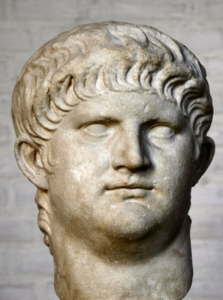
Tertullian (pronounced “ter-TUH-lee-uhn) lived from 160 – 220 AD. He was born in Carthage, Africa when it was a Roman province. By this point, Rome had become violently opposed to Christianity thanks to Nero who blamed the great fire that decimated most of Rome on the Christians in 64 AD. Subsequent Caesars followed suit and while much of the more heinous persecutions had faded by the time Tertullian was championing the Christian faith, local proconsuls still made it very hazardous to claim Christ as Savior.
It was in this cultural climate the Tertullian wrote his Apology. It was a letter written to the Roman government basically challenging them to consider the logic of their predisposition against Christianity. He crafts a very compelling defense and at one point when he is describing the Christian faith, he says:
But the Jews were so exasperated by His teaching, by which their rulers and chiefs were convicted of the truth, chiefly because so many turned aside to Him, that at last they brought Him before Pontius Pilate, at the time Roman governor of Syria, and, by the violence of their outcries against Him, extorted a sentence giving Him up to them to be crucified…At his own free-will, He with a word dismissed from Him His spirit, anticipating the executioner’s work.
In the same hour, too, the light of day was withdrawn, when the sun at the very time was in his meridian blaze. Those who were not aware that this had been predicted about Christ, no doubt thought it was an eclipse. You yourselves have the account of the world- portent still in your archives.
Then, when His body was taken down from the cross and placed in a sepulcher, the Jews in their eager watchfulness surrounded it with a large military guard, lest, as He had predicted His resurrection from the dead on the third day, His disciples might remove by stealth His body, and deceive even the incredulous. But, lo, on the third day there was a sudden shock of earthquake, and the stone which sealed the sepulcher was rolled away, and the guard fled off in terror; without a single disciple near, the grave was found empty of all but the clothes of the buried One.
But nevertheless, the leaders of the Jews, whom it nearly concerned both the spread abroad a lie, and keep back a people tributary and submissive to them from the faith, give it out that the body of Christ had been stolen by His followers. For the Lord, you see, did not go forth into the public gaze, lest the wicked by delivered from their error; that faith also, destined to a great reward, might hold its ground in difficulty. But He spent forty days with some of His disciples down in Galilee, a region of Judea, instructing them in the doctrines they were to teach others. Thereafter, having given them commission to preach the gospel through the word, He was encompassed with a cloud and taken up to heaven, – a fact more certain far than the assertions of your Proculi concerning Romulus.11
Again, this is not “biblical.” This isn’t a Bible study. Rather, this is a concerned citizen appealing to the Roman decision makers on the basis of logic. In his explanation of the Christian faith, He refers to Jesus’ death and resurrection as things that happened as opposed to things that are merely believed to have happened. The fact that he punctuates his account of Christ by referencing the eclipse that happened when Jesus was killed highlights how some of these things can be verified by referring to their own records. He is not laboring to convince his audience based on mere conjecture. Rather, he’s providing an account of what happened and how those events provided the basis of the doctrine that Christians subscribe to.
Another example that demonstrates the historical reality of Christ’s resurrection that comes from a secular source would be the account of Ignatius who lived from 50-115 A.D. He was the Bishop of Antioch, a native of Syria and a pupil of the apostle John. Enroute to a martyr’s death, he wrote his “Epistles,” and this is what he said of Christ:
He was crucified and died under Pontius Pilate. He really, nad not merely in appearance, was crucified, and died, in the sight of beings in heaven, and on earth, and under the earth. He also rose again in three days…”12
IV) Conclusion
There’s no amount of facts or data that can change the mind of someone who’s personally invested in a lie. To alter the way they think, you first have to change who they are and only God can do that (Jer 17:9; Jn 6:65).
Nevertheless, faith comes by “hearing” the Word of God and we are commanded to be His witnesses…
Consequently, faith comes from hearing the message, and the message is heard through the word about Christ. (Rom 10:7 [see also 1 Pet 3:15])
Hopefully you can see how a part of your response to a skeptic can include the fact that there is a substantial amount of secular documentation that references the Resurrection, not as a spiritual fiction, but as a historical fact. And this is in addition to the Scriptures which are beyond authentic, which we’ll discuss in another session.
He is risen!
He is risen indeed!
To view the citations, refer to the “I Dare You” series which you can access by clicking here.


