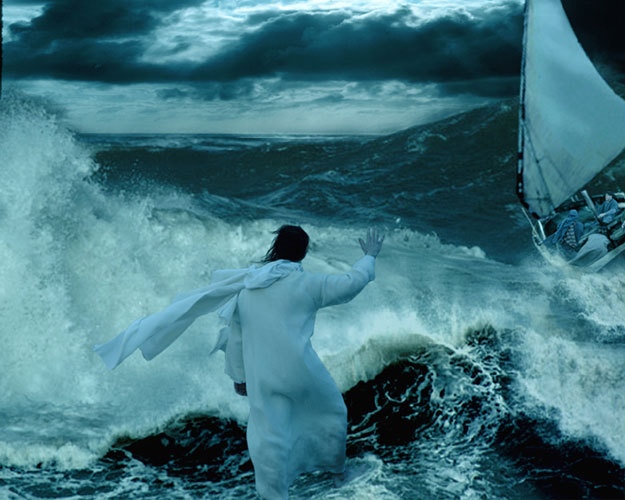
The God Delusion vs The God Conclusion | Part One: FIT

Facts

There are three kinds of “data.” “Facts” “Facts” are accurate statements. Think of them as headlines. For example:

  • Headline #1: Jesus Rises From the Grave
  • Headline #2: Pharisees Accuse Christ Followers of Stealing Corpse of Christ

Both of these statements are accurate. While we know Christ did, in fact, rise, the Pharisees also paid the guards that were guarding the tomb a large sum of money to back up the story that the disciples had stolen the body (Matt 28:11-15).

What’s significant is that for someone who’s just glossing over the headlines, the verbiage, albeit very brief, can still shape conclusions for those who don’t take the time to consider the full account.

That leads us to the second category:

Information

“Information” is the “facts” in the context of a limited perspective. A journalist could build a compelling yet misleading article by strategically citing the chief priests, the guards who had been bribed and any one of a number of like minded people.

Can you see the article in your mind’s eye (click here to read “Experts Doubt the Resurrection of Christ” to see an example)?

By steering clear of any testimony that differs from the accounts of the judiciously selected individuals compiled by the hypothetical journalist, you’ve got an article that’s legitimately accurate (facts) and informative (limited perspective). But because the perspective of the article is limited, while there’s nothing directly stated, there is nevertheless an implication that says Christ is dead and unless the reader is inspired to seek out a more comprehensive perspective, assuming he’s even aware that one is available, he’s waking around sporting a very cynical outlook on the first Easter morning.

Information.

Limited perspective.

Finally, the last category of “data” is…

Truth

Truth is an accurate statement that’s been elaborated on in the context of a full perspective. This is the well you want to be drawing your conclusions from. Here is where the right questions are being asked and full disclosure is the norm.

In the absence of “truth,” you risk formulating convictions that are fundamentally flawed. This is why you want to ensure that you’re aggressively and intentionally seeking out the “truth,” and not just the “facts.” You don’t even want to be content with “additional information.” The truth, the whole truth and nothing but the truth.

The Treaty of Tripoli

If you’re familiar with the words of the “Marines Hymn,” then you’re familiar with the phrase, “…the shores of Tripoli.” That phrase refers to the “War with the Barbary Pirates” where Lieutenant Presley O’Bannon lead an exceptionally daring assault as part of the Battle of Dema. Prior to that war President John Adams issued a statement in an effort to assure the radical Muslims that comprised the Barbary Pirates that our country should not be perceived by them as a religious target in that we were not a Christian theocracy. He said:

Art. 11. As the Government of the United States of America is not, in any sense, founded on the Christian religion; as it has in itself no character of enmity against the laws, religion, or tranquility, of Mussulmen (Muslims); and as the said States never entered into any war or act of hostility against any Mahometan (Mohammedan) nation, it is declared by the parties that no pretext arising from religious opinions shall ever produce an interruption of the harmony existing between the two countries (Treaty of Tripoli).

Most of those who try to take Adams words to mean that he was declaring that the United States was not based on Christian principles are required to leave out some context that is both obvious and crucial. But that is nevertheless the methodology that is often used by the person who has something to hide more so than they have something to say.

Thomas Essel, despite being among those who seemingly do not see God as central to our nation’s founding, wrote a great piece in 2016 entitled, “Secularists, Please Stop Quoting the Treaty of Tripoli” that elaborates on how citing that statement is irresponsible both academically and practically.

Consider this quote from John Adams:

“This would be the best of all worlds if there were no religion in it!”

On the surface, you have, what appears to be, a very valid piece of evidence that says our nation’s second President and a founding father was an atheist. Or, at least, a very cynical individual when it came to religion.

John Adams did say it. It’s part of a letter he wrote to Thomas Jefferson. When you consider the statement in its proper context, you arrive at a much different conclusion:

“Twenty times in the course of my late readings, I have been on the point of breaking out, ‘This would be the best of all worlds if there were no religion in it!’ But in this exclamation I should have been as fanatical as [Adams’ former pastor Lemuel] Bryant or [his former teacher Joseph] Cleverly. Without religion, this world would be something not fit to be mentioned in polite company — I mean hell.”

In other words, Adams is exasperated when he ponders the way in which organized religion has resulted in so much tension. He says, tongue in cheek, that the world would be better without any “religion” in it. But then he’s very quick to say that the world would be, literally, hell on earth. Hardly the musings of a man who views religion with a contemptuous sneer.

Yet, this is the way in which atheists and progressives sometimes frame their “facts” and “information” when it comes to the religious disposition of America’s founding fathers (see also “The Treaty of Tripoli” on sidebar).

Richard Dawkins categorizes John Adams as a cynical deist, to the point of him being used by Dawkins as evidence of a collective disdain for religion shared by virtually all the founding fathers. He quotes Adams as saying:

As I understand the Christian religion, it was, and is, a revelation. But how has it happened that millions of fables, tales, legends, have been blended with both Jewish and Christian revelation that have made them the most bloody religion that ever existed?”1

But he fails to reference another statement made by Adams:

The Christian religion is, above all the Religions that ever prevailed or existed in ancient or modern Times, the Religion of Wisdom, Virtue, Equity, and humanity, let the Blackguard [Thomas] Paine say what he will; it is Resignation to God, it is Goodness itself to Man.2

Facts.

Information.

Truth. You want to know the truth, you want to be aware of the facts, but more than anything else, you want to understand the truth.

A Toddler and a 285 Pound Benchpress

As a quick aside, don’t allow yourself to think that being obedient to God’s commands is a laborious drudgery.

It’s not.
When you’ve got the Holy Spirit living in and through you, you’re not flying solo when you’re confronted with a temptation to make compromises (1 Cor 10:13). When the lights aren’t on (aka, the Holy Spirit is not living in you), you’re approaching temptation the same way a toddler approaches a 285 pound bench press. It’s not going to end well.
But when it’s God’s Strength and His Truth that is allowed to animate your actions and your outlook, you now have more than you need to successfully negotiate the challenge that lies before you.

Bear in mind, it’s a choice. You can run the red light and plow head on into traffic if you want and God grants you the freedom to make those decisions (Josh 24:2, 15; Rom 8:12-13). As someone who doesn’t have a relationship with Christ, you don’t have the Spirit of God living in you (Rom 8:9), you’re on your own and you’re that overwhelmed toddler.
But when it’s God’s Spirit being deployed in the context of those situations, it’s one victory after another.

The Book of Proverbs

Scripture admonishes us to do as much. Proverbs 4:7 says:

Wisdom is supreme; therefore get wisdom. Though it cost all you have, get understanding. (Prove 4:7)

And wisdom begins with a reverence for God. That’s the top button.

The fear of the Lord is the beginning of wisdom, and knowledge of the Holy One is understanding. (Prov 9:10)

Understand that wisdom, from a biblical standpoint, is more than just knowledge. It’s the “ability to judge correctly and to follow the best course of action, based on knowledge and understanding.”3

While this “ability” is based in part on one’s discipline in the context of academic pursuits, it derives it’s true accuracy and application from an intentional pursuit of God’s Power and Perspective. In short, it’s a Divine Perspective properly applied (1 Cor 2:16; Col 1:29; Jas 1:5-8.

Here, then, is where you see the real distinction between having access to the directions and actually following the directions –  the difference between Facts, Information and Truth.  Anytime you buy something that requires some assembly, you can gloss over the instructions, believing that your intuition can more than make up for a careful study of the manufacturer’s counsel. More often than not, however, those instructions prove invaluable in being able to put your new resource together correctly. And however prudent it may be to follow the instructions in the assembly of your nephew’s new swing set, it’s absolutely crucial that you follow God’s Instructions when it comes to the whole of life (Jn 14:21; Rom 8:11).

And when you’re listening to people like Richard Dawkins, or people who think like him, use the same technique. Recognize the difference between Facts, Information and Truth.

Don’t let a carefully crafted platform based on an intentionally watered down perspective replace the full perspective and the truly accurate convictions that flow from that approach.

Click here to read “The God Delusion vs The God Conclusion | Part Two: What About Prayer?”

1. “The God Delusion”, Richard Dawkins, Bantam Press, Great Britain, 2006, p65
2. John Adams, The Diary and Autobiography of John Adams, ed. L.H. Butterfield (Cambridge, MA: The Belknap Press of Harvard University Press, 1962), 3:233-34
3. Nelson’s Illustrated Bible Dictionary, Thomas Nelson Publishers, 1986, Nashville, TN

A Position of Strength

Overcoming Adversity

There was a time I worked for a guy who, although he was good to me, was the kind of character where if you were interested in securing a favorable deal for yourself, you needed to be able to approach him from a position of strength.

At least, that’s what I called it: A “position of strength.” 

By that, I mean that you had to be able to substantiate your terms with something that compelled him to agree to what you’re saying. For example, I want to see my hourly wage increase. If I was going to emerge from his office as a successful negotiator, I needed to be able say something like, “I’ve got another job offer,” or something comparable.

Short of that, he had you in a place where you obligated to accept his deal, which wasn’t always inspiring.

The bottom line, though, is that you could get what you were hoping for as long as you had that trump card – as long as you were approaching him from a position of strength.

Wouldn’t That Be Sweet?

Negotiating life is similar. Of course, in life you’re not interacting with an individual per se, but if you could, for a moment, envision your need to overcome some kind of adversity as something you could manipulate via an exchange between yourself and this figure who can hypothetically alter your circumstances, you can see how approaching this meeting from a “position of strength” would constitute a huge tactical advantage.

So, just as they’re getting ready to refuse your terms, you could lay that “something” on the table and suddenly your platform is dominant and you emerge with an ideal scenario. Wouldn’t that be sweet?

Obviously, we don’t have access to that kind of life-altering dynamic, but we do have something that often gets overlooked and it does equate to a legitimate “position of strength.” The things that most exasperates us are those things that we can’t control.

It’s part of life.

No matter how you prepare, no matter how you plan, life includes a number of elements that simply cannot be controlled or anticipated. It’s those unexpected setbacks that take the wind out of our sails and that “position of strength” you would theoretically occupy is processed as an impractical pipedream than it is anything else.

But look at your scenario in the light of God’s Truth.

Asserting Some Truth Into Your Situation

It says in the Psalms that all our days were ordained before one of them came to be (Psalm 139:16). There is a plan – there is a purpose that infuses every triumph and every setback with significance and meaning (Eph 2:10; Phil 2:13).

Nothing is random. 

At one point Paul is attempting to get over into Bithynia. He can’t. Who knows what that situation looked like, but according to Scripture, Paul documents it as Divine direction and not a physical obstacle (Acts 16:7).

Do you see that?

How many times have things fallen short of what you were hoping for and your reaction was aimed at the tangible entities that comprised your dilemma? Perhaps it was a person. Maybe your car broke down. Perhaps you were working towards a particular goal and something went south leaving you in a puddle of disappointment and confusion. It’s then when you need to be intentional about asserting some Truth into your situation. Otherwise, you’re prone to linger in that zone characterized by discouragement and even bitterness. 

Take some of the Scriptures that pertain to purpose and lay them down side by side….

• All the days ordained for me were written in your book before one of them came to be. (Psalm 139:16)

• A man’s steps are ordered by the LORD; how then can man understand his way? (Prov 20:24)

• And we know that in all things God works for the good of those who love him, who have been called according to his purpose. (Rom 8:28)

• For we are God’s handiwork, created in Christ Jesus to do good works, which God prepared in advance for us to do. (Eph 2:10)

• for it is God who works in you to will and to act in order to fulfill his good purpose. (Phil 2:13)

You see where this is going?

Nothing Random

Remember Simeon? Check out Luke 2:25-32. He’s an older gentleman who has his heart set on seeing the Messiah before he takes his last breath. In verse 27, it says “Moved by the Spirit, he went into the temple courts…” 

I’m not sure what that looked like, as far as being “moved by the Spirit,” but I like to think that it was a series of very practical events that had him thinking he needed to be at the temple. And because it was God pulling the strings, he happened to be there when an obscure couple comes walking out holding the One Who he had been praying to see.

There’s nothing random about our lives. From a human standpoint, we cling to the idea that we are the master or our own fate. Hence, we get the credit when things go well and we bear the blame when things do not.

Certainly we are responsible for our actions, as far as being obedient go God’s commands (Dt 11:1; Jn 14:21). But we are not victims of circumstance, nor are we the reason for our own success. All those things that we can’t control – both the good and the bad – it all culminates in a beautiful exclamation point: God’s in charge!

You’re in a Position of Strength

So, as you’re going about your day, be mindful of the fact that you are in a position of strength. That imaginary person you’re negotiating with in an effort to secure a positive outcome – you have that trump card in that while you don’t know what a day may bring forth, you know Who does. And the Lord makes firm the steps of those who delight in him. (Psalm 37:23).

That’s a position of strength!

Financial Planning When You’re Not, You Don’t, You Can’t, and You Won’t

A Healthy Desire

On one hand, you’ve got greed and a “love of money.” (1 Tim 6:10) On the other hand, you have a healthy desire to succeed (Josh 1:8) and prosper (1 Chron 4:10).

What distinguishes those two extremes is not always readily apparent. However noble a particular venture or desire may be, apart from being intentional about your relationship with Christ, “compromise” poses as “reasonable” and you’re on your way to something unhealthy (1 Pet 5:8).

But assuming you’re on top of your spiritual game, you’re quest for more in the way of material resources is not so much about satisfying a selfish agenda as much as it’s a desire to bless others. Perhaps you want to alleviate someone else’s angst over a financial burden, maybe you just want to surprise someone with an unexpected blessing. Whatever the reason, it’s an honorable one, but regardless of how hard you work, how hard you pray, your hand keeps getting slapped by different forms of discouragement. Whatever “financial planning” you would like to do, you can’t, because you’re not, you won’t,  and you don’t.

You’re Not, You Don’t, You Can’t and You Won’t

You’re not, you don’t, you can’t and you won’t… It’s not a negative disposition, it’s not a lack of confidence. It’s a fact.

  • I’m not qualified
  • I don’t have the platform I need
  • I can’t make someone give me more money
  • I won’t ever get beyond my current situation

And being a person of faith, you’re more than willing to believe that God can completely transform your situation. But that can make it even more exasperating in that He’s not responding and your situation, rather than being remedied, continues to drag on and on.

Brace Yourself Like a Man

It’s interesting  that when God finally responded to Job’s plea for some kind of explanation as far as why he was being allowed to suffer the way he was, God didn’t start by apologizing nor did He let Job in on the conversation with Satan that had set the stage for the disasters that Job would have to contend with. Instead, God’s first comment to Job was:

“Who is this that darkens my counsel with words without knowledge? Brace yourself like a man; I will question you, and you shall answer me.” (Job 38:2-4)

In the verses that follow God’s introductory statement in Job 38:2-4, He enumerates various examples of His Absolute Authority in the context of creation. His Attributes are so obvious and so overwhelming that Job, who is still in the throws of physical pain and emotional despair, does a complete one eighty. However “deserving” he felt a moment ago, as far as some kind of rational explanation for everything he’s had to endure, he enthusiastically embraces the opportunity to simply revere his King.

He goes as far as to say “I repent in dust and ashes.” (Job 42:6) He says that because he’s awestruck by the Grandeur or God. The instant God appears, His Perfection effortlessly overwhelms whatever indictments Job had prepared and the only thing that registers as present and worthy of consideration is God Himself.

A Position of Strength

It’s imperative to realize that Job’s response is not fearful, nor is he begrudgingly  admitting a subordinate position relative to God’s Omnipotence. Confronted with a clear view of God’s Reality, He figuratively runs to God’s Throne and drinks in every drop of Substance and Glory that emanates from it. And while it may not change Job’s situation, it completely changes Job. Rather then feeling like a hopeless victim of unfortunate circumstances, he’s now on his feet and facing his situation from a position of strength.

By reminding Job of Who it is that commands every nuance of creation, Job is able to perceive the true nature of his status. It is neither random nor is it intimidating when viewed from the perspective that recognizes God’s unchanging commitment to his welfare and the subsequent sense of Purpose that now characterizes every aspect of his dilemma.

Psalm 16

David’s being pursued Saul who’s determined to kill him. Things were looking especially bleak in that Saul was closing in and David’s options were nonexistent. That is the setting for Psalm 16. At one point, he says:

The boundary lines have fallen for me in pleasant places; surely I have a delightful inheritance. (Psalm 16:6)

 Strange verbiage, considering it’s coming from someone being hunted and on the threshold of complete destruction. David would be delivered and he would go on to great things. But the point here is that David penned this Psalm at a point where he could say with confidence: “I’m not, I don’t, I can’t and I won’t.”

But David was also aware of the fact that his plight was not based solely on what he could see or what he could control. He knew that, not only God CAN deliver, but He IS in the process of doing that presently.

That’s the Truth that needs to be recognized.

God hears and God answers. There’s no disconnect and there’s no delay. His response is exactly what it needs to be in order for His Purposes to be accomplished.

And while His Purposes don’t always include the immediate relief you’re hoping for, the fact of the matter is, you’re being heard and your situation is being addressed. You can, you are, you will and you do.

You can, you are, you will and you do.

Job’s pain did not go away in Job 38 and David was still several chapters removed from becoming king of Israel as God had promised. But in both instances, they experienced the same strength that you and I have access to right now. The perspective that gives meaning and purpose to the pain, the mindset that’s founded on God’s Awareness and Power and the disposition that’s authentically optimistic because of Who it is that’s Ultimately in charge.

It’s the basis for the contentment that Paul refers to in Philippians 4:13 and it’s the Truth that gives us what we need to not only endure, but to excel and to grow into the enhanced character that God has designed us to become.

You’re not, you don’t, you can’t and you won’t…?

No.

You are, you can, you will and you do.

Why You Want to be Spiritually Ripped

What’s the difference between the unsaved version of you and the saved version of you?

Beyond the fact that you’re going to Heaven and you have the option of dropping to your knees and and whispering a prayer in crisis situations, what is it that constitutes a practical advantage over that version of you that doesn’t know Christ? Imagine this:

I) On Your Stomach

Lay down on your stomach and close your eyes. This is the perspective that you have of yourself and the world around you, as far as the unsaved version of you (Ps 19:8; 36:2; Is 6:10; Matt 13:15; 2 Cor 3:14; 4:4; Eph 4:18; Jas 4:13-14).

You’re virtually “blind” to what is going on around you in terms of the spiritual realities that comprise the human experience. And before you dismiss the term, “spiritual” as some kind of ethereal mysticism that has no place in the context of a practical perspective, bear in mind that you can’t put anger in your pocket nor can you put happiness on like a ball cap. That which irritates us or makes us feel good may be a solid object of some kind, but the emotions and the psychological machinery that’s initiated by those objects aren’t things you can quantify or package.

Our whole world is one big box of “spiritual” commodities that we’re constantly processing according to the way our personalities are wired. It’s what inspires our values, it’s our mood, it’s our outlook, it’s all of what make us unique as individuals – it’s that host of intangibles that we encounter and contend with everyday (Eph 6:12).

When you’re spiritually dead, everything that drives the way you process yourself and the world around you is based on what you “feel,” rather than what you can truly see and know (see 2 Cor 4:4; Phil 3:19). Rather than being upright with your eyes open – and even standing on top of something so you have a good view of what’s going on -you’re in the dirt and incapable of processing the world as it truly is.

We’re oblivious to what’s under the hood. We can hear the car running, maybe, but we don’t see life as anything beyond what we want and what we feel. The bigger and the more important picture is “hidden” and we tend to wear ourselves out attempting to understand and control that which cannot be managed or anticipated (Jas 4:14).

II) Do You Smell That?

On the other hand, the born-again version of you has a clue. At least, we have access to a perspective that takes into account the Reality of that which is unseen (Heb 11:1). Purpose (Eph 2:10), Peace (Gal 5:22-23) and Power (Acts 1:8) – we have the mind of Christ (1 Cor 2:16) and our eyes have been open to what constitutes the difference between light and darkness (Jn 9:39; Acts 26:18).

For the sake of our illustration, we’re on our knees with our eyes now fully open. Do you smell that? That is the aroma of Divine Perfection and it lives within us (1 Cor 1:30; Col 1:27).

That’s motivating!

But what does that mean?

There’s no doubt, that’s True. But how does that translate to something practically advantageous? And let’s go ahead and acknowledge the obvious perk of being able to bring our troubles before our King in prayer. That piece of it, along with the guarantee of Heaven, is a given (Jn 3:16; Phil 4:6).

But what about Monday morning?

How does being a follower of Christ resonate in the context of homework, bills, bad debt, dreams and car tags? What’s the difference in the way you negotiate the everyday, as far as the approach the saved version of you is going to take as opposed to the spiritually clueless version of you and the way that person is going to engage the day?

Are you ready?

Buckle up…

wait for it…

Everything.

Everything is different.

Take a look:

III) Every Moment –  It’s Never About “What’s Happening…”

It’s never about what’s “happening,” it’s what God is doing. You are not a victim of circumstance – ever. Your triumphs, your defeats as well as all of the decision you make – both the good and the bad – are laid out before your King Who’s not limited by the constraints of time or space. In Psalm 139:16 it says, “…all the days ordained for me were written in your book before one of them came to be.” Couple that with Jeremiah 29:11:

 For I know the plans I have for you,” declares the Lord, “plans to prosper you and not to harm you, plans to give you hope and a future. (Jer 29:11)

…and Ephesians 2:10:

For we are God’s handiwork, created in Christ Jesus to do good works, which God prepared in advance for us to do. (Eph 2:10)

…and you have a life that reeks of Purpose, Significance and Substance. However this particular moment appears from a human standpoint, there is a stamp of Divine Purpose upon it and when you get your head around that, something shifts in the way you process your activity and your surroundings. It’s motivating. Even if you’re just cutting the grass, that’s a point in time that was on God’s radar long before you decided the yard needed mowing. And while knocking out some chores doesn’t reverberate as profoundly as the career you choose or the person you marry, it is nevertheless an investment of time and effort and that is therefore a part of your life – the existence that God purposefully initiated before you were even born.

And the thing is, God didn’t just haphazardly throw you together and give you a role as an “extra.” The Plan that’s in place for your life is uniquely tailored for you and the strengths He gave you. The greatest amount of fulfillment you could ever hope to experience is in the context of living out the Purpose that He created you for.

Park here for a minute because this really is a game-changer.

Years ago, I was working a job that lacked substantially in prestige. I had just gotten out of the USMC as a Staff Sergeant and I had moved to Nashville on the tail end of a very successful tour that had me thinking I was on the cusp of a successful career as a full time musician. Fast forward several months later and I’m working for a buddy that owned and operated a fast food franchise at the local food court. What started out as “temporary” thing had bloomed into a full time dynamic and I was smelling like a chicken nugget at the end of everyday.

Not happy.

But as I was making my way into the mall one particular morning, I was encouraging myself with the fact that I had yet to be asked to clean the commode. That was one task that I had not been assigned.

That morning, as if by Divine Appointment, my buddy, the manger, greeted me at the door with a green scouring pad and a can of Comet. “I’ve got a job for you,” he said.

Moments later, I’m on my hands and knees scrubbing the ceramic throne and having a very frank exchange of ideas with my Heavenly Father. I was reflecting on the how I had exchanged some stripes on my sleeve for a nametag on my shirt. Where I had been interacting with a who’s who of Contemporary Christian Music artists and hearing the thunderous applause of arena sized crowds every weekend, I was now listening to disgruntled customers complaining about the availability of certain menu items.

And now, here I am, scrubbing the contaminated floor surrounding the toilet in the employee restroom.

“You seein’ this?” I asked. I’m praying as I’m scrubbin’… I’m talking to God and I heard Him in my mind ask me a question:

“What if I had been the One Who asked you to clean the commode rather than Michael? Would that have made a difference?”

“Well, sure!” I said.

Then God replied, “Well, guess what…?”

At that point, I remembered Psalm 139:16 and other verses that talk about God’s Sovereignty.

Fact is, because “…all the days ordained for me were written in your book before one of them came to be,” He had tasked me with that job and while the clean up operation didn’t suddenly become anymore prestigious, my perspective changed dramatically. It’s never simply a matter of “what’s happening,” it’s what God is doing.

There’s a Plan in place that allows you to process even the most inconvenient and annoying occurrence as something that has Purpose. When you’re confronted with something that takes you by surprise, you can maintain an even disposition by claiming every Resource that God’s already unpacked and placed on the table because He knew this moment would come long before it happened.

And when the pressure’s on and it’s up to you to turn in a truly noteworthy performance, there’s something about how God’s had this on His screen for quite some time that makes the inclination to reach for the Strength along with the Calm that He offers that much stronger and intuitive.

Even when things are going great, by reflecting on how it is God that orchestrated your situation, the tendency to be thankful is that much more automatic (Rom 12:3; 2 Thess 5:16-18).

The Bible is full of personalities that God elevated in the context of wealth and power who then allowed themselves to become corrupted by crediting themselves with the success they enjoyed (Dt 8:17-18). Authentic gratitude is more than just “thanking God” as a courtesy, as much as it’s a comprehensive theme of reverence and humility that characterizes your perspective on yourself and your accomplishments.

Being intentional about constantly seeing yourself within the framework of God’s overarching Purpose is not automatic, despite it being the most logical and the most healthy approach one could take. But it’s far easier to do so when you remain cognizant of how this moment and every moment of your life was known and planned by your Heavenly Father long before it ever showed up on your calendar.

IV) Momentum – the Guarantee of Forward Movement

While we can rest assured that every moment of our lives is chock full of Divine Purpose, there’s also the guarantee of forward movement.

In Chemistry, there’s an anomaly called the “Latent Heat of Fusion.” You can see it illustrated in the graph to the right. What you’re looking at is the change in temperature as an ice cube is being melted. You’ll notice in the first blue area, there’s no change in temperature despite the fact that you’re increasing the amount of heat you’re applying to said ice cube. You see the same thing happen when it’s going from a liquid phase to a gaseous state. Again, there’s a zone where, although you’re increasing the amount of heat, yet there’s no measurable change in the temperature.

The two segments of the graph that are highlighted in blue represent what’s called the “Latent Heat of Fusion.” On the molecular level, what’s happening is that rather than the molecules moving about more “furiously”- which is registered in terms of temperature – the energy is being absorbed by the process by which the molecules that are grouped together according to whatever state they’re in are now coming apart.

During that timeframe, there’s no change in temperature.

Life can be like that sometimes. You’re working towards a goal, you’re waiting for additional information so you can make a sound decision – it’s during these seasons that you can feel as though you’re stalled.

Nothing’s happening.

But we can rest assured that God’s not dormant nor is our situation being ignored.

One of the best examples of that is the story of Joseph. Bolstered by dreams and his father’s favoritism, Joseph is convinced he’s on the threshold of great things. Apparently the gift of subtlety was not among Josephs strengths, however, nor was humility given the way he saw fit to inform his older brothers that one day that would bow down before him.

You know the story of how they sold him into slavery and how he eventually ended up in prison. By this time, Joseph doesn’t seem as forthcoming when it comes to promoting himself. As a matter of fact, when he’s given the chance to distinguish himself before Pharaoh, he’s quick to say that it’s not by his own ability that he’s able to discern the meaning of dreams, rather it’s God.

That’s quite a move for one who’s spent the majority of his young adult life either as a slave or as a captive.

Think about it.

Why would you not attempt to take as much credit as you could for being able to do something extraordinary when you’re standing before the one individual who has the power to set you free? How often do you think Joseph asked for God to intervene and end his enslavement or to commute his prison sentence? He was sold into slavery when he was seventeen (Gen 37:2). He entered Pharaoh’s service when he was 30 (Gen 41:46). 13 years spent waiting for…

something.

A Good Plan God uses the word “agathos,” often in the New Testament which means “good.” But it’s more than “good,” as in the way some might process that to mean “acceptable,” but not especially noteworthy. It means, “moral and spiritual excellence.” The Greeks used it to describe a skilled and noble warrior. It’s more than being merely “nice,” it’s more than just a silver medal as opposed to first place finish. It is a standard and a goal that goes beyond victories, accomplishments and acquisitions. It is the Perfect Storm of character and quality actions. Not just “good behavior,” but a standard of excellence that originates from one’s core and spills over into everything that they engage. That’s “good!”

That’s a lot of “latent heat.” But it was during that time that God was transforming the character of Joseph into what would need to be in place in order to administrate the largest political power in the world. God wasn’t slow, He was intentional.

There may be something you’ve been praying about for a while. Perhaps you’ve reached that point where you’re poised on the threshold of some serious disillusion thinking, “This prayer thing doesn’t work!”

Don’t throw in the towel.

Remember there’s a Divine Purpose attached to every moment including those moments when you don’t seem to be moving forward. Even then, there’s supernatural activity being conducted Look… John 5:17 says:

17 In his defense Jesus said to them, “My Father is always at his work to this very day, and I too am working.” (Jn 5:17)

God is always working. He’s never idle so to be suspicious that your appeal has been ignored or lost is a pointless perspective. Things are moving forward and they’re moving forward at a pace that is nothing short of perfect in that it’s consistent with the tempo that matches the flawless Plan and Purpose of the One Who’s got your best interests at heart.

V) The Mandate to be Excellent

 Do not conform to the pattern of this world, but be transformed by the renewing of your mind. Then you will be able to test and approve what God’s will is—his good, pleasing and perfect will. (Rom 12:2)

“Good” is more than just “acceptable.” It’s the Greek word, “agathos.” The Greeks used it to describe a noble warrior. Scripture uses it to describe moral and spiritual excellence.

Think about this for a minute: Imagine an employee that’s good at what they do (Col 3:17). They show up to work on time (Matt 5:16), and when you’re needing to get something done, this person is one of the first people that comes to mind because they’re that dependable (Prov 25:13). They function well as a team player and when the situation calls for someone to step up to the plate and lead, they have a knack for bringing out the best in others (Matt 7:12; Phil 2:3-4) and they’re able to oversee an effort that achieves the kind of results that exceeds expectations (Ecc 9:10).

What do you with that kind of employee?

You promote them!

You put them in a position where they can effect the greatest amount of good (Prov 22:29). Thing is, even if they don’t get the kind of recognition they deserve, the thing that makes this individual extraordinary is that they don’t go out of their way to be noticed by others. The applause they get from the crowd is not what drives them. Rather, they’re focused on personifying and pursuing a standard of excellence as a means to honor their King.

There’s a great scene in the movie, “Cinderella Man,” where Jimmy Bradock, played by Russell Crowe, is being interviewed by a mob of reporters who want to better understand how he was able to be in contention for the heavyweight championship of the world after having had to contend with several years of poverty and unemployment due to an injury and the Great Depression. His response included a comment where he said that he now knew what he was fighting for.

It wasn’t the money, it’s wasn’t the title, it was “milk.”

To him, the “prize” wasn’t about promoting himself, as much as it was being able to provide for his family – something he hadn’t been able to do for a while. His drive and his resolve were now fueled by something greater than himself. In a similar way, we are commanded to be “lights” (Matt 5:16) and “standouts” (Prov 22:29; Titus 2:7). Colossians 3:24 says it best:

Whatever you do, work heartily, as for the Lord and not for men, knowing that from the Lord you will receive the inheritance as your reward. You are serving the Lord Christ. (Col 3:24)

VI) On Top of my Spiritual Disciplines

Go back to that earlier illustration of being on your stomach with your eyes closed. That’s the unsaved version of you. Spiritually blind and limited in the way you see yourself and the world around you, as far as the spiritual realities that define the human experience (2 Cor 4:4; Eph 6:12).

Now imagine a person on their knees with their eyes open. This is the saved version of you. You’re aware of your need for Christ and you’ve handed Him the keys to your life (Acts 26:18). Now, picture a person standing on their feet. This person also has their eyes open, but because of their being on their feet, they have a better view of the world around them.

The qualifying factor in what defines the difference between themselves and the person on their knees is that they’re not only aware of God, they’re familiar with God’s Word (2 Tim 2:15).

Finally, the fourth and final person is standing on a chair and significantly higher than the version of themselves that’s simply on their feet. They’re not blind, their eyes are open and they’re aware of their need for God’s grace. But while they know God’s Word, more importantly they know God.

It’s not just an informed faith, it’s a tenured relationship. That’s where you want to be!

Being on top of my spiritual disciplines increases my capacity to see myself for who I truly am and to see the world as it truly is. And it’s more than just an intellection / emotional disposition. Ultimately, it’s a Presence that commands the majority of who and what I am. It’s not just a filter, it’s a default setting and the benefits that go along with that kind of spiritual maturity cannot be overstated in terms of an active strength, an influential character, a practical wisdom and an appealing depth. It is the greatest level of success you could ever aspire to in that it resonates on all levels.

I want to be spiritually ripped because that kind of fitness prevents me from seeing myself as a victim of circumstance, rather, I’m an agent of change. I’m not defined by things that are destined to die, quit or fail, I target that which endures and that is what fires me up. I aim to achieve a level of excellence in all that I do because I’m commanded to do just that.

Regardless of the scoreboard or who’s not returning my calls, my focus is on the King of kings, my God, my Redeemer. I am being constantly inspired in the most profound yet practical way to reach, to accomplish and triumph over a casual work ethic, a lazy sense of morality and a self absorbed agenda.

The Moment, the Momentum and the Mandate.

Constantly reaching for more of Christ that I might become all that He created me to be.

Bring it!

My Bride

When I’m in my car, I like listening to either music or comedy. On occasion, I’ll listen to a podcast of some sort, but generally speaking, I usually want to either groove or laugh.

A lot of the comedians I listen to will poke fun at domesticity – specifically the dynamic that often exists between a man and his wife. For the most part, it’s hysterical. But every now and then, I’ll get a little uncomfortable at the way marriage is portrayed as an institution that robs a man of his masculinity.

The schtick usually revolves around the way a man is prohibited from doing what he wants to do. It may be something trivial or it may be something significant, but in either case the wife is portrayed as an obstacle to her husband’s preferences in terms of how he wants to spend his time and even the way he thinks.

It’s funny because there isn’t a married man who can’t identify with the task of having to occasionally alter his perspective on himself and the world around him in order to preserve the harmony that exists between himself and his bride. But does that qualify as a surrender of one’s hold on what it means to be a “man?”

I don’t think so.

When I took my vows, I promised to honor Michelle. To honor her, I’ve got to be both willing and able to make her perspective a priority. That’s not difficult for a man who’s secure in himself, but it’s a potential dealbreaker to the male who’s determined to remain fundamentally prideful and self absorbed.

That’s not to say my wife is always right, but I will say that I have benefited from my bride’s viewpoint on multiple occasions. I may not have been open to it initially, but because I had been taught that true strength is expressed in the context of humility and a willingness to listen, my situation as well as our collective dynamic, was dramatically improved (Phil 2:3-4).

Much of the literature that’s out there that pertains to leadership emphasizes the importance of character and leading by example. Nowhere is that more important than in the way a man leads his family, which starts with the relationship he has with his wife. There’s no other person on the planet who possesses a more comprehensive view on my strengths as well as those areas where there’s room for improvement than Michelle.

In the same way, there’s no other human being that can breathe life into me as profoundly as she can. The reason she has such complete access to me is because I love her and the reason I listen to her, even when I may be inclined to dismiss what she has to say, is because I choose to honor her above myself. That’s not a compromise of my masculinity, that’s an expression of it.

Maundy Thursday | Part II

I) Intro

“The Last Supper” is one of the world’s most famous paintings. Leonardo da Vinci was commissioned by Lodovico Sforza, the Duke of Milan in 1495 to create, what is now considered, a legendary work of art. Today, the painting resides in the dining hall at the monastery of Santa Maria delle Grazie in Milan, Italy.

At the time, however, it was Sforza’s family mausoleum.1  The painting measures 28 feet long and is 15 feet high. While it took three years to complete, it has been admired and studied for centuries.  Da Vinci chose to depict the apostles’ reaction to Christ’s statement that one of them would betray Him. He does an amazing job of portraying a number of emotional reactions which can be seen in the faces of every one of the disciples, all of whom are grouped in threes.

While there are obviously no captions on the painting to reveal which disciple is which. Notes penned by Da Vinci himself have been discovered that reveal who’s who.2  If you take a look at the restored version of Davinci’s work crafted by Giovanni Pietro Rizzoli below, you can better decipher which disciple is which by using the key to the left.

The-Last-Supper-Restored-Da-Vinci

The Last Supper, ca. 1520, by Giovanni Pietro Rizzoli, called Giampietrino (active 1508-1549), after Leonardo da Vinci, oil on canvas, currently in the collection of The Royal Academy of Arts, London; an accurate, full-scale copy that was the main source for the twenty-year restoration of the original (1978-1998). It includes several lost details such as Christ’s feet and the salt cellar spilled by Judas. Giampietrino is thought to have worked closely with Leonardo when he was in Milan.

1. Bartholomew
2. James, son of Alphaeus
3. Andrew
4. Judas Iscariot (Notice how he’s clutching what appears to be a money bag. He is also tipping over the salt cellar. This may be related to the near-Eastern expression to “betray the salt” meaning to betray one’s Master. He is the only person to have his elbow on the table and his head is also horizontally the lowest of anyone in the painting.)3
Peter
6. John
7. Thomas
8. James the Greater
9. Philip
10. Matthew
11. Jude Thaddeus
12. Simon the Zealot

When you pull back and pop the hood on all that happened that night, it’s evident that Jesus had a lot on His plate. There wasn’t anything haphazard about all that occurred, however. Ever since God’s initial conversation with Moses, where He laid out all that needed to be done for the Passover Meal, it was this particular evening that God had in His mind where everything would be brought together in a way that pointed to His Solution for man’s sin.

In a way, you could say that Jesus had a Divine script before Him that outlined everything that needed to be done in order for His death and resurrection to resonate the way that it needed to. It wasn’t just about positioning Himself as a martyr, it was doing so in a way that was consistent with the Truth and the prophecies that gave context to what was about to happen.

II) Divine Documentation

It’s nothing short of phenomenal when you really study God’s Word and see all of the symbolism and the manner in which all of these Scriptural “threads” are woven together in a way that results in something profoundly supernatural.

Ravi Zacharias is Founder and President of Ravi Zacharias International Ministries (RZIM), which celebrated its thirtieth anniversary in 2014. Dr. Zacharias has spoken all over the world for 42 years in scores of universities, notably Harvard, Dartmouth, Johns Hopkins, and Oxford University. He has addressed writers of the peace accord in South Africa, the president’s cabinet and parliament in Peru, and military officers at the Lenin Military Academy and the Center for Geopolitical Strategy in Moscow. At the invitation of the President of Nigeria, he addressed delegates at the First Annual Prayer Breakfast for African Leaders held in Mozambique.4 On a podcast entitled “Created for Significance, Part 2,” he explains how the existentialist lives for the moment, the utopian is always looking to the future and the Hebrew focuses on the events and the traditions of the past. Given those dynamics, look at how Jesus addresses the present, past and future in the space of two sentences:

25 In the same way, after supper he took the cup, saying, “This cup is the new covenant in my blood; do this, whenever you drink it, in remembrance of me.” 26 For whenever you eat this bread and drink this cup, you proclaim the Lord’s death until he comes. (1 Cor 11:25)

  •  “For whenever you drink this cup” – present
  • “…the Lord’s death” – past
  • “…until he comes” – future

When you really study the Bible as Divine documentation, it’s amazing what you discover in terms of 66 books all culminating into a rich, cohesive whole. 66 books written over 1,500 years all pointing to one central theme: the redemption of man.

Professor M. Montiero-Williams, former Boden professor of Sanskrit, spent 42 years studying Eastern books and said in comparing them with the Bible: “Pile them, if you will on the left side of your study table; but place your own Holy Bible on the right side – all by itself, all alone – and with a wide gap between them. For,…there is a gulf between it and the so-called sacred books of the East which severs the one from the other utterly, hopelessly, and forever…a veritable gulf which cannot be bridged over by any science of religious thought.”5

III) Spiritual Propaganda –  Doubting the Credibility of Scripture

Some want to doubt the credibility of Scripture. Generally speaking, the hesitancy comes from one of two ideas that the Bible was compiled by strategically collecting a series of antique texts that happened to corroborate with the spiritual propaganda they wanted to promote. The other statement that you hear fairly often is that the Bible is “filled with errors” and is thus unreliable.

     A) The Old Testament

Here are some things to consider: First of all, the Old Testament is a series of carefully guarded texts, most of which come from people who had direct contact with God. Their credentials, as far as having had contact with God, coupled with the accuracy of their prophecies, make it very difficult, even for the most aggressive cynic, to doubt their integrity.

For example, the Pentateuch – the first five books of the Old Testament authored by Moses. These books document the activity of God, the Law of God and the words of God all written by someone who had direct contact with God.  Joshua, Samuel, Isaiah, JeremiahEzekielHosea, Jonah – while they didn’t converse as frequently with God face to face, they nevertheless interacted directly with their King. Most of the minor prophets present their content in the context of visions and oracles.

In other words, God dictated to them what they were to proclaim through an experience similar to a dream. Though that may seem somewhat subjective, again, the accuracy of their visions from a historical perspective certifies their content as more than credible.

          1) Dead Sea Scrolls

While the notion that the OT should be perceived as reliable due to the supernatural conversations / interactions the writers had with God may resonate as logical, that doesn’t address the possibility that the original writings may have been changed and corrupted over the centuries. The Dead Sea Scrolls was an archeological find that effectively puts those fears to rest. The Dead Sea Scrolls are a series of some 40,000 inscribed fragments from which over 500 books have been reconstructed, Among these reconstructed books is the majority of the Old Testament.6 What made the find so significant is prior to their discovery, the oldest surviving manuscripts of the Old Testament that was available at the time was from 900 AD on. The Dead Sea Scrolls, specifically the book of Isaiah, was dated 125 AD making it over 1,000 years older than any manuscript we had previously possessed.

The number of extant Old Testament MSS is fairly limited. That’s not to say what we have isn’t sufficient enough to be certain that what we have in our hands today is an accurate rendering of the original text, but it’s the fact that we don’t have thousands of original copies that made the Dead Sea Scrolls such a significant find. When you’re able to take a document that was originally written in 900 A.D. and compare it to another rendering of the same text that was done 1,025 years beforehand (Dead Sea Scrolls were dated 125 B.C.) and determine that the texts are virtually identical, you have more than adequate justification to feel confident that your Bible is, in fact, the Word of God!

When comparing the manuscripts from 900 AD to the scrolls date 125 AD, the accuracy and consistency was nothing short of stunning. For example…

Of the 166 words in Isaiah 53, there are only seventeen letters in question. Ten of these letters are simply a matter of spelling, which does not affect the sense. Four more letters are minor stylistic changes, such as conjunctions. The remaining three letters comprise the word “light,” which is added in verse 11, and does not affect the meaning greatly. Furthermore, this word is supported by the LXX and IQ Is. Thus, in one chapter of 166 words, there is only one word (three letters) in question after a thousand years of transmission – and this word does not significantly change the meaning of the passage (LXX refers to the Septuagint and IQ Is is the Isaiah scroll found in the first cave at Qumran, the site where the Dead Sea Scrolls were found). 7

Given the consistency of the texts, to doubt the overall credibility of the Bible is to adopt a prospective based on a nonsensical cynicism more so than an objective analysis.

     B) The New Testament – the Bibliographical Test

The New Testament is just as solid. In this case, you’re not having to reach back as far in order to examine the accuracy of the original manuscripts and the number of original MSS is significantly more. When seeking to verify the integrity of an ancient manuscript, two things are considered:

  • how many original copies do we have
  • how many years have lapsed the original document and the first copy

These two dynamics combine to form what is referred to as the “Bibliographic Test” and is used to evaluate the authenticity of  ancient texts. Compared to the New Testament, Homer’s Iliad is the most credible, based on the above criteria. Take a look at how the two compare:

Bibliographical Test – New Testament Compared to Homer’s Iliad
work when written earliest copy time span number of copies
Home (Iliad) 900 B.C. 400 B.C. 500 years 643
New Testament 40 – 100 A.D. 125 A.D. 25 years over 24,000

The strength of the New Testament is nothing short of substantial. When comparing one copy to another, the variations that exist are minimal. Josh McDowell, in his book “Evidence That Demands a Verdict” writes:

That textual variations do not endanger doctrine is emphatically stated by Sir Frederic Kenyon (one of the great authorities in the field of New Testament textual criticism): “One word of warning already referred to, must be emphasized in conclusion. No fundamental doctrine of the Christian faith rests on a disputed reading…

It cannot be too strongly asserted that in substance the text of the Bible is certain: Especially in this the case with the New Testament. The number of manuscripts of the New Testament, of early translations from it, and of quotations from it in the oldest writers of the Church, is so large that it is practically certain that the true reading of every doubtful passage is preserved in some one of other of these ancient authorities. This can be said of no other ancient book in the world.

Scholars are satisfied that they possess substantially the true text of the principal Greek and Roman writers whose works have come down to us, of Sophocles, of Thucydides, of Cicero, of Virgil; yet our knowledge of their writings depends on a mere handful of manuscripts, whereas the manuscripts of the New Testament are counted by hundreds, and even thousands.8

So, from the standpoint of consistency, as far the copy of the Bible that we have in our possession today being the same as what was originally dictated by God and documented by the writers He spoke through, we have an intellectually solid justification for concluding that we have an accurate copy of the original.

     C) The Canon

So, we’ve got an authentic collection of antique texts. But how were those texts assembled and was there conflicting literature that was strategically omitted in order to preserve a line of thought that was more of a human campaign than it was a Divine revelation? Bottom line: No. The “canon” of Scripture was not assembled according to a template that accommodated preferences as much as it insisted on authenticity.

          1) The Old Testament

The manner in which the Old Testament was compiled is best explained by simply considering the Jewish people. As God worked in their midst through events and specific personalities, His Activity and Counsel was documented. The resulting literature was not a collection of commentaries as much as it was a record of what God said and what God did. It was not a subjective account manufactured by a panel of like minded spectators. It was an exclusive collection of individuals, each of whom had been specifically tasked to lead, speak and teach with the Authority that had been given to them by God.

Anyone that qualified as a “man of God” was not perceived as such because of their charisma or academic credentials. They were recognized as prophets because of the way in which they presented their platform under the heading of “thus saith the Lord.” You could conceivably pose as a prophet, but the consequences of falsely presenting yourself as a messenger of God were lethal (Dt 13:15). Only an obvious fulfillment of the prophecies you proclaimed could validate you as authentic (Dt 18:21-22).

Hence, true prophets were easily identified and the content they disseminated as being Divinely Inspired was readily accepted. In A.D. 70, a council of Jewish religious leaders congregated in Jamnia to discuss the canonization of Proverbs, Ecclesiastes, the Song of Solomon and the book of Esther. Some want to point to this conference as an example of a subjective human element being used to establish the content of Scripture. Thing is, these books hardly constitute the bulk of the Old Testament. Furthermore, these books weren’t disputed as much as they merited discussion for a variety of reasons – one of which is the book of Esther doesn’t mention the Name of God even once. This quartet of unique texts would be recognized as canonical and the discussions that took place were documented, thus providing evidence for future generations that not only were these books recognized as Scripture, but the majority of the Old Testament at the time of Christ and before had been established and embraced unreservedly.

          2) The New Testament

The criteria used to define a particular New Testament book as worthy of being included in the Canon was similar to the attributes that were considered where the Old Testament was concerned. Namely, apostolic authority. Did the writer interact with Jesus himself, or did the writer have the approval of one who did? Given that kind of filter, the field is narrowed considerably.

The early church was staffed by the apostles. This was not due to a lack of qualified personnel or a knee jerk reaction to the departure of Jesus. This is the way Christ had set it up. For three years, Jesus had taught and led these men so they could accurately and effectively promulgate the gospel. In John 16:13, He explains how the Holy Spirit would guide them and you see that Authoritative Guidance in Acts 2:42 where it says that the early believers devoted themselves to the apostles’ teaching and to the fellowship, the breaking of bread and to prayer.

Matthew, John and Peter were both apostles, having walked with Christ during His three year ministry. Paul was commissioned as an apostle by Jesus on the road to Damascus in the ninth chapter of Acts. Between those four individuals, you have the majority of the New Testament (Matthew, John, Romans, 1-2 Corinthians, Galatians, Ephesians, Philippians, Colossians, 1-2 Thessalonians, 1-2 Timothy, Titus, Philemon, 1-2 Peter,  1-3 John and Revelation).

In addition, you have the brothers of Jesus; James and Jude (the books that bear their names). These men do not promote themselves as apostles, but in  1 Cor 9:5 they are referenced alongside the apostles which implies an apostolic dynamic. The fact that Jesus appeared specifically to James (1 cor 15:7), along with the way in which Paul sought him out when he visited Jerusalem in the immediate aftermath of his conversion (Gal 1:19), makes it obvious that James possessed credentials that were recognized as apostolic (see also Gal 2:9).

While there isn’t a specific biblical account of Jude having been visited by the risen Christ, 1 Cor 15:3-7 references a group of people referred to as “apostles” that are listed independently of the “Twelve.” Jude may have been a part of that group. The bottom line, however, is that both James and Jude had a unique relationship with Christ given the fact that they were all a part of the household of Joseph and Mary. They were both initially skeptical as to the Divine Identity of Christ (John 7:5), but were committed champions of His gospel after the resurrection. So while Jude is not mentioned as prominently as James, given the aforementioned realities and the content of his epistle, his book was embraced as canonical and was referenced as such by Clement of Rome in A.D. 96 and Clement of Alexandria in A.D. 200.9

Generally speaking, when the term “Apocrypha” surfaces, it’s usually in reference to the Old Testament additions that were made in 1546. In some instances, however, you’ll hear about the “New Testament Apocrypha” which applies to the literature that was being circulated between 65 and 170 A.D.. Books such as the Epistle of Pseudo-Barnabas (A.D. 70-79), the Shepherd of Hermas (A.D. 115-140) and the Acts of Paul and Thecla (A.D. 170) – these were some of the writings that concerned the Synod of Hippo. But as was the case in the past, when it came to clarifying what was biblical and what was not, there was no need to engage in lengthy, subjective discussions. Dismissing the notion that they were worthy of being considered inspired was an easy conclusion to make given their obvious lack of apostolic authority and subsequent want of Divine substance.

They Synod of Hippo in A.D. 393 was a gathering of religious authorities whose purpose was, in part, to confirm the 27 books that comprised the New Testament as canonical. There wasn’t any doubt as to which books belonged and which did not, but it was nevertheless an appropriate step to take in order to reinforce the fact that in order for a book to qualify as Scripture, it had to be penned by an apostle or someone who represented an authenticated extension of that ministry.

Some had attempted to sidestep that test of authenticity thus making it needful to clearly define the books of the New Testament. The thing that’s crucial about this meeting is that nothing new was established. They simply stated what was already understood as far as what books in the New Testament qualified as Scripture.

There’s a group of texts called the Apocrypha that were added to the Old Testament in 1546.10. The books in question had been in circulation for a while, having been written over a period of centuries dating as far back as 200 years before Christ (Judith) and 100 A.D. (Baruch). But while the books, in some cases, deal with biblical themes, they are sorely lacking when compared to their Scriptural counterparts in terms of authority and accuracy.

Many Catholic scholars throughout the Reformation period, as well as Luther and like minded reformers, rejected the Apocrypha. It was only at the Counter Reformation Council of Trent in 1546 that the Apocrypha was awarded canonicity by the Catholic leadership. Thing is, the Council of Trent was more about protecting the Catholic paradigm that it was upholding the Truth. The Reformation had brought to the surface inconsistencies that existed between what the pope was advocating and what Scripture proclaimed. Martin Luther lead the charge under the heading of “sola Scriptura, ” which means “Scripture alone.” He said “a simple layman armed with Scripture is greater than the mightiest pope without it.”11 Catholicism would not yield without a fight, however, and the Council of Trent was , in some ways, an attempt to reclaim the people and the reputation it had lost. But the Council appealed to tradition more so than Truth when attempting to defend its various practices. Thus, the adoption of the Apocrypha fails to resonate as an Inspired decision and is not included in the Protestant canon.

     D) The Bible is Full of Errors

Skeptics will sometimes justify their refusal to take the Bible seriously by insisting that it’s “full of errors.” The reason for their skepticism, however, is not based on a careful study of Scripture. Rather, it’s more often than not,  the perspective of a cynic that’s resolved to keep the Word of God at a distance in order to avoid having to perceive themselves in the light of its Truth.

That’s not to say there aren’t passages that are difficult to process and understand. The gospel writers sometimes describe the same scene differently to the point where critics insist that they contradict one another thus disqualifying the whole of Scripture as credible. But “differences” don’t necessarily equate to “contradictions” provided the elements that give each account an air of distinction don’t conflict with one another.

For example, when describing Jesus riding a donkey into Jerusalem in the context of his “triumphal entry,” Mark, Luke and John mention one donkey (Mark 11:2, Luke 28:30 and John 12:14-15). Matthew 21:2 mentions two.  Take a look:

saying to them, “Go to the village ahead of you, and at once you will find a donkey tied there, with her colt by her. Untie them and bring them to me. (Matt 21:2)

Jesus wasn’t straddling two donkeys as much as it was Matthew simply mentioning what constituted a complete picture of the prophecy articulated in Zechariah 9:9:

Rejoice greatly, Daughter Zion!  Shout, Daughter Jerusalem! See, your king comes to you, righteous and victorious, lowly and riding on a donkey, on a colt, the foal of a donkey. (Zec 9:9)

Chances are excellent since the foal had never been ridden before, let alone paraded around in front a large and noisy crowd, having the mother lead the foal for the sake of psychological support would’ve been a logical move. The “Encyclopedia of Bible Difficulties,” says as much:

The Zechariah passage does not actually specify that the parent donkey would figure in the triumphal entrance; it simply describes the foal as “the son of a she-ass” by way of poetic parallelism. But Matthew contributes the eyewitness observation (and quite possibly neither Mark nor Luke were eyewitnesses as Matthew was) that the mother actually preceded Jesus in that procession that took Jesus into the Holy City. Here agin, then, there is no real contradiction between the synoptic account but only added detail on the part of Matthew as on who viewed the event while it was happening.12

So, the gospel writers do not conflict with one another as much as Matthew is simply providing more detail.

You can read about more examples of “difficult to understand” passages in another “Muscular Christianity” post entitled “Ten Questions Christians Can’t Answer.” The bottom line, however, is that the Bible is not flawed. Passages that are difficult to understand do not constitute reasons to doubt the accuracy of the text as much as they are cues to pop the hood on said passage and actually study it.

Look at the original languages, consider the culture of the time, ponder the audience that’s being addressed. Deploy the approach of an investigative reporter, and do so in the context of a disposition that seeks to understand what happened, as opposed to a prejudiced perspective that questions whether it happened at all.

It’s interesting to watch the amount of academic dust that gets kicked up when educated critics of the Bible unleash the full fury of their sarcasm into the marketplace. Their credentials and the dogmatic tone of their rhetoric can come across as quite compelling as they dismiss the Authority of Scripture. Yet, on the other side of the aisle stands a formidable constituency of learned individuals who, while they don’t get the same amount of press, are nevertheless just as educated and just as forceful in their defense of God’s Word and the Christian perspective.

From a layman’s standpoint, it’s not always easy to sort out the weeds from the grass, but those who defend the integrity of Scripture inevitably win out because their defense is founded on a comprehensive analysis of the facts as opposed to their adversaries whose platform is characterized by a disposition that dismisses everything save that which is consistent with their intellectual preferences. In other words, of the information that exists to either verify or explain a particular passage of Scripture, the only facts they’re willing to admit into the dialogue are those that match their definition of what’s reasonable. The resulting exchange isn’t so much an objective evaluation of a biblical text as much as it’s an attempt of the part of the skeptic to overwhelm substance with sarcasm.

Dr. Gleason Archer is the author of the “Encyclopedia of Bible Difficulties.” In the preface, he describes his inspiration for writhing the book and the experiences he draws from as he sets out to resolve the intellectual tension that some verses can create.

The problems and questions dealt with in this volume have been directed to me during the past thirty years of teaching on the graduate seminary level in the field of biblical criticism. As an undergraduate at Harvard, I was fascinated by apologetics and biblical evidences; so I labored to obtain a knowledge of the languages and cultures that have any bearing on biblical scholarship. As a classics major in college, I received training in Latin and Greek, also in French and German. At seminary I majored in Hebrew, Aramaic, and Arabic; and in post-graduate years I became involved in Syriac and Akkadian, to the extent of teaching elective courses in each of these subjects. Earlier, during my final two years of high school, I had acquired a special interest in Middle Kingdom Egyptian studies, which was furthered as I later taught courses in this field. At the Oriental Institute in Chicago, I did specialized study in Eighteenth Dynasty historical records and also studied Coptic and Sumuerian. Combined with this work in ancient languages was a full course of training at law school, after which I was admitted to the Massachusetts Bar in 1939. This gave me a thorough grounding in the field of legal evidences. Additionally, I spent three years in Beruit, Lebanon, in specialized study of modern literary Arabic. This was followed by a month in the Holy Land, where I visited most of the important archaeological sites. 13

He goes on to say that his faith has been validated and strengthened, rather than challenged and weakened as he’s tackled some of the more difficult- to-understand passages:

As I have dealt with one apparent discrepancy after another and have studied the alleged contradictions between the biblical record and the evidence of linguistics, archaeology, or science, my confidence in the trustworthiness of Scripture has been repeatedly verified and strengthened by the discovery that almost every problem in Scripture that has ever been discovered by man, from ancient times until now, has been dealt with in a completely satisfactory manner by the biblical text itself – or else by objective archaeological information.14

When you step back and consider the intellectual strength of the man who is speaking, coupled with the hands on experience he’s had with a variety of archaeological  and literary artifacts, it’s virtually impossible to dismiss his content as a desperate attempt to protect a set of flawed convictions. What he brings to the table resonates as more than a mere “response.” Rather, it’s an objective platform as compelling as it is substantial – to the point where the criticisms leveled against the Word of God are quickly revealed as pathetic shadows that are effortlessly dispelled by the Light of God’s formidable Truth.

IV) Conclusion

George MacDonald was a Scottish minister as well as a prolific writer. He’s been cited as a major influence by authors such as C.S. Lewis (“The Chronicles of Narnia) and J.R. R. Tolkein (The Hobbit, The Fellowship of the Ring).

He once said, “To try and explain the truth to him who loves it not, is but to give him more plentiful material for misinterpretation.”15 Some want to say that the Bible represents the quintessential example of circular reasoning. In other words, some will defend the Truth of Scripture by citing the Bible as its own witness. But Scripture is validated by history, archaeology, literature, as well as the multitudes of changed lives over the centuries.

It is not lacking for evidence, uniqueness, consistency or accuracy. As Professor Williams stated, there is a gulf between the Bible and every other book that’s ever been authored. It is, quite simply, the “words” of God. The substance of Christ’s comments to His disciples at the Last Supper is but one example of the richness of Scripture.

It says in 2 Timothy 3:16 that the entire Bible is God-breathed.

It truly is.

And the benefits that accompany obedience to God’s Word are as abundant as they are advantageous.

It’s true. It’s God. …and it’s only Thursday.

Wait till you see what happens this weekend!

Click here to read Part I

1. “The Last Supper”, Wikipedia, http://en.wikipedia.org/wiki/The_Last_Supper_(Leonardo_da_Vinci), accessed May 12, 2015
2. Ibid
3. Ibid
4. Ravi Zacharias International Ministries, http://rzim.org/about/ravi-zacharias, accessed June 2, 2015
5. “Evidence That Demands a Verdict”, Josh McDowell, Thomas Nelson Publishers, Nashville, TN, 1972, p 15
6. “The Levon Levy Dead Sea Scrolls Digital Library”, http://www.deadseascrolls.org.il/featured-scrolls, accessed June 17, 2015
7. “Evidence That Demands a Verdict”, Josh McDowell, Thomas Nelson Publishers, Nashville, TN, 1972, p 58
8. Ibid, p45
9. Although Jude had earlier rejected Jesus as Messiah (John 7:1-9), he, along with other half brothers of our Lord, was converted after Christ’s resurrection (Acts 1:14). Because of his relation to Jesus, his eyewitness knowledge of the resurrected Christ, and the content of his epistle, it was included in the Muratorian Canon (A.D. 170). The early questions about its canonicity also tend to support that it was written after 2 Peter. If Peter had quoted Jude, there would have been no question about canonicity, since Peter would thereby have given Jude apostolic confirmation. Clement of Rome (c. A.D. 96) plus Clement of Alexandria (c. A.D. 200) also alluded to the authenticity of Jude. Its diminutive size and Jude’s quotations from uninspired writings account for any misplaced questions about its canonicity. (notes on the book of Jude [“The MacArthur Study Bible”, Crossway, Wheaton, IL, 2010, p1922])
10. “Evidence That Demands a Verdict”, Josh McDowell, Thomas Nelson Publishers, Nashville, TN, 1972, p 36
11. “Sola scriptura”, “Wikipedia”, https://en.wikipedia.org/wiki/Sola_scriptura, accessed July 23, 2015
12. “Encyclopedia of Bible Difficulties”, Zondervan Publishing House, Grand Rapids, MI 1982, p334
13. Ibid, p12
14. Ibid, p15
15. George Macdonald, quoted by Ravi Zacharias