President Trump: Convicted Felon or Political Target

Imagine buying a printer and documenting it as a business expense.

Perfectly legal.

But pretend for a moment that instead of buying a printer, you bought heroin. Now, not only are you breaking the law by purchasing illegal drugs, but you’re also committing a crime in the way you reported it as “something for the office.”

If instead of buying a printer, you bought an ice cream cone, you’ve got a “falsified business expense,” but that’s not necessarily a problem. What makes it criminal is the crime being concealed by documenting the expense as something legitimate.

If someone is going to accuse you of committing a felony because of a falsified business expense, they have to prove to the jury that you’re guilty of committing a crime that was funded by the money you reported as a legal transaction. In the case of our example, the purchase of heroin.

But if you bought ice cream, that’s not illegal and however you accounted for it is not a felony and…

…they don’t have a case.

These are the 34 “felonies” that President Trump was charged with:

 Invoice from Michael Cohen, marked as a record of the Donald J. Trump Revocable Trust 2/14/17
 Entry in the Detail General Ledger for the Donald J. Trump Revocable Trust, bearing voucher number 842457 2/14/17
 Entry in the Detail General Ledger for the Donald J. Trump Revocable Trust, bearing voucher number 842460 2/14/17
 Check and check stub, Donald J. Trump Revocable Trust Account, bearing check number 000138 2/14/17
 Invoice from Michael Cohen, marked as a record of the Donald J. Trump Revocable Trust 3/16/17
 Entry in the Detail General Ledger for the Donald J. Trump Revocable Trust, bearing voucher number 846907 3/17/17
 Check and check stub, Donald J. Trump Revocable Trust Account, bearing check number 000147 3/17/17
 Invoice from Michael Cohen, marked as a record of Donald J. Trump 4/13/17
 Invoice from Michael Cohen, marked as a record of Donald J. Trump 5/22/17
 Entry in the Detail General Ledger for Donald J. Trump, bearing voucher number 855331 5/22/17
 Check and check stub, Donald J. Trump account, bearing check number 002700 5/23/17
 Invoice from Michael Cohen, marked as a record of Donald J. Trump 6/16/17
 Entry in the Detail General Ledger for Donald J. Trump, bearing voucher number 858770 6/19/17
 Check and check stub, Donald J. Trump account, bearing check number 002740 6/19/17
 Entry in the Detail General Ledger for Donald J. Trump, bearing voucher number 858772 6/9/17
 Check and check stub, Donald J. Trump account, bearing check number 002741 6/19/17
 Invoice from Michael Cohen, marked as a record of Donald J. Trump 7/11/17
 Entry in the Detail General Ledger for Donald J. Trump, bearing voucher number 861096 7/11/17
 Check and check stub, Donald J. Trump account, bearing check number 002781 7/11/17
 Invoice from Michael Cohen, marked as a record of Donald J. Trump 8/1/17
 Entry in the Detail General Ledger for Donald J. Trump, bearing voucher number 863641 8/1/17
 Check and check stub, Donald J. Trump account, bearing check number 002821 8/1/17
 Invoice from Michael Cohen, marked as a record of Donald J. Trump 9/11/17
 Entry in the Detail General Ledger for Donald J. Trump, bearing voucher number 868174 9/11/17
 Check and check stub, Donald J. Trump account, bearing check number 002908 9/12/17
 Invoice from Michael Cohen, marked as a record of Donald J. Trump 10/18/17
 Entry in the Detail General Ledger for Donald J. Trump, bearing voucher number 872654 10/18/17
 Check and check stub, Donald J. Trump account, bearing check number 002944 10/18/17
 Invoice from Michael Cohen, marked as a record of Donald J. Trump 11/20/17
 Entry in the Detail General Ledger for Donald J. Trump, bearing voucher number 876511 11/20/17
 Check and check stub, Donald J. Trump account, bearing check number 002980 11/21/17
 Invoice from Michael Cohen, marked as a record of Donald J. Trump 12/1/17
 Entry in the Detail General Ledger for Donald J. Trump, bearing voucher number 877785 12/1/17
 Check and check stub, Donald J. Trump account, bearing check number 003006 12/1/17

These were all identified by the prosecution as falsified business records.

34 falsified business records, 34 felonies.

But remember, in order for a falsified business record to quality as a felony, it has to be proven that the money was intentionally categorized to conceal the fact that the law had been broken.

An excerpt from Manhattan prosecutors’ bill of particulars in the Donald Trump hush-money case referenced in the “Old, unused, and ‘twisty’ — meet the obscure NY election-conspiracy law that just might get Trump convicted” article printed in the Business Insider, April 27, 2024.

But what was the crime?

You can’t tell by looking at the business records, apart from the name, “Michael Cohen.”

In 2018, the Wall Street Journal reported that Michael Cohen, Donald Trump’s lawyer, cut a check to Stormy Daniels in exchange for her discretion when it came to her relationship to Donald Trump, given its sordid characteristics that occurred in 2006. That same check was later categorized as an illegal contribution to Trump’s presidential campaign and Cohen wound up serving three years in prison.1

Later, however, it was alleged that Trump tried to reimburse Cohen for the money paid out to Daniels and used a series of falsified business records in order to conceal the true nature of the payment made to the former porn star. In doing so, at least one of three crimes were committed (see sidebar):2

  • Violation of State Election Law
  • Tax Fraud
  • Federal Election Law

But you can’t simply list 34 transactions and call them 34 felonies. You have to prove that every one of those line items was intentionally mis-categorized in order to conceal a violation of either State Election Law, New York Tax Law, or Federal Election Law.

It looks like this:

But at each stage of the prosecution’s case, you have some toxic flaws that neither the judge, nor the jury, nor the prosecuting attorney’s seemed willing to acknowledge.

Let’s take a look…

#1 Hush Money – the money paid to Stormy Daniels, according to the prosecution, should’ve been reported to the FEC as a campaign expenditure. It was intentionally documented incorrectly in order to cover up either a violation of Federal Election Law (2), State Election Law (3), or an instance of Tax Fraud (4).

Here’s the problem…

The money paid to Stormy Daniels DID NOT have to be reported to the FEC as a campaign expenditure. However he documented it, the prosecution is wrong in insisting that the money should’ve been reported to the FEC.

Washington Examiner reporter, Byron York, explains:

Manhattan District Attorney Alvin Bragg has charged Trump with falsifying bookkeeping records of a nondisclosure payment in order to commit or conceal another crime, Bragg still hasn’t revealed what that other crime is. It’s really the key to the whole case. Without the other crime, there would be no charges against Trump in this matter. The fact that we — and that includes the defendant — still don’t know what the other crime is is one of the great injustices of a felony prosecution that never should have happened…[Bragg’s] theory is that if Michael Cohen paid Daniels $130,000 in the fall of 2016 to keep her from going public with her story that she and Trump had a sexual encounter and then Trump repaid Cohen in 2017, then that was a campaign contribution and should have been reported to the FEC. The payments were made “for the purpose of influencing any election,” the theory continues, and the Trump campaign should have filed a document with the FEC listing among its campaign contributions and expenditures that it received and spent $130,000 for “hush money.”

If you think that sounds a little odd for an FEC disclosure, you’re right. That’s where one of the critical witnesses to be called by the Trump defense comes in. Bradley Smith is a former chairman of the FEC, and on many occasions, including long before Trump, he has argued that there are all sorts of things a candidate can spend money on that are not legally classifiable as “for the purpose of influencing any election.” … Smith, having headed the FEC, has many examples from the commission’s enforcement of federal election law that illustrate his point. He knows what he is talking about, and it seems clear that his expert opinion is that paying off Daniels, no matter what one might think of it, is not a campaign expenditure or donation that FECA requires a candidate to disclose. The Trump defense plans to call Smith as a witness. Not because he has any personal knowledge of the Trump transaction but because he understands, and has enforced, the campaign law that Bragg’s prosecutors appear to be planning to use against Trump. But Merchan has forbidden Smith from testifying about most of the issues involved in the case.3

The Forbidden Testimony of Bradley Smith

Bradley Smith’s testimony would’ve severely undermined the prosecution’s case. He tweeted some of what he would’ve said had Judge Merchan allowed him to take the stand and elaborate on how Campaign Law actually applied to President Trump’s situation…

Judge Merchan has so restricted my testimony that defense has decided not to call me. Now, it’s elementary that the judge instructs the jury on the law, so I understand his reluctance. But the Federal Election Campaign Act is very complex. Even Antonin Scalia—a pretty smart guy, even you hate him—once said “this [campaign finance] law is so intricate that I can’t figure it out…

Someone has to bring that knowledge to the jury. That—not the law—was my intended testimony. For example, part of the state’s case is that they wrongly reported what they knew to be a campaign expenditure in order to hide the payment until after the election. Cohen even testified they just wanted to get past the election…

So, we were going to go over the reporting schedules, showing that even if they thought it was a campaign expenditure to be reported, an expenditure made on October 27 (when $$ sent to Daniels atty) would not, under law, be reported until Dec. 8, a full 30 days after election. But while judge wouldn’t let me testify on meaning of law, he allowed Michael Cohen to go on at length about whether and how his activity violated FECA. So effectively, the jury got its instructions on FECA from Michael Cohen! (What an Expert Witness for Trump’s Defense Would Have Told Jurors If He Hadn’t Been Muzzled by the Judge)

Everything about the prosecution’s case requires the money paid to Stormy Daniels by categorized as illegal in the context of Election Law. If the priority is a fair trial, it only makes sense that you would seek out the clarity provided by someone who can speak with authority as to whether or not Trump did, in fact, break the law from the standpoint of the FEC.

Bradley Smith is that authority and Bradley Smith was forbidden by Judge Merchan to provide that clarity.

Jonathan Turley is a professor at George Washington University Law School and has testified in United States congressional proceedings about constitutional and statutory issues. Since the 1990s, Turley has been a legal analyst for several major news networks and is currently a legal analyst with Fox News. He said this about the prosecution’s closing argument made by Joshua Steinglass:

Steinglass just said that it is a fact that these were campaign violations. Nothing from the judge and nothing for the defense. This jury has now been told dozens of times that the payments were campaign violations and the Judge is letting that false claim stand uncontradicted…He literally said that Trump lied in denying that these were campaign contributions because they were in fact such violations. Merchan is treating this all as argument. However, Steinglass is making a statement of law that is contradicted by a wide variety of experts.4

Among the “wide variety of experts” that Turley is referring to is Bradley Smith, whose testimony would’ve prevented Steinglass from invoking the discredited assumption that Trump had violated Election Law as an established fact (see “What an Expert Witness For Trump’s’ Defense Would Have Told Jurors if He Hadn’t Been Muzzled by the Judge” sidebar).

It’s as though the court wasn’t really looking for the truth as much as it was looking for an excuse to find Trump guilty.

#2 Federal Election Law – The prosecution insisted that Trump’s payment to Stormy Daniels violated Federal Election Law.

Here’s the problem…

The FEC declared President Trump innocent of any wrongdoing involving his payment to Stormy Daniels in 2021.


Statute of Limitations…

The crimes Trump was convicted of date back more than five years, but they withstood an initial court challenge because of a pandemic-era extension.Trump was indicted on March 30, 2023, more than six years after the earliest charge in the indictment, which dates to Feb. 14, 2017. That’s beyond the five years typically allowed by the statute of limitations, but there’s a catch: Former New York Gov. Andrew Cuomo extended the time limit to file charges in all criminal cases when courts were disrupted by the COVID-19 pandemic in 2020.

Trump’s lawyers moved to dismiss the case in its early stages based on the statute of limitations, but Merchan rejected the argument. In a pretrial decision, the judge said the pandemic extension stretched out the deadline for the prosecution by one year and 47 days.

“In other words, this felony prosecution had to be commenced within six years and 47 days from when the crimes were allegedly committed,” Merchan wrote.

Trump was charged within days of the potential deadline. The extension “brought the conduct described in the indictment within the prescribed five-year time limit,” Merchan wrote. (USA Today)

The Federal Elections Commission (FEC) had closed its investigation into whether former President Trump illegally made hush money payments to women prior to the 2016 election.

The FEC voted 4-1 to close the inquiry after failing to find that Trump or his campaign “knowingly and willfully” violated campaign finance law when his former attorney Michael Cohen paid $130,000 to porn star Stormy Daniels to keep her from disclosing an alleged affair.5

The FEC declared President Trump innocent of any wrongdoing involving his payment to Stormy Daniels in 2021. Yet, the State of New York decided to ignore that verdict and attempted to charge him with the same crime in 2024.

Another weakness in the prosecution’s case is the fact that President Trump’s alleged violation happened six years ago – a full year beyond the state’s statute of limitations. While a provision was made to extend that timeframe, given the way courts were disrupted by COVID-19, the fact that under any other circumstance, the prosecution’s case would never have made it to trial.

Bear in mind that a falsified business record is a misdemeanor. In order for it to be classified as a felony, the prosecution had to allege that the money was intentionally misrepresented in order to conceal another crime. But not only did that misdemeanor have to be linked to another crime in order for it to qualify as a felony, it had to be asserted as a felony in order for an exception to the statute of limitations to apply.

#3 State Election Law – According to Judge Merchan, New York State Election Law Section 17-152 was violated.

Here’s the problem…

State courts have no jurisdiction in cases such as this as defined by the Federal Election Campaign Act of 1971.

Again, in order for the 34 counts of falsified business records to resonate as felonies, it has to be proven that they were falsely documented in order to conceal another crime. The prosecution asserted that one of the three possible crimes was a violation of New York State Law Section 17-152  which refers to a “Conspiracy to promote or prevent election.” It goes on to say that, “Any two or more persons who conspire to promote or prevent the election of any person to a public office by unlawful means and which conspiracy is acted upon by one or more of the parties thereto, shall be guilty of a misdemeanor.”6

At one point, Judge Merchan elaborated by saying, “Under our law, a person is guilty of such a conspiracy when, with intent that conduct be performed that would promote or prevent the election of a person to public office by unlawful means, he or she agrees with one or more persons to engage in or cause the performance of such conduct.”7

The problem, however, is that the state has no jurisdiction when it comes to Federal elections. In other words, if the FEC declares that the money paid by President Trump to Michael Cohen was not in violation of the law, that ruling supersedes and preempts any provision of State law with respect to election to Federal office.8

Judge Merchan and the prosecution were completely wrong in making a violation of State Election Law as part of the trial because Federal Law renders any attempt on the part of the state to override a Federal ruling a moot point.

#4 Tax Fraud – Prosecution accused President Trump of tax fraud when he disguised payments to Michael Cohen.

Here’s the problem…

The DA introduced no evidence to support the claim and the court didn’t rule on the issue.

In his legal review, Professor Gregory Germain elaborated on the issue of tax fraud as presented by the prosecution:

Early in the case, the District Attorney suggested that Trump might have been disguising the payments to commit tax fraud. But the DA introduced no evidence to support that claim. Trump asked Judge Merchan to prevent the District Attorney from arguing the tax fraud point. The District Attorney argued that falsifying the payment as income to Cohen rather than a reimbursement was a “tax law violation,” but Trump pointed out that there is no evidence that anyone received a tax benefit from the characterization. The court did not rule on the issue.9

So, however “tax fraud” might’ve been documented in the prosecution’s “Bill of Particulars,” it was never proven let alone discussed.

#5 Convicted Felon – Trump’s guilt was evaluated according to his having effected the election according to “unlawful means.”

Here’s the problem…

Judge Merchan illegally told the jury they didn’t have to unanimous which also violated President Trump’s rights.

N.Y. Election Law § 17-152 states, “any two or more persons who conspire to promote or prevent the election of any person to a public office by unlawful means … shall be guilty of a misdemeanor.” This crime has two elements:

  • To be guilty, a jury must find the accused: (1) conspired to affect an election; and (2) committed another act by “unlawful means” in furtherance of the conspiracy.
  • A jury must agree unanimously on the acts constituting elements of a crime. (See U.S. v. Gotti, 451 F.3d 133, 137 (2d Cir. 2006) (“The jury must be unanimous not only that at least two [predicate] acts were proved, but must be unanimous as to each of two predicate acts.”); U.S. v. Carr, 424 F.3d 213, 224 (2d Cir. 2005) (“The jury must find that the prosecution proved each one of those two … specifically alleged predicate acts beyond a reasonable doubt.”).)10

A jury can’t declare someone to be guilty without being unanimous. Despite that being a known precedent, Judge Merchan told jurors, in his verbal instructions to the jury, “Your verdict, on each count you consider, whether guilty or not guilty, must be unanimous. In order to find the defendant guilty, however, you need not be unanimous on whether the defendant committed the crime personally, or by acting in concert with another, or both.11

While it may sound like the Judge is insisting on a consensus, he simultaneously makes it clear that the jury doesn’t have to be unanimous in which of the three possible manifestations of “unlawful means” were actually committed.  Not only is that a gross violation of legal precedent, it’s also a violation of President Trump’s Sixth Amendment right which says that all those accused of a crime have the right to “be informed of the nature and cause of the accusation.”12

Juan Merchan

However unbiased Juan Merchan may claim to be, his adversarial perspective on President Trump and the Republican party are obvious given his financial contributions as well as the way in which his daughter stood to gain financially had President Trump lost the election.This is more than just an awkward coincidence. This is a violation of New York State Law pertaining to how political activity and family associations can not be allowed to impact the necessary impartiality that has to characterize the judgement of the one sitting on the bench.

  • Judge Merchan made financial contributions to Joe Biden’s Presidential Campaign and a Political Action Committee called “Stop Republicans.”14
  • Judge Merchan’s daughter, Loren Merchan, is the founder and president of a political consulting company called Authentic Campaigns, which provides political services for prominent Democratic Party clients. In a letter from Congress to Ms. Merchan, the Committee on on the Judiciary said, “Experts have raised substantial concerns with Judge Merchan, your father, refusing to recuse himself from President Trump’s case despite your work on behalf of President Trump’s political adversaries and the financial benefit that your firm, Authentic Campaigns Inc., could receive from the prosecution and conviction.15

At every level of this trial, you have a corrupted manipulation of the law…

  • The Hush Money paid to Stormy Daniels did not have to be filed as a campaign expenditure
  • There was no violation of Federal Election Law.
  • The State has no jurisdiction over Federal Elections.
  • There was no evidence of Tax Fraud
  • Jury didn’t have to be unanimous on what crime was committed

In addition…

  • The jury pool is coming from a county that consists of 663,000 registered Democrats as opposed to 66,000 Republicans.13
  • A key witness for the defense was not allowed to testify
  • Prosecution’s star witness confessed to lying under oath
  • Given Merchan’s political activity as well as his daughter being formally questioned by Congress as to how she stands to benefit financially by Trump’s indictment and defeat (see sidebar), his bias makes his refusal to recuse himself a potential violation of New York State Law standards for recusal which state that judges may not “directly or indirectly engage in any political activity.”16 The rules further state, “A judge shall not allow family, social, political, or other relationships to influence the judge’s judicial conduct or judgment.”17

What Was Donald Trump’s Crime? Liberals have a hard time in saying what Trump was guilty of.

Finally, Michael Colangelo was President Joe Biden’s third-highest-ranking Department of Justice official. He quit to join the Manhattan office investigating Donald Trump on November 18, 2022 – only three days after Trump announced his 2024 run and the same day Attorney General Merrick Garland appointed special counsel Jack Smith, and White House attorneys met for eight-hours with Nathan Wade. Colangelo’s association with the case and his nonsensical departure from his prestigious position makes it all the more logical to assume that the Biden White House was instrumental in ensuring that the case against President Trump had the look and feel of something legitimate.

It’s especially suspicious, given the way that Alvin Bragg was apparently reluctant to prosecute President Trump up until Colangelo joining the effort. He was so instrumental in building the case, he actually presented the opening arguments.18

Depending on the media you consume, it’s easy to believe that President Trump was found guilty on 34 felony convictions including what you see above. The problem with the headlines is that they rarely communicate the bottom lines that define the legal substance of, not just the allegations, but even the court proceedings that handed down a guilty verdict.

According to legal experts, Merchan’s standards for a conviction are abnormal. Not only were his instructions vague and illegal, but the prosecution never really made its point. Turley, who was been inside the courtroom, writes. “The jury has been given little substantive information on these crimes, and Merchan has denied a legal expert who could have shown that there was no federal election violation. This case should have been dismissed for lack of evidence or a cognizable crime.”19

Alan Dershowitz was a Democrat up until September of 2024. Prior to that, he supported Hillary Clinton and represented several high profile clients in their legal struggles.

He had a chance to be in the courtroom when Judge Merchan cleared everyone out in order to rebuke Robert Costello. From the perspective of Dershowitz, it was more than inappropriate…

Even if what Costello did was wrong, and it was not, it would be utterly improper and unlawful to strike his testimony — testimony that undercut and contradicted the government’s star witness.

The judge’s threat was absolutely outrageous, unethical, unlawful and petty.

Moreover, his affect while issuing that unconstitutional threat revealed his utter contempt for the defense and anyone who testified for the defendant.

The public should have been able to see the judge in action, but because the case is not being televised, the public has to rely on the biased reporting of partisan journalists.

But the public was even denied the opportunity to hear from journalists who saw the judge in action because he cleared the courtroom.

I am one of the few witnesses to his improper conduct who remained behind to observe his deep failings.20

He goes on to observe how, because the trial wasn’t televised, the only perspective on what happened inside the courtroom was going to be coming from media types, many of who were just as biased as Judge Merchan.

He concludes his observations with a fitting statement that captures everything that falls into the category of the way in which President Trump was not found guilty as a convicted felon as much as he was put on trial as a political target…

“The American public is the loser.”21


1. “Stormy Daniels – Donald Trump Scandal”, https://en.wikipedia.org/wiki/Stormy_Daniels%E2%80%93Donald_Trump_scandal, accessed January 31, 2025
2. The excerpt from Manhattan prosecutors “Bill of Particulars” references four crimes. However, only three were referenced by Judge Merchan in his instructions to the jury. The fourth one is State Penal Law 175.05 and refers to falsifying business records and is classified as a misdemeanor. It may be that this was considered both obvious and redundant and for that reason, wasn’t referenced by Judge Merchan.
3. “When the judge gags a key witness for Trump’s defense”, Washington Examiner, Byron York, May 6, 2024, https://www.washingtonexaminer.com/daily-memo/2993414/when-the-judge-gags-a-key-witness-for-trumps-defense/, accessed February 22, 2025
3. “Why Is the Judge in Trump’s New York Trial Muzzling a Key Defense Witness?”, “Townhall”, Guy Benson, 5/8/2024, https://townhall.com/tipsheet/guybenson/2024/05/08/why-is-the-judge-in-trumps-new-york-trump-trial-muzzling-a-witness-for-the-defense-n2638747, accessed February 3, 2024
4. Jonathan Turley, https://x.com/JonathanTurley/status/1795582312073101372, accessed February 1, 2025
5. “FEC drops investigation into Trump hush money payments”, Jordan Williams, 05/06/21, “The Hill”, https://thehill.com/homenews/campaign/552271-fec-drops-investigation-into-trump-hush-money-payments/, accessed February 4, 2025
6. “The New York State Senate”, “SECTION 17-152 | Conspiracy to promote or prevent election”, https://www.nysenate.gov/legislation/laws/ELN/17-152, accessed February 22, 2025
7. “What is the New York election law at the center of Trump’s hush money trial?”, ABC News, Ivan Pereira and Peter Charalambous, May 30, 2024, https://abcnews.go.com/US/new-york-election-law-center-trumps-hush-money/story?id=110678995, accessed February 22, 2025
8. Office of the Law Revision Counsel, United States Code, §30143. State laws affected, https://uscode.house.gov/view.xhtml?req=granuleid:USC-prelim-title52-section30143&num=0&edition=prelim, accessed February 22, 2025
9. Syracuse University, College of Law, “Professor Gregory Germain writes: The Most Important Part of Trump’s Hush Money Case begins Next Week”, Professor Gregory Germain, May 22, 2024, https://law.syracuse.edu/news/professor-gregory-germain-writes-the-most-important-part-of-trumps-hush-money-case-begins-next-week/, accessed February 22, 2025
10. America First Legal, “Legal Errors in the New York Prosecution of President Trump Jury Unanimity”, https://media.aflegal.org/wp-content/uploads/2024/07/01181702/Merged-One-Pagers.pdf, accessed February 22, 2025
11. New York State Unified Court System, “Post Summation Instructions”, https://www.nycourts.gov/LegacyPDFS/press/PDFs/People%20v.%20DJT%20Jury%20Instructions%20and%20Charges%20FINAL%205-23-24.pdf, accessed February 22, 2025
12. Constitution Annotated, Sixth Amendment, https://constitution.congress.gov/constitution/amendment-6/, accessed February 22, 2025
13. “Election by County”, “New York State Board of Elections”, https://elections.ny.gov/enrollment-county, accessed February 1, 2025
14.Federal Election Contribution, Individual Contributions, https://www.fec.gov/data/receipts/individual-contributions/?contributor_name=juan+merchan&contributor_occupation=judge&two_year_transaction_period=2020, accessed February 22, 2025
15. Congress of the United States, House of Representatives, Committee on the Judiciary, “Letter to Ms. Lauren Merchan”, https://judiciary.house.gov/sites/evo-subsites/republicans-judiciary.house.gov/files/evo-media-document/2024-08-01%20JDJ%20to%20L.%20Merchan%20re%20Authentic%20Campaigns.pdf, accessed February 22, 2025
16. Cornell Law School, “N.Y. Comp. Codes R. & Regs. Tit. 22 § 100.5 – A judge or candidate for elective judicial office shall refrain from inappropriate political activity”, https://www.law.cornell.edu/regulations/new-york/22-NYCRR-100.5, accessed February 25, 2025
17. Casetext, “N.Y. Comp. Codes R. & Regs. tit. 22 § 100.2”, https://casetext.com/regulation/new-york-codes-rules-and-regulations/title-22-judiciary/subtitle-a-judicial-administration/chapter-i-standards-and-administrative-policies/subchapter-c-rules-of-the-chief-administrator-of-the-courts/part-100-judicial-conduct/section-1002-a-judge-shall-avoid-impropriety-and-the-appearance-of-impropriety-in-all-of-the-judges-activities, accessed February 22, 2025
18. Congress.gov, “Biden’s #3 Man at DOJ Resigned to Join Alvin Bragg’s‘Get Trump’Team on November 18,2022”, Bradley Jaye, JUne 12, 2024, https://www.congress.gov/118/meeting/house/117426/documents/HHRG-118-JU00-20240613-SD012-U12.pdf, accessed February 22, 2025
19. Jonathan Turley, “The Closing: Trump’s Final Argument Must Bring Clarity to the Chaos in Merchan’s Courtroom”, Jonathan Turley, May 28, 2024,
https://jonathanturley.org/2024/05/28/the-closing-trumps-final-argument-must-be-clarity-to-chaos-in-merchans-courtroom/, accessed February 22, 2025
20. New York Post, “I was inside the court when the judge closed the Trump trial, and what I saw shocked me”, Alan Dershowitz, May 21, 2024, https://nypost.com/2024/05/21/opinion/i-was-inside-the-court-when-the-judge-closed-the-trump-trial-and-what-i-saw-shocked-me/, accessed February 22, 2025
21. Ibid

See also…

Judge limits scope of testimony from Trump’s planned expert witness

Legal Errors in the New York Prosecution Against President Trump

Why Does it Have to be so Difficult?

I was looking at the story about how the Hebrews crossed the Red Sea. It was a timely devotion because of the way my bride and I were rehearsing some challenges yesterday.

In the chapters leading up to the exodus, God had demonstrated His Reality in the context of several miraculous signs that were so compelling, that no one in Egypt doubted the superiority of Israel’s God. After the Passover, Pharaoh couldn’t wait to send the Israelites on their way. This wasn’t just an example of brilliant statesmanship on the part of Moses, or a series of unfortunate events that coincidentally promoted the idea of granting Israel their independence. This was the miraculous Power of God in full display and what was an impossible situation, as far as the Hebrews being subject to the most powerful empire on earth with no hope of ever being free from a life of bondage, were now leaving in the context of a total and complete victory over their former taskmasters.

But then, Pharaoh changes his mind and he goes after the Israelites. He corners them against the Red Sea and there’s nothing the Hebrews can do but just wait for Pharaoh’s chariots and spears to end their lives.

But then, God parts the Red Sea and before it’s all over, Israel will, once again, see God doing what only He can do with the result being total and complete victory.

But before the waters parted, the Hebrews go up to Moses and, rather than calmly asking that he approach the Lord and ask for some help, they are terrified and wonder out loud if the whole purpose of leaving Egypt was to simply be killed in the desert.

When Moses approaches God, the Lord responds by asking him, “Why are you crying out to me?” (Ex 14:15)

The commentary on this verse is pretty minimal. But I hear it as God asking Moses, why are you freaking out?

Perhaps that’s not the most scholarly approach. Moses wasn’t necessarily terrified, but I can’t help but think that God was pointing back to the last several months of signs and wonders and asking Israel through His conversation with Moses, “Why are you so forgetful? Do you not remember all of what’s happened recently? Do you think that I’m somehow perplexed by what’s going on now?”

We know how the story ends. The Red Sea parts, Pharaoh’s army is destroyed and Israel can’t stop cheering.

But in the very next chapter, the nation of Israel is out of water and they’re in the desert and they…

…grumble (Ex 15:24)

Here’s where I have a question.

Why is it that the Red Sea couldn’t be the last round of major obstacles. You come within a heartbeat of being totally destroyed by Pharaoh’s army, you’ve got Pharaoh in front of you, the sea behind you, you’ve got nowhere to run, there’s nothing you can do and then, God delivers you and…

…cue music, the Israelites ride off into the sunset to the Promised Land and the lights come up.

Happy Ending!

But it’s one round of major problems after another. Chapter 14, Pharaoh’s army is holding a knife to your throat. Chapter 15, you run out of water. Chapter 16, you run out of food. Chapter 17 you run out of water again and you get attacked by the Amalekites.

Why does God allow so much adversity? It’s like with every problem that gets solved, suddenly you’re looking at something else that seems even worse.

It doesn’t take much to get to a place where you feel like nothing ever really gets done. No matter how many times you cry out to the Lord, it’s like there’s nothing there and you’re just engaging in what amounts to a pointless exercise that does nothing more than give you a false sense of encouragement.

But then, after the dust settles, you realize, after looking back, that some things have changed. You’re compelled to revisit some major breakthroughs and resolutions that, at the time, were major headlines in your life and you were thanking God and celebrating His Reality!

Perhaps, it’s healthy to imagine God asking you in your moment of need, “Why are you crying out to me?”

“Have you forgotten all that I’ve done?”

“Do you remember the empty tomb?”

“Have you forgotten Who I am?”

No. No, Lord. I’ve not forgotten and You’re right. I need to take a breath and be mindful of, now just what You’ve done, but Who it is I’m talking to.

But why can we not just take care of “this” once and for all? Why do I feel compelled to come back to You with a different scenario, but, more often than not, the same problem?

Why did You let the Israelites go thirsty? Why do You let them go hungry? Yes, You provided for them, but not before they got to a place where they were desperate. Why does it have to get to a place where people are hurting before You move?

Maybe it’s because no one is asking God for help until they’ve exhausted all their resources and they’re compelled to remember, “…from whence cometh my help.” (Ps 121:1)

Or perhaps it’s because it’s only when you’re having to exercise the muscle of genuine faith, that muscle actually grows.

JD Walt in his devotional, “The Gift of Thirst,” has a great little take on this when he says…

Something about thirst creates desperation. Something about desperation focuses prayer. Something about prayers of desperation creates a context for divine breakthroughs. Something about divine breakthroughs transform nominal religion into blazing faith. Something about blazing faith changes not just one life but transforms entire communities and traverses up and down generational lines. 

God always has a point and some of the greatest breakthroughs, which are also the greatest times of growth, happen only after some of the greatest trials. A.W. Tozer once said,”It is doubtful whether God can bless a man greatly until he has hurt him deeply.”

You see that in James 1:2-4:

Consider it pure joy, my brothers and sisters, whenever you face trials of many kinds, because you know that the testing of your faith produces perseverance. Let perseverance finish its work so that you may be mature and complete, not lacking anything. (Jas 1:2-4)

Why does it have to be so difficult? Because sometimes that’s the only way you can see Him for Who He is and be able to benefit from all that He does.

A Biblical Approach to Politics | Part IV

I) Intro –  A Conflict of Visions

“A Conflict of Visions” is a book by Dr Thomas Sowell. In it, he distills the various political philosophies and worldviews into one of two “visions…”

The Constrained Vision…
“…sees the evils of the world as deriving from the limited and unhappy choices available, given the inherent moral and intellectual limitations of human beings.”
“For the amelioration (improvement) of these evils and the promotion of progress, they rely on the systemic characteristics of certain social processes such as moral traditions, the marketplace, or families.”1


The Unconstrained Vision…
When Rousseau said that ‘man is born free’ but ‘is everywhere in chains,’ he expressed the essence of the unconstrained vision, in which the fundamental problem is not nature or man but institutions.”22

Sowell is an Economist. He is not a theologian nor does he attempt to position one “vision” over the other in his book. Rather, it’s a dispassionate overview of the two visions and how they capture much of the angst and tension that exists in today’s cultural and political arenas because of the way The Constrained Vision sees life as something that is hard by nature and requires individual resolve and moral courage to succeed… …and not government. The Unconstrained Vision, however, sees life as a place where good things happen automatically and the only barrier to individual and corporate utopia are institutions.

By implementing different laws or instituting different systemic paradigms, suddenly life becomes better. This is what we’re looking at as a society: Two approaches that are defined exclusively by what it is that makes the difference in terms of prosperity and fulfillment both from an individual and a national perspective.

The Constrained Version says that you look to morality, industry and healthy family structures.

The Unconstrained Version says that you depend on institutions and legislative systems for your happiness and satisfaction.

While the practical advantages of the Constrained Version can be validated using objective economic realities, there’s more to this discussion than what can be calculated on an Excel spreadsheet.

While Sowell makes no mention of the spiritual realities inherent in both Versions, because The Constrained Version incorporates morality into its perspective, the definition of what is moral has to be addressed and that will be determined by one’s view on Moral Absolutes. And it’s because the Unconstrained Version doesn’t acknowledge one’s morality as a contributing factor to your economic success, either Moral Absolutes don’t matter or they don’t exist.

Either way, there’s a perspective that goes beyond dollar signs and spills over into personal convictions pertaining to Who it is that makes the rules. It’s here that one’s definition of God becomes the defining issue and this is why we need to be talking about, not just Economics, but the Politics and the Theology those Politics are based on that allow those economies to exist in the first place.

In this series, we’ve looked at how God is intimately engaged in Politics and He expects us to be aware and involved (Dan 2:21; 1 Chron 12:32; 1 Tim 2:2). We also discussed how the best candidate for office is the one who’s platform is most consistent with the foundation laid by our Founding Fathers who conceived a form of government based on Biblical Absolutes.

In Part II, we looked at the importance of being wise in the way you process what you hear and what you see in the media.

In Part III we looked at two of the five tactics that are often used by people who have something to hide more than they have something to say.

Today we conclude our series by looking at the last three of the five tactics referenced in Part III and looking at the importance of evaluating a tree according to its fruit more so than its appearance. Here we go!

II) The Progressive Pentagon (Part II)

They spend more time pretending to be hurt than they do proving that they’re right.

But Moses said to God, “Who am I that I should go to Pharaoh and bring the Israelites out of Egypt…10 Moses said to the Lord, “Pardon your servant, Lord. I have never been eloquent, neither in the past nor since you have spoken to your servant. I am slow of speech and tongue.”

11 The Lord said to him, “Who gave human beings their mouths? Who makes them deaf or mute? Who gives them sight or makes them blind? Is it not I, the Lord? 12 Now go; I will help you speak and will teach you what to say.”

13 But Moses said, “Pardon your servant, Lord. Please send someone else.”

14 Then the Lord’s anger burned against Moses… (Ex 3:11; 4:10-14 [see also Matt 7:21-22])

When you’re on the bench, you can’t be expected to be putting points on the board because you’re not on the field. It’s a reasonable sounding excuse for the person who’s looking to avoid having to function and perform. However you may be inclined to say: “I’m not, I don’t, I can’t and I won’t” remember, you are, you do, you can and you will…because He does, He can, He will and He is.

An unwilling mind will take up with a sorry excuse rather than none. (Matthew Henry Commentary on Exodus 4)3

They spend more time trying to sound honest rather than actually telling the truth.

4 “You will not certainly die,” the serpent said to the woman. 5 “For God knows that when you eat from it your eyes will be opened, and you will be like God, knowing good and evil.” (Gen 3:4-5)

All a person’s ways seem pure to them, but motives are weighed by the Lord. Commit to the Lord whatever you do, and he will establish your plans. (Prov 16:2-3)

The judgment of God concerning us, we are sure, is according to truth: He weighs the spirits in a just and unerring balance, knows what is in us, and passes a judgment upon us accordingly, writing Tekel (TEE-cale [to weigh]) upon that which passed our scale with approbation—weighed in the balance and found wanting; and by his judgment we must stand or fall. He not only sees men’s ways but tries their spirits, and we are as our spirits are… (Matthew Henry Commentary on Proverbs 16:2-3)

21 “Not everyone who says to me, ‘Lord, Lord,’ will enter the kingdom of heaven, but only the one who does the will of my Father who is in heaven. 22 Many will say to me on that day, ‘Lord, Lord, did we not prophesy in your name and in your name drive out demons and in your name perform many miracles?’ 23 Then I will tell them plainly, ‘I never knew you. Away from me, you evildoers!’ (Matt 7:21-22) You can’t drown out the crash of a bad decision with the sound of a good intention.
I’m not that bad…


The man said, “The woman you put here with me—she gave me some fruit from the tree, and I ate it.” (Gen 3:12) “He that is good for making excuses is seldom good for anything else.” Benjamin Franklin
It’s not my fault…


Don’t excuse yourself by saying, “Look, we didn’t know.” For God understands all hearts, and he sees you. He who guards your soul knows you knew. He will repay all people as their actions deserve. (Prov 24:12 [NLT])

Proverbs 28:13 “Whoever conceals his transgressions will not prosper, but he who confesses and forsakes them will obtain mercy.”

Recap… An easy way to remember the five tactics that we’ve looked at is by using the acrostic, “Mickey Hood.”

Mickey Hood
M Mobs They spend more time talking about Labels, Mobs and Crowds than they do a Name, a Person and a Choice.
C Characters They spend more time assaulting their opponent’s character than they do discussing their opponent’s content.
H Hurt They spend more time pretending to be hurt than they do proving that they’re right.
H Honest They spend more time trying to sound honest rather than actually telling the truth.
D Decisions They spend more time defending bad decisions than they do applauding good choices.

All of this can be boiled down to one central Truth and that’s the fact that you can know a tree by its fruit…

Make a tree good and its fruit will be good, or make a tree bad and its fruit will be bad, for a tree is recognized by its fruit. (Matt 12:33)

However a person looks on paper or in person, however they speak – while all of that is something to be considered, Christ makes it clear that in the end, it’s a person’s actions that reveal their true colors (see Matt 15:18-19). III) Real World Examples Attempting to distract from a person’s actions by using one of the aforementioned tactics so as to better justify what amounts to a bogus mindset is a practice frequently used and is hard to miss once you know what to look for.

A) Illegal Immigration

Prager University recently published a video that details our nation’s immigration policies and describes them as generous and fair (see QR code to the right). There are those, however, who insist that America is a racist enterprise and any kind of legislation that seeks to limit the ability of a particular people group into the country is unjust and a manifestation of its resolve to promote white supremacy. One argument that’s presented as a way to prove the theory that America is a racist nation and has a history of preventing specific ethnicities from entering the country is the Page Act of 1875.

1) Page Act of 1875

Beginning in 1845, Chinese looking to escape the sufferings of the Taiping Rebellion were easily convinced to sign contracts offered by recruiters featuring the promise of a better life in the US in exchange for an extended period of time as an indentured servant.

For all intents and purposes, these “contracts” weren’t designed for the sake of providing opportunities to Chinese foreigners as much as it was an attempt to circumvent the abolition of slavery and secure cheap labor provided by a nationality that was easy to exploit.

This was the “Coolie Trade.” Many of the Chinese that signed these contracts had no idea what they were actually signing up for. Some were actually forced to sign and the conditions that they had to contend with included being congregated at Hong Cong in Barracoons before they were loaded into ships and then transported to any one of a number of foreign destinations that included America, Britain, France Spain and Portugal.

While some died of disease or suicide in the Barracoons, the average mortality rate was 12% during the journey overseas which was the same mortality rate as the African Slave Trade. And while Chinese men were obviously preferred for the sake of physical labor, Chinese women were also being enslaved… …as prostitutes. In 1860, upwards of 85% of Chinese women in San Francisco were prostitutes.

An 1870 census reported that 61% of the 3536 Chinese women in California were employed as sexual appliances. Some of these girls had been kidnapped, many of them had been sold into slavery by their families. It was a terrible life in many ways…

Conditions in the California brothels, concentrated primarily in San Francisco and Los Angeles, were terrible. Often mistreated by customers, the indentured girls received little care and no medical attention. Homesick and left untreated for venereal disease or other illnesses, most women were broken within a few years and rarely lasted more than five or six years in bondage. Some who started when they were 14 years old were dead before they reached 20, according to Chinese academics Yung and Lucie Cheng and the reportage of Gary Kamiya based on stories in the “San Francisco Chronicle” archives.4

In 1862, the Republican party submitted a piece of legislation designed to put an end to the way in which the Chinese people were being abused and exploited. It proved almost impossible to enforce, however, because there was no way to systemically identify a “coolie” from a legitimate Chinese immigrant – an unfortunate circumstance that was enthusiastically embraced by those who profited from the, “Coolie Trade.”

The point of the legislation was not to restrict Chinese people, but to protect them from being exploited. It was called the “Page Act” because of it’s sponsor, Horace Page. When you look him up on Wikipedia, you find this:

Horace Francis Page (October 20, 1833 – August 23, 1890) was an American lawyer and politician who represented California in the United States House of Representatives for five terms between 1873 and 1883. He is perhaps best known for the Page Act of 1875 which began the racial prohibitions against Asian, primarily Chinese, immigration. Page was among a faction of congressmen who openly used racist ideas to defend their positions. Page introduced the Chinese Exclusion Act to the House. When arguing for a ban on the immigration of Chinese laborers, he sought to win support from those who believed in white racial superiority, telling his fellow members that “there is not a member upon this floor… who believes that the coming of the African race… was a blessing to us or to the African himself.5

The comment “…there is not a member upon this floor…who believes that the coming of the African race…was a blessing to us or to the African himself” makes it apparent that this man is a racist. But note the ellipsis (…). Anytime you see those three dots, you may want to roll up your sleeves and do some digging because there’s at least a chance that some crucial context is being omitted.

Here’s the actual comment he made as recorded in the Congressional Record dated March 15, 1882:

I believe, Mr Speaker, that there is not a member upon this floor, of either party, who believes that the coming of the African race to this country originally was a blessing to us or to the African himself. Their condition has long been a subject of careful and earnest consideration among thoughtful people.

The time was, Mr Speaker, when the United States Government undertook to suppress African slavery, or when it entered into an agreement in a treaty with other governments that they would suppress African slavery. It also provided by law that when any vessel having slaves on board was captured upon the high seas by any of our cruisers those Africans found on board and held as slaves, if brought to the United States, should only remain her six months and then be returned back to their native country.6

The point Page was making is that Africans were not brought here voluntarily. As slaves they were subjected to all kinds of inhumane treatment and the result was a horrific existence for the slave and ultimately a war that would wipe out over a quarter of a million people.

While he doesn’t reference the Civil War in his comments, Page was a Major in the California Militia– a unit that was active during the conflict.7 In addition, later on in his comments, he speaks specifically to the Chinese people in general. He says:

The other sections of the bill provide that any native of China who comes here for the purpose of trade or travel or of engaging in legitimate commerce may do so unrestricted and shall be entitled to all the rights and privileges accorded to citizens of the most favored nation.8

When you take the context of his comments into consideration as well as his military record, you find yourself viewing Page not so much as a Racist, but as someone who was concerned about a specific situation more so than a general people group.

If Page was alive today, I can’t help but think he wouldn’t be extremely offended to be labeled, not only a Racist in the context of African Americans, but also in the way he was maligned for supposedly targeting Chinese people in general as opposed to those who were here either against their will or brought here under false pretenses. It’s not that he was looking to limit their opportunities as much as he was trying to destroy the trade of their oppressors.

But did you see how Mickey Hood was used to make Page and his legislation appear malicious?

B) Christopher Columbus

For centuries, Christopher Columbus has been respected as a brave and virtuous explorer credited for having discovered the New World. Recently, however, historians such as Howard Zinn have depicted Columbus as a greedy racist intent on enslaving the natives he encountered and ushered in a wave of disease and abuse that qualifies him as a true villain. He quotes from Columbus’ journals with things like this:

(describing the natives) They do not bear arms, and do not know them, for I showed them a sword, they took it by the edge and cut themselves out of ignorance. They have no iron. Their spears are made of cane…The would make fine servants…With fifty men we could subjugate them all and make them do whatever we want.9

Again, you see the ellipsis and the “mystery” suggested by those three dots does not disappoint, as far as the way it hides the context that Zinn obviously wants to conceal. Columbus’ actual log entry was this (the highlighted section is what Zinn omits):

Thursday, October 11: They neither carry nor know anything of arms, for I showed them swords, and they took them by the blade and cut themselves through ignorance. They have no iron, their darts being wands without iron, some of them having a fish’s tooth at the end, and others being pointed in various ways. They are all of fair stature and size, with good faces, and well made. I saw some with marks of wounds on their bodies, and I made signs to ask what it was, and they gave me to understand that people for other adjacent islands came with the intention of seizing them, and that they defended themselves. I believed, and still believe, that they come here from the mainland to take them prisoners. They should be good servants and intelligent, for I observed that they quickly too in what was said to them, and I believe that they would easily be made Christians, as it appeared to me that they had no religion.10
Columbus wasn’t saying they would make good servants because he had in mind to expand the slave trade to include the natives he had just discovered. Rather, he was observing why this particular people would be potentially victimized by neighboring tribes because they were so submissive.

In his translation of Columbus’s log, Robert Fuson discusses the context that Zinn deliberately left out: “The cultural unity of the Taino [the name for this particular tribe, which Zinn labels “Arawaks”] greatly impressed Columbus…Those who see Columbus as the founder of slavery in the New World are grossly in error. This thought occurred to [Samuel Eliot] Morison (and many others) who misinterpreted a statement made by Columbus on the first day in America, when he said, ‘They (the Indians) ought to be good servants.’ In fact, Columbus offered this observation in explanation of an earlier comment he had made, theorizing that people from the mainland came to the islands to capture these Indians as slaves because there were so docile and obliging.”11

Notice Columbus’ statement: “They should be good servants” and how that one phrase is quoted by Zinn, but then nothing after that is cited until the next section of Columbus’ log which is… …three days later! It’s here where he mentions how the natives could easily be subjugated.

Sunday, October 14: I went to view all this this morning, in order to give an account to your Majesties and to decide where a fort could be built. I saw a piece of land which is much like an island, though it is not one, on which there were six huts. It could be made into an island in two days, though I see no necessity to do so since these people are very unskilled in arms, as your Majesties will discover from seven whom I caused to be taken and brought aboard so that they may learn our language and return. However, should your Highnesses command it all the inhabitants could be taken away to Castile or held as slaves on the island, for with fifty men we could subjugate them all and make them do whatever we wish.12

It’s hard not to suspect Columbus of something sinister when you hear him assure his sovereigns that they could enslave all of the natives on the island with no problem because, after all, they don’t know anything about modern weaponry and, “…with fifty men we could subjugate them all and make them do whatever we wish.” If Columbus’ actions had mirrored his comments, there would be good reason to believe that he was scheming to enslave and exploit the Arawaks. But Columbus’ first priority was to be an effective witness:

…welcomed as a “deliverer”
According to Professor Felipe Fernadndez-Armesto – a specialist in Latin American History and the author of Columbus, Columbus was actually, “welcomed as a deliverer” by the Arawaks because they were “already doomed by the fierce imperialism of the neighboring Caribs.16

“I,” he says, ” that we might form great friendship, for I knew that they were a people who could be more easily freed and converted to our holy faith by love than by force, gave to some of them red caps, and glass beads to put round their necks, and many other things of little value, which gave them great pleasure, and made them so much our friends that it was a marvel to see.13

Columbus wanted to convert them to the Christian faith. To do that, in his mind, required genuine friendship and compassion and you can see this if you read his journal entries in their appropriate context. Beyond that, however, you have the reality of a world that is not acknowledged at all by Zinn.

First off, while the natives that Columbus interacted with directly were docile enough, there were other tribes that he could confidently categorize as possible threats given the way in which they had demonstrated their willingness to attack the locals he had met.

The natives make war on each other, although these are very simple-minded and handsomely-formed people14

The Actions of Christopher Columbus…

In their book, “The Worlds of Christopher Columbus…”

…William and Carla Phillips point out, “One prime motive for European expansion, reiterated by nearly all of the early explorers, was a desire to spread Christianity. To the current cynical age, religious motivation is difficult to understand; it is much easier to assume that missionary zeal merely served to justify a lust for gold and glory. Christian faith in early modern Europe touched “virtually every aspect of human life.”18

 On his first return trip, Dr. Carol Delaney, author of “Columbus and the Quest for Jerusalem,” writes…

“…Columbus did bring six natives back with him to Spain where they were “baptized with the king (Ferdinand), queen (Isabella), and Columbus standing as godparents. . . . One became Columbus’s godson who accompanied him on many of his later explorations. . . .”19

In addition to the civil unrest among the neighboring islands, it should also be noted that Columbus left some of his sailors behind when he made his way back to Europe only to return and find his men had been murdered to a man.15 So, there was ample reason to be precautious and tactical in the way one planned ahead for any kind of enduring outpost.

To evangelize would require, not only a place to inhabit, but also the means by which to protect oneself from the obvious presence of local violence. And while that perspective may require some conjecture, one aspect of Columbus’ journey which is not open to debate is the condition of Spain in 1492.

The Crusades had resulted in Spain being conquered in 711 A.D. From then until January 1492 when King Ferdinand and Queen Isabelle reclaimed Grenada from the Muslims, Spanish Christendom had endured almost eight centuries of jihad ravages including massacres, pillages and mass enslavements. Columbus was looking for an alternative route to East Asia in order to secure alliances and resources that could be used to reclaim the Holy Land from militant Muslims as well as eliminate the oppressive presence of Islam in the Iberian Peninsula.17

There was more to this trip than a mere curiosity in global sea routes or even the possible discovery of mythical stores of gold. Columbus’ homeland was occupied, the Holy Land was still under Muslim control and there was a New World filled with souls that needed to hear the gospel. Taken together, Columbus’ journey had the potential to right several wrongs, not by supplementing the slave trade with more human resources, but by strengthening the Presence of Christ both at home and abroad.

There were matters far more pressing in Columbus’ mind than his bank statement. While his words can be taken out of context and used to characterize him as a fiend, his actions say otherwise as do the historians and eyewitnesses that are willing to take an objective view of history rather than one poisoned by a political agenda and determined to make use of the Progressive Pentagon.

Which of the tactics represented by the Mickey Hood acrostic are used by Zinn and his likeminded activists?

Seriously.

Take a minute and see if you can’t name a few…

IV) A Ready Response

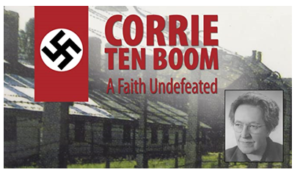
In May of 1940, the Nazis invaded the Netherlands. Initially, Corrie Ten Boom and her family perceived any effort to protect a Jewish person as a political action and therefore something that didn’t necessarily coincide with a believer’s mandate to focus on matters of the soul as opposed to affairs of state. But one night, a Jewish infant was brought to the Ten Boom home. A local pastor, unwilling to take any personal risk, had brought the child to the Ten Boom’s. Appalled, Casper Ten Boom, Corrie’s father, took the child in and thus began an underground campaign that would successfully hide several Jewish persons, but would cost the lives of several in the Ten Boom family (see “Corrie Ten Boom: A Faith Undefeated”).

What the Ten Boom’s discovered is that Politics is ultimately the collection of laws that define the way a person is to be treated and perceived. Politics is about people and to that end a believer cannot ignore the impact a godly foundation  – or the lack thereof – can have on a government and ultimately the citizens who live beneath its legislative umbrella (Prov 29:2).

The purpose of this series is to reveal the spiritual aspect of Politics and to recognize the role that we must play as believers in order to preserve and promote the Truth that defines us as a nation and benefits us as a people. This is why you need to know our nation’s true history and our spiritual heritage. This is why you need to be aware of what’s going on and familiar with the tactics that we’ve discussed so that when it’s time to pray, you know what and who to pray for.

13 “When I shut up the heavens so that there is no rain, or command locusts to devour the land or send a plague among my people, 14 if my people, who are called by my name, will humble themselves and pray and seek my face and turn from their wicked ways, then I will hear from heaven, and I will forgive their sin and will heal their land. (2 Chron 7:13-14)

At the beginning of our discussion we looked at Dr Thomas Sowell’s brilliant approach to summarizing the various political and sociological schools of thought into two main “visions.” But his approach can be boiled down into an even more rudimentary collection of categories…

Either God is God or man is god.

When you hear someone say, “You can’t make me believe the same things that you do!” they’re not wrong. You can’t “make” them drive on the right side of the road let alone believe in the God of the Bible.

But that’s not the point.

The question is whether you’re going to formulate your convictions according to what God says or someone else’s opinion.

The challenge, however, is that regardless of how bulletproof your logic may be, the proper processing of God as the Absolute against which all things moral and political are measured is not possible apart from having a relationship with Christ (1 Cor 2:12). This is how a conversation about Christ can occur – by being able to trace the foundation upon which you build your political convictions on the Word of God. And the thing is, you need to be able to do that because more and more our world is becoming a place where there is no bottom line, only different broadcasts. You go to the “Today Show,” and hear one perspective on the President’s State of the Union speech and you can go out and listen to Ben Shapiro offer a completely different viewpoint. Without a definitive Standard to compare things to, the only thing that qualifies something as being  “right” is however you as an individual want to process it.

If you perceive credibility as represented by academic degrees or by popular vote, than there is no “right” or “wrong,” there’s just consensus. We are who we are as a nation because we had more than a group dynamic to base our convictions upon and we are that same nation today, but only to the extent that godly men are willing to take their place at God’s Throne on their knees, pray, seek His Face, turn from the wicked ways and ask Him to heal out land (2 Chron 7:14).

God cares about Politics because God cares about people and it’s prayer that resulted in the Declaration of Independence, it’s prayer that produced the Constitution, it’s prayer that has seen us through multiple wars and crises and it’s prayer that will make the difference now.

  1. “The Independent Whig”, “sowell: the unconstrained vision”, https://theindependentwhig.com/haidt-passages/sowell-constrained-and-unconstrained-visions/sowell-the-unconstrained-vision/, accessed February 22, 2022
  2. Ibid
  3. Matthew Henry Commentary on the Whole Bible, Matthew Henry, “Commentary on Exodus 4”, https://www.biblestudytools.com/commentaries/matthew-henry-complete/exodus/4.html, accessed February 20, 2022
  4. “China’s Lost Women in the Far West”, Historynet, https://www.historynet.com/chinas-lost-women-in-the-far-west/, accessed February 27, 2022
  5. Wikipedia, “Horace F. Page”, https://en.wikipedia.org/wiki/Horace_F._Page, accessed February 23, 2022
  6. Congressional Record Containing The Proceedings and Debates of the 47th Congress, First Session, p1932, https://play.google.com/books/reader?id=MLQOp17jauUC&pg=GBS.PA1932&hl=en, accessed February 23, 2022
  7. Page was attached to the unit based out of Placerville, which was the county seat of El Dorado County. You can visit https://en.wikipedia.org/wiki/List_of_California_State_Militia_civil_war_units#Placer_County to see which units were active during the Civil War
  8. Congressional Record Containing The Proceedings and Debates of the 47th Congress, First Session, p1932, https://play.google.com/books/reader?id=MLQOp17jauUC&pg=GBS.PA1932&hl=en, accessed February 23, 2022
  9. “A People’s History of the United States”, Howard Zinn, Harper Collins Publishers, New York, NY, originally published in 1980, p1
  10. “Journal of Christopher Columbus (During his First Voyage, 1492-93): And Documents Relating the Voyages of John Cabot and Gaspar Corte Real (Cambridge Library Collection – Hakluyt First Series)”, John Cabot and Gaspar Corte Real, p38
  11. “Debunking Howard Zinn”, Mary Grabar, Regnery History, Washington, D.C., 2019, p12
  12. “Christopher Columbus: The Four Voyages”, Being his own log book, letters and dispatches with connecting narrative drawn from the Life of the Admiral by his son Hernando Colon and other contemporary historians, edited by J.M. Cohen, Penguin Books, New York, NY, 1969, p58
  13. “Journal of Christopher Columbus (During his First Voyage, 1492-93): And Documents Relating the Voyages of John Cabot and Gaspar Corte Real (Cambridge Library Collection – Hakluyt First Series)”, p101, https://www.latinamericanstudies.org/columbus/Columbus-Journal.pdf, accessed February 23, 2022
  14. Ibid, p42
  15. In “Debunking Howard Zinn,” author Mary Grabar explains how Columbus lost one of his ships and had to leave some sailors behind in that there wasn’t room for everyone on the return voyage. When he returned, every one of his men had been killed. “Debunking Howard Zinn”, Mary Grabar, Regency History, Washington D.C, 2019, p16
  16. “Debunking Howard Zinn”, Mary Grabar, Regnery History, Washington, D.C., 2019, p10
  17. “Muslim Spain”, BBC, https://www.bbc.co.uk/religion/religions/islam/history/spain_1.shtml#:~:text=In%20711%20Muslim%20forces%20invaded,1492%20when%20Granada%20was%20conquered, accessed February 27, 2022
  18. “Debunking Howard Zinn”, Mary Grabar, Regnery History, Washington, D.C., 2019, p14
  19. “Scholar disputes source of criticism of Columbus (Commentary)”, Mary Grabar, Ph.D., syracuse.com, https://www.syracuse.com/opinion/2020/07/scholar-disputes-source-of-criticism-of-columbus-commentary.html, accessed March 1, 2022

A Biblical Approach to Politics | Part III

I) Intro

Thus far we’ve looked at how God does care about Politics and He expects us to be engaged. We looked at how the best candidates are going to be those whose platforms take the same approach as the one our Founders took when they defeated the most powerful empire on earth and built a political system founded on Biblical Absolutes.

In Part II we examined the difference between being smart and being wise in the way we process the headlines and the media that we consume.

This week we continue our discussion on being discerning when it comes to the way in which current events are presented by looking at a series of tactics that are sometimes used when you’re listening to someone who doesn’t have something to say as much as they have something to hide.

II) Meet Saul Alinski

“Rules for Radicals” is a book authored by Saul Alinski, a “Community Organizer” that made a name for himself by developing a series of tactics designed to agitate and coerce decision makers to the point where they would be willing to make concessions that they wouldn’t consider otherwise.

It’s not wrong to be persistent or even shrewd in the way you obtain justice from an authority who is neither compassionate nor just (Matt 10:16; Lk 18:1-8). But anything done in the absence of wisdom (Prov 9:10) translates to something evil.

  • Unity becomes Corruption (1 Cor 1:10)
  • Love becomes Neglect (Prov 19:18; Heb 12:7)
  • Compassion becomes a Subsidy (Prov 23:9; 26:4-8)
  • Peace becomes Indifference (Jud 1:19-26; Prov 6:10-11)
  • …and Change becomes Destruction (Ex 32:1; Jud 2:10-11; 1 Kings 12:28-30)

Saul Alinski aligned himself with noble causes, but his methods and his rhetoric betrayed an unhealthy commitment to the acquisition of power more so than the realization of principle. You see that reflected in the dedication he wrote at the beginning of his book:

Alinski’s Rules…

Saul Alinski may have been spiritually bankrupt, but there’s no denying that his tactics proved to be very effective and continue to be effective to this day. If you’re going to defeat your enemy, you have to know how he works so you can know how to respond. But ideally, you want to have a platform in place that anticipates his strategies to the point where they’re rendered useless because of the way in which your content is structured and presented.

Rules for Radicals

  1. “Power is not only what you have but what the enemy thinks you have.”
  2. “Never go outside the expertise of your people.”
  3. “Whenever possible go outside the expertise of the enemy.”
  4. “Make the enemy live up to its own book of rules.”
  5. “Ridicule is man’s most potent weapon. There is no defense. It is almost impossible to counterattack ridicule. Also it infuriates the opposition, who then react to your advantage.”
  6. “A good tactic is one your people enjoy.”
  7. “A tactic that drags on too long becomes a drag.”
  8. “Keep the pressure on.”
  9. “The threat is usually more terrifying than the thing itself.”
  10. “The major premise for tactics is the development of operations that will maintain a constant pressure upon the opposition.”
  11. “If you push a negative hard and deep enough it will break through into its counterside; this is based on the principle that every positive has its negative.”
  12. “The price of a successful attack is a constructive alternative.”
  13. “Pick the target, freeze it, personalize it, and polarize it. “

Lest we forget at least an over-the-shoulder acknowledgment to the very first radical: from all our legends, mythology, and history (and how is to know where mythology leaves off and history beings – or which is which), the first radical known to man who rebelled against the establishment and did it so effectively that he at least won his own kingdom – Lucifer

In his book, Reveille for Radicals, Alinski said that all radicals like himself “want to advance from the jungle of laissez-faire capitalism…They hope for a future where the means of production will be owned by all of the people.”1

This was the goal.

It wasn’t the elimination of Racism or Poverty as much as it was acquiring the needed power to facilitate a Socialist approach to government.

There are many informed commentaries on the fallacies of Socialism that rightfully underscore everything from the lethal consequences of a Socialist doctrine to the economic chaos of artificial pricing. But there’s one aspect of Socialism that often gets missed which reveals it as something that is diametrically opposed to Scripture.

A) Why Socialism Doesn’t Work

Socialists generally categorize a population under two headings:

  • the rich, who are corrupt and
  • the poor who are oppressed

Those who are not where they want to be financially are, in some cases, drawn to this paradigm because in the mind of the Socialist, among the poor you have only noble and hardworking individuals who have been unfairly victimized by a flawed system.

This is an attractive option for the person who has made some bad choices because if there are no fools and there no fiends among the “downtrodden,” then they cannot be held accountable for their actions and they bear no responsibility for their choices.

But Scripture is heavily populated with verses that contrast the success of those who are diligent and the difficulties faced by those who insist on being foolish. Proverbs 24: 30-34 says:

I went past the field of a sluggard, past the vineyard of someone who has no sense; 31 thorns had come up everywhere, the ground was covered with weeds, and the stone wall was in ruins. 32 I applied my heart to what I observed and learned a lesson from what I saw: 33 A little sleep, a little slumber, a little folding of the hands to rest—34 and poverty will come on you like a thief and scarcity like an armed man. (Prov 24:30-34)

On the other hand, it says in Proverbs 10:4:

Lazy hands make for poverty, but diligent hands bring wealth. (Prov 10:4)

While there are situations that can be categorized as tragic and overwhelming, you also have scenarios that are intentionally exaggerated in order to make an irresponsible disposition appear reasonable:

A sluggard says, “There’s a lion in the road, a fierce lion roaming the streets!” 14 As a door turns on its hinges, so a sluggard turns on his bed. 15 A sluggard buries his hand in the dish; he is too lazy to bring it back to his mouth. (Prov 26:13-15)

Whoever watches the wind will not plant; whoever looks at the clouds will not reap. (Ecc 11:4)

In the context of Socialism, there’s no acknowledgement of how poor decision making can contribute to any one of a number of difficult situations. Victor Davis Hanson is a professor emeritus of Classics at California State University, Fresno, the Martin and Illie Anderson Senior Fellow in classics and military history at Stanford University’s Hoover Institution, and visiting professor at Hillsdale College.

He had this to say about the way in which more and more young Americans are gravitating to Socialism:

Many young people claim to be socialists but are instead simply angry that they were unable to afford a home, a new car, or other nice things, or start a family in their “woke” urban neighborhoods during a decade of muted economic growth (2008–17) and high unemployment. In college, they were not warned about the dangers of statism and collectivism, nor given the skills to look at the world empirically. The combination of nonmarketable degrees and skills with burdensome debt helped alter an entire generation’s customs, habits, and thinking.2

Compare the way in which the perspective of someone who has a very limited resume, yet feels entitled to those things that have to be earned and not simply obtained – how does that line up with God’s View as expressed in Proverbs 24:27?

 Put your outdoor work in order and get your fields ready; after that, build your house. (Prov 24:27)

Typically, a person’s situation is going to be characterized by things that constitute both personal flaws as well as challenging circumstances (Jn 16:33; Rom 3:23). To assert the idea that every difficulty you contend with is due to a systemic restriction and you bear no responsibility whatsoever for those choices that contributed to the problem – not only is that a nonsensical philosophy, but it also violates what God says in Galatians 6:7:

Do not be deceived: God cannot be mocked. A man reaps what he sows. (Gal 6:7)

In short, Socialism cannot be discussed let alone deployed without minimizing the way in which God expects individuals to take responsibility for their actions (Rom 14:12). However convenient or challenging your environment may be, Scripture makes it clear that you have available to you every Resource that you need to rise above those things that would otherwise limit you or tear you down (2 Cor 9:8; Jas 1:13). Whatever the evil may be that stands between you and your ambition – be it the most desperate desire to survive or a noble passion to succeed – because you are not alone (Matt 28:20) and He promises that all things work together for the good (Rom 8:28) – you cannot blame anything or anyone for having yielded to the temptation to stop striving (Jn 16:33) without accusing God of having stopped caring (Rom 8:32).

Socialism’s True Result
Josef Stalin liquidated twenty million people to create the collective basis for the Soviet Union. Mao Zedong’s Great Leap Forward cost China forty-five million dead. Pol Pot’s back-to-the-land experiment murdered well over one million in Cambodia. Various disasters in Cuba, Nicaragua, Venezuela, and Zimbabwe turned once-prosperous states into murderous, impoverished socialist dictatorships.3

It is God Who is in control and it is His Purpose and Power in and through a person that makes the difference both individually (Rom 12:1-2) and collectively (Ps 33:12; 84:11). Still, the temptation to take the wheel from your Heavenly Father and insist that it’s your turn to drive is alluring despite the fact that it is toxic (Prov 14:12).

This is why Socialism appeals despite the Truth it ignores and the lives it has taken. And this is why you want to be aware of what’s going on and what’s being said.

This is why you want to Pop the Hood, Keep Your Balance and Kick the Tires.

It’s also why you want to be aware of the some of the more frequently used tactics deployed by those who have something to hide more than they have something to say.

This is where Saul Alinski comes in.

His book, Rules for Radicals details 13 tactics that can be used to get your way by virtue of the manner in which they extort, embarrass and manipulate your opponent.

In today’s discussion, we’re going to build on some of Alinski’s rules, not for the sake of glorifying them but for the sake of exposing them. And then we’re going to get more detailed in how Alinski’s approach is manifested in the media according to five easy to remember and recognize tactics we’re going to call the Progressive Pentagon.

Here we go…

III) The Progressive Pentagon

There are five tactics you can be listening for when you’re being told by someone that they have a point, when in fact they’ve got something to hide. I call it the “Perspective Pentagon” because, taken together, they serve as the way in which the Left both defends its stance and attacks its opponents. It’s bogus, but it’s brilliant. Here’s the five tactics we’re going to look at:

  • They spend more time talking about labels, mobs and crowds than they do a name, a person and a choice.
  • They spend more time attacking their opponent’s character than they do discussing their opponent’s content
  • They spend more time pretending to be hurt than they do proving that they’re right.
  • They spend more time trying to appear honest than they do telling the truth.
  • They spend more time defending bad decisions and demonizing personal responsibility than they do applauding wise choices and holding people accountable for their actions.

Let’s start by looking at “Mobs…”

A) Mobs

They spend more time talking about labels, mobs and crowds than they do a name, a person and a choice.
God Knows…

“Do not keep talking so proudly or let your mouth speak such arrogance, for the Lord is a God who knows, and by him deeds are weighed.” (1 Sam 2:3)

But the Lord said to Samuel, “Do not consider his appearance or his height, for I have rejected him. The Lord does not look at the things people look at. People look at the outward appearance, but the Lord looks at the heart.” (1 Sam 16:7)

…then hear from heaven, your dwelling place. Forgive and act; deal with everyone according to all they do, since you know their hearts (for you alone know every human heart), (1 Kings 8:39)

I will strike her children dead. Then all the churches will know that I am he who searches hearts and minds, and I will repay each of you according to your deeds. (Rev 2:23)

You can conceal a person’s lack of judgment by presenting them as part of a supposedly virtuous group. You can do the same thing, only in reverse, by making a sinister collective appear innocent by associating them with an honorable person or intention. Both approaches are part of a heinous tactic that seeks to assign whole demographics a specific morality, regardless of the individuals who do or do not qualify… …and it’s often used by that person who has something to hide.

1) God Doesn’t Look at Your Appearance

God doesn’t look at your appearance, He looks at your heart. So, however you would try to elevate or justify yourself by insisting that your membership in a particular tribe, company or movement is sufficient to validate your status as a moral individual, those efforts will not only fall short in the sight of God, they also tend to fail in the marketplace as well (Pro 1:32, 3:35; 10:10; Gal 6:7-8).

Jews in the time of Christ saw themselves as justified before God because of their last name (Dt 14:1-2). As a result, they felt comfortable being critical of others, despite the fact that they were just as guilty before God as those they were criticizing.

Paul takes all of that apart in Romans 2:17-29. He summarizes everything beginning in verse 28:

A person is not a Jew who is one only outwardly, nor is circumcision merely outward and physical. 29 No, a person is a Jew who is one inwardly; and circumcision is circumcision of the heart, by the Spirit, not by the written code. Such a person’s praise is not from other people, but from God. (Rom 2:28-29)

It’s not about a label, a mob or a crowd. Ultimately, the credibility of your platform is going to be measured according to the character and conduct of the individual in question and not the assumed morality of the collective.

B) Character

They spend more time assaulting their opponent’s character than they do discussing the content of their opponent’s platform.

In his book, Rules for Radicals, Alinski documents Rule #13 as: “Pick the target, freeze it, personalize it, and polarize it.”

What you’re doing here is identifying a particular individual as the one who’s “responsible” for whatever the problem may be. Once you have your target, you focus all of your attack on them as opposed to anyone else who may bear some responsibility.

That’s how you “freeze” them.

And the one thing you want to keep in mind when selecting your target is that they must qualify as an intuitive personification of the problem you’re trying to solve. You make them the “poster child” for your cause and by giving your campaign a face and a specific behavior or quality to despise, you give your platform emotional momentum that draws people in because of the way they want to be perceived as compassionate and justifiably indignant.

1) A Nazarene and a Son of Mary

Jesus of Nazareth… His hometown wasn’t especially noteworthy and some saw that as one more reason to doubt His Authenticity as the Messiah. Even when Nathanael was skeptical. When first told about Jesus, Nathanael said:

“Nazareth! Can anything good come from there?” Nathanael asked. “Come and see,” said Philip. (Jn 1:46)

In addition, Jesus was never referred to as “Joseph’s son.” Rather, He was always referred to as “Mary’s son…”

Isn’t this the carpenter? Isn’t this Mary’s son and the brother of James, Joseph, Judas and Simon? Aren’t his sisters here with us?” And they took offense at him. (Mk 6:3)

Reason being is that, in the mind of His detractors, He was an illegitimate child which made Him all the less likely to be “Divine.” Christ’s critics spent more time attempting to discredit Him than they did actually listening to Him. And the more people that were drawn to His Message, the more the Pharisees resolved to attack His Character, even to the point where they made Him out to be an enemy of the state.

IV) Conclusion

In Part IV we’re going to conclude our series by wrapping up the remainder of the “Progressive Pentagon” as well as take apart some examples where you can hear these tactics being deployed. In the end, it’s not about winning elections or being overly cynical as much as it’s about being aware and being wise when it comes to the way in which we process current events.

To read “A Biblical Approach to Politics | Part IV,” click here. To read Part II, click here.


  1. Sanford Horwitt, Let Them Call Me a Rebel: Saul Alinski, His Life and Legacy (New York: Vintage Books, 1992); Saul Alinski, Reveille for Radicals, p25, books.google .com
  2. Hoover Institution, “Our Socialist Future?”, Victor Davis Hanson, https://www.hoover.org/research/our-socialist-future-0, accessed February 16, 2022
  3. Andreas Kluth, “Why Germany Will Never Be Europe’s Leader,” Bloomberg Opinion, April 29, 2020, https://www.bloomberg.com/opinion/articles/2020-04-30/coronavirus-crisis-why-germany-will-never-be-europe-s-leader; Jennifer Rankin and Daniel Boffey, “Tensions Mount between EU Members Ahead of Budget Talks,” The Guardian, February 19, 2020, https://www.theguardian.com/world/2020/feb/19/tensions-mount-between-eu-members-ahead-of-budget-talks; Alberto Alesina and Francesco Giavazzi, “Will Coronavirus Kill the European Union?,” City Journal, March 27, 2020, https://www.city-journal.org/covid-19-european-union.

The Progressive Pentagon – A Practical Guide to Fake News

There are five tactics you can be listening for when you’re being told by someone that they have a point, when in fact they’ve got something to hide. I call it the “Perspective Pentagon” because, taken together, they serve as the way in which the Left both defends it’s stance and attacks it’s opponents.

It’s bogus, but it’s brilliant.

1) They spend more time attacking their opponent’s character than they do discussing their opponent’s content .

By making your opponent look immoral, their platform is interpreted as being immoral as well, regardless of how sound it may be (Matt 11:19; 2 Cor 10:10). When you hear this tactic being used, chances are the person who’s speaking doesn’t have something to say as much as they have something to hide.

2) They spend more time pretending to be hurt than they do proving that they’re right.

You can’t criticize someone who’s in pain let alone the person who’s trying to help without immediately being categorized as cruel and insensitive. Because of the way this tactic has the ability to shut down any transparent dialogue, chances are the person who uses this technique can’t afford to be cornered by a direct question and they have something to hide (Prov 22:13)

3) They spend more time trying to appear honest than they do telling the truth.

You can be ethical without telling the whole truth. When you’re hearing this tactic being used, it’s then that credible evidence is usually being dismissed for no good reason because of the way it threatens to expose the truth. Again, this person has something to hide (Matt 4:1-11).

4) They spend more time talking about labels, mobs and crowds than they do a name, a person and a choice.

You can conceal a person’s lack of judgment by ignoring their individuality and seeing them instead as part of a supposedly virtuous group. You can do the same thing, only in reverse, by refusing to see a person’s virtue and instead see them as part of a sinister collective. Both approaches are part of a heinous tactic that seeks to assign whole demographics a specific morality, regardless of the individuals who do or do not qualify…

…and it’s often used by that person who has something to hide (2 Thess 3:10).

5) They spend more time defending bad decisions and demonizing personal responsibility than they do applauding wise choices and holding people accountable for their actions.

Of all the tactics represented by the “Progressive Pentagon,” this is the most obvious in that the person speaking is calling “good” bad and vice versa. It’s accomplished by insisting that, as part of a flawed system, there are no “bad decisions” because of the way your environment obligates you to fail. Hence, you are not responsible for your actions and it’s not you that has to change, rather, it’s the ideals that the current system is based on that need to be altered if not destroyed.

It’s as nonsensical as it is sinister, yet it is a hallmark of those who have something to hide (Is 5:20).


You can remember those five tactics by using this mnemonic:

Mobs of Characters Hurt Honest Decisions

Anytime you hear any of these tactics being deployed, you’re listening to someone who has something to hide. And generally, what they’re trying to conceal is either;

  • the fact that their argument can’t bear up under the weight of a direct question, or…
  • there’s a darker purpose being accomplished that has nothing to do with the subject matter but is nevertheless advanced by the topic being discussed

You defeat the “Pentagon” by first being aware of it, then you you remind your audience that it’s not about the way they, “feel,” rather, it’s about what’s true. You insist on an evaluation of all the facts and as opposed to a manipulation of just some of the facts and you demand specific examples as opposed to a manufactured majority.

Finally, you demonstrate how what’s being debated is a natural compliment to the sinister agenda that’s hoping to go unnoticed. You avoid anything that can be potentially dismissed as an outrageous conspiracy, but you don’t allow the obvious to be dismissed as a meaningless coincidence.

In short…

You stand.

You speak.

…and you silence the evil disguised as compassion and the lie that poses as the truth.

A Biblical Approach to Politics | Part II

I) Intro

In “A Biblical Approach to Politics | Part I,” we looked how God cares about Politics and He expects us to be engaged. To not be informed makes knowing what to pray for virtually impossible and to ignore the character of those who govern is to invite the kind of corruption that makes the “people groan. (Prov 29:2, 4)”

In Part II we’re looking at the challenge we face when attempting to discern the character of those who aspire to leadership positions as well as the seemingly illusive bottom lines when it comes to current events. Bottom line: The Bible says to “test the spirits” and we need to apply that to what it is we allow into our inbox by popping the hood, keeping your balance and kicking the tires.

II) Pop the Hood

A) Wisdom vs Intelligence

Proverbs 9:13-18 says:

Folly is an unruly woman; she is simple and knows nothing. 14 She sits at the door of her house, on a seat at the highest point of the city, 15 calling out to those who pass by, who go straight on their way, 16 “Let all who are simple come to my house!” To those who have no sense she says, 17 “Stolen water is sweet; food eaten in secret is delicious!” 18 But little do they know that the dead are there, that her guests are deep in the realm of the dead. (Prov 9:13-18)

Compare that to Proverbs 1:20-23, 3:13-18:

Out in the open wisdom calls aloud, she raises her voice in the public square; 21 on top of the wall[a] she cries out, at the city gate she makes her speech: 22 “How long will you who are simple love your simple ways? How long will mockers delight in mockery and fools hate knowledge? 23 Repent at my rebuke! Then I will pour out my thoughts to you, I will make known to you my teachings… Blessed are those who find wisdom, those who gain understanding, 14 for she is more profitable than silver and yields better returns than gold. 15 She is more precious than rubies; nothing you desire can compare with her. 16 Long life is in her right hand; in her left hand are riches and honor. 17 Her ways are pleasant ways, and all her paths are peace. 18 She is a tree of life to those who take hold of her; those who hold her fast will be blessed. (Proverbs 1:20-23, 3:13-18)

What’s the difference between being wise and being smart?

What Do You Mean, “I Prosper…?”
The dollar amount on your paycheck is but one indicator of “prosperity.”

Few people believe that they’re making “enough” money (Ecc 5:10), so from that standpoint, that’s a glass that is never completely full.

But when you’re being obedient and you’re walking in lock step with your King, your sense of purpose and fulfillment is now based on a scale that isn’t defined by dollar signs alone (Job 23:12; Prov 27:11; Matt 4:4; Jn 4:32:6:27; Phil 4:13) and the lasting peace and enduring happiness that can’t be achieved through any financial transaction or significant achievement is now yours in ever increasing measure (Matt 6:19-20; 2 Cor 3:18)

The dictionary defines wisdom as “…knowledge, and the capacity to make due use of it.”1 The Bible takes it a step further by saying that, “The fear of the Lord is the beginning of wisdom, and knowledge of the Holy One is understanding.” (Prov 9:10) How does that work? How does an appropriate reverence for God translate to wisdom?

B) Give Thought to Your Ways

Apart from the way a fool will ultimately deny the Reality of God (Ps 14:1) and the need for God’s grace (Rev 20:15), you also have the practical side of wisdom to consider in that you’re like the tree referenced by David in Psalm 1 as far as how everything they do prospers (see sidebar). And part of why they prosper is because they’re prudent and they give careful thought to their ways. Proverbs 14:15 says:

The simple believe anything, but the prudent give thought to their steps. (Prov 14:15 [see also Prov 6:6-11; Matt 25:16])

Fact is, in light of our struggle always being defined in the context of a spiritual contest (Eph 6:12), “testing the spirits” like what Paul says in First Thessalonians is going to apply not only to points of doctrine, but to everything that we encounter as human beings (2 Cor 9:8):

20 Do not treat prophecies with contempt 21 but test them all; hold on to what is good, 22 reject every kind of evil. (1 Thess 5:21-22)

Finally, in 1 John 4:1 we hear John saying the same thing we just heard Paul mention:

Dear friends, do not believe every spirit, but test the spirits to see whether they are from God, because many false prophets have gone out into the world. (1 Jn 4:1)

C) Every Bit of It

While listening to a cable news broadcast may seem like it falls under a different category than what John is referring to as far as “false prophets,” remember that however innocent or nondescript something may appear to be, consider what it says in Proverbs 24:

I went past the field of a sluggard, past the vineyard of someone who has no sense; 31 thorns had come up everywhere, the ground was covered with weeds, and the stone wall was in ruins. 32 I applied my heart to what I observed and learned a lesson from what I saw: 33 A little sleep, a little slumber, a little folding of the hands to rest—34 and poverty will come on you like a thief and scarcity like an armed man. (Prov 24:30-34)

You wouldn’t think Solomon, as wise and as powerful as he was, would’ve ever even considered betraying the One Who was the Source of his grandeur, but incremental compromises ultimately culminated in what you read in 1 Kings 11:5, as far as how his wives convinced him to worship Ashtoreth (ASH-toh-rith)  and Molech (MOH-lek) – Molech being the god who demanded that you burn your children alive in order to appease him.

It’s not something to obsess over, but it is a healthy reminder to be diligent – not just in personal matters but even in the way you process the things that are going on around you.

Little compromises, incomplete information, a biased perspective – you want to pop the hood on every bit of it in order to ensure your convictions are sound and your steps are appropriately “ordered.” (Ps 37:23) So, how does one “test the spirits?”

III) Keep Your Balance

John says that you tell who’s who and what’s what by looking to see which “spirits” are willing to acknowledge Jesus as Lord:

This is how you can recognize the Spirit of God: Every spirit that acknowledges that Jesus Christ has come in the flesh is from Godbut every spirit that does not acknowledge Jesus is not from God. This is the spirit of the antichrist, which you have heard is coming and even now is already in the world. (1 Jn 4:2-3)

When attempting to discern the bottom line where a particular headline is concerned, while some commentators will make public their religious convictions, not everyone does.

So, how do you navigate Politics? How do you establish some bottom lines where COVID-19 is concerned or “Black Lives Matter?”

Ecclesiastes 7:16-18 says this:

Do not be overrighteous, neither be overwise—why destroy yourself? 17 Do not be overwicked, and do not be a fool—why die before your time? 18 It is good to grasp the one and not let go of the other. Whoever fears God will avoid all extremes. (Ecc 7:16-18)

This is where we get into the dynamic of what you allow into your inbox. Consider the following:

Experts Doubt the Resurrection of Christ

 All of Israel is caught up in the rumors pertaining to the supposed resurrection of Jesus of Nazareth, a religious and political criminal that was recently put to death. While some are insistent that he is, in fact, alive, there are many others who dismiss it as yet another attempt being made on the part of his followers to validate his claims that he was the Son of God.

We sat down with several high ranking officials, both from the Jewish and the Roman institutions that championed what was a very difficult, yet just, decision to get their thoughts. From the very beginning, the Nazarene who referred to himself as the Son of God, was a problem in the way he incited many Jews to question the Law and their own heritage. His exploits weren’t curious as much as they were damaging, though many of those who heard him speak were unaware of just how toxic his perspective was.

Thankfully there were steady and committed hands ready to prevent his corrosive effect from spreading by publicly questioning him and revealing his true colors. “We challenged him,” said Simon, one of our more prominent Pharisees. “We demanded that he validate his testimony concerning himself and he wasn’t able to do it. (John 6)”

“His illegitimacy is no secret,” says Reuben, an associate of Simon and with him while they were questioning Jesus. “His mother was a disgrace and to see him now trying to assert himself as being equal to Jehovah is not only ludicrous, it’s almost sad to see someone so desperate to cover up the scandalous and unlawful aspects of his birth. (Mk 6:3)”

Clavius, a familiar tribune who serves Rome and has been an advocate for our Jewish traditions on many occasions, has no trouble being critical of Jesus. “I remember a servant who lived in the household of one of my centurions who was deathly ill,” said Clavius. “He asked the Christ to come and heal his servant and this Jesus, who is supposedly compassionate, never even came to his home. I remember hearing that and from that moment forward, I was convinced that he was a problem and a fraud. (Matt 8:5-13)”

Atticus is yet another distinguished Roman, having served in the Roman army for two decades and a veteran of many conflicts. He was one of the guards who were stationed at the site of the Christ’s tomb (Matt 27:62-65). “It’s insane!” he said. “I’ve been around death more than once.  Jesus died. He’s dead. It might make you sad, but that doesn’t change the fact He’s gone. And I know what it is to grieve, but to see this rabble refuse to accept the death of their cause and their champion by inventing this ridiculous story that he ‘rose from the grave’ is nothing more than a crazy effort to not accept the fact that your Christ is no more, and you need to move on.”

When asked about the way in which the Pharisees were accusing the disciples of having stolen Christ’s body in order to give the appearance of Jesus having risen, Atticus said, “Your readers need to know that the disciples are lying! There is no resurrection. They broke the seal, they violated the sovereignty of Rome, they’re a stench among their own people…they’re insane! (Matt 28:11-15)”

Among those who insist that he rose is a former small business owner named Peter. As a fisherman, your fortunes are limited by default. Perhaps that’s why the prospect of becoming one of the Christ’s followers appealed to him to the point where he abandoned his craft and his family (Matt 8:14-18; 1 Cor 9:5). Maybe in the context of aligning yourself with someone who challenges the governing authorities could lead to a more prominent and financially sound position. Whatever his motivation was, his resolve to promote the fantasy of a risen “Messiah” is still very much intact.

“I’ve seen him!” said Peter. “I’m ashamed to admit that during his arraignment and trial, I denied even knowing him – I was that determined to put as much distance between myself and my former teacher as possible (Matt 26:73-75).” “But that all changed when I saw him,” Peter said. “He’s alive and I’ll stake my life on it (Acts 4:18-19).”

Peter’s passion is admirable, but does that passion negate the testimony of hundreds of eye witnesses let alone the sworn statements coming from established and reputable Roman officials and Jewish authorities?

“There is something both healthy and beneficial in retreating from emotionally charged declarations and instead cling to the certainty of one’s spiritual heritage,” said Simon. “We obey the political authorities that God has instituted, and we revere the Law He gave to Moses. This is my stance and I hope it is one that our people will adopt as well.”

You can be honest without telling the truth. You can be ethical and still be sinister. By emphasizing certain aspects of the story and casting a shadow of doubt on specific personalities, you can manipulate your readers’ perspective so they’re not only embracing the conclusion you would have them arrive at, but they’re also perceiving anyone who thinks differently as being either hateful or frightened. In many cases, the dissemination of information is more about tactics than it is topics.

In the movie, “The Social Network,” there’s a scene where an attorney shows Mark Zuckerberg just how easy it can be to sway a jury without having to produce any evidence or even have a reason to doubt the answer to a particular question. But just by asking the question, you can distract from what’s relevant and initiate a thought process that’s willing to believe something despite the necessary evidence needed to validate it as being true being completely absent.

(Marilyn Deply [attorney]) I’ve been licensed to practice law for all of twenty months and I can get a jury to believe that you planted the story about Eduardo and the chicken. Watch what else: Why weren’t you at Sean’s sorority party that night?

(Mark Zuckerberg) You think I called the police?

(Marilyn Deply [attorney]) Doesn’t matter. I asked the question, now everybody’s thinking about it. You’ve lost your jury in the first 10 minutes.

What this scene demonstrates is the way in which your mind can be influenced to ignore what amounts to a comprehensive collection of the facts and instead focus on what is made to stand out as being the only logical bottom line. And it’s not hard to do… Oftentimes the only thing needed is to make your audience question your opponent’s character. If you’re successful, there’s nothing that can come from their mouth or their pen that won’t be immediately processed as something bogus. They did it with Paul:

For some say, “His letters are weighty and forceful, but in person he is unimpressive and his speaking amounts to nothing.” (2 Cor 10:10)

… they did it with Christ:

The Son of Man came eating and drinking, and they say, ‘Here is a glutton and a drunkard, a friend of tax collectors and sinners.’ But wisdom is proved right by her deeds.” (Matt 11:19)

…and they do it today.

IV) Conclusion

There’s any one of a number of topics that are being constantly presented using this approach where more time is spent assaulting a person’s character than they do engaging their content. This is but one tactic and we’ll look at some more next week.

But however misleading things can potentially be, the question remains: How do you overcome it?

You keep your balance.

In the passage we looked at a moment ago, the last piece says, “It is good to grasp the one and not let got of the other. Whoever fears God will avoid all extremes.“

When you’re confronted with a question or an issue, the resources you allow into your inbox that you default to in order to understand what’s going on may represent a comprehensive analysis, they may not. The key is to ensure that you’re looking at all the facts according to their academic merit and not the way in which they’re made to be associated with certain personalities that have been characterized as either fools or fiends.

Balance.

Grasp the one and do not let go of the other.

Give thought to your steps and be diligent in ensuring that you’re processing yourself and the world around you according to a wise assessment as opposed to a quick impression.

For example, did you know we won the Vietnam War?

I’m not kidding.

I didn’t.

I served for nine years in the USMC with several who were combat vets. I remember as a kid the bumper stickers and the bracelets that were circulated during the seventies to remind people that we had POWs still over there… It was always viewed as a bit of a tragic debacle. If you try to find any information on what it is I’m getting ready to elaborate on, you’re going to run into some difficulties. Try doing a search for “vietnam war victory day” and you’ll get articles about the fall of Saigon and “Reunification Day.”

But if you do a search for January 23, 1973, you’ll get the information you need in order to better understand why Vietnam was a war that we did indeed win. You can watch a video about it by clicking here.

The gist of it was that Nixon launched an aggressive bombing campaign against industrial and military targets in Hanoi with the condition that the bombing would stop if the North Vietnamese would agree to talk peace at the Paris Peace Accords. North Vietnam finally agreed to Nixon’s offer and on January 23, 1973, an announcement was made that an agreement had been initialed by the North Vietnamese, the Viet Cong, South Vietnam and the United States.

It was proclaimed as “Victory in Vietnam Day!” We had won! The nature of the peace agreement was that the hostilities would end and that South Vietnam would be recognized as a sovereign nation by the North Vietnamese. Should the North Vietnamese initiate any kind of military action, the United States promised to match South Vietnam’s response bullet for bullet, man for man.

But then Watergate happened.

Nixon resigned in disgrace and the Democrats smelled blood. They ran on a platform that denounced the war as a waste of resources. Gerald Ford appeared before Congress and pleaded with them to remain faithful to the promise made to South Vietnam, but the opportunity to win the Oval Office was too great, and Congress refused.

Not long after, Saigon fell and the victory that was both true and legitimate was erased from the history books and Jimmy Carter was elected as our new President.

However shameful it may be to see the honor and the sacrifice of the American military so casually removed from the public conscience just so a particular party can regain a superior political position, what’s even more despicable is the way in which those in charge of crafting the headlines and creating our school’s curriculum made a point of ignoring the practical reality of VV Day (Victory in Vietnam Day).

This is part of what makes informed conversation so challenging. You have in place a media staffed by some who are determined to minimize certain facts that make a difference in the way, not only America appears, but also how Truth is defined. Over a period of time, the abundance of “chanted information” (questionable conclusions repeated over and over again by the media until they become a collection of accepted facts) makes locating a more holistic perspective not only more challenging, but also more controversial.

This is why we need to be on top of our spiritual game. Our country needs the same kind of godly men who recognized that it’s the combination and not the separation of church and state that translates to, not only a prosperous nation, but a happy (1 Thess 5:16-18), healthy (Prov 10:27) and holy (Ps 33:12) population.

To read “A Biblical Approach to Politics | Part III,” click here.

To read Part I, click here.

1. Webster’s 1913 Dictionary, “Wisdom”, https://www.webster-dictionary.org/definition/Wisdom, accessed February 9, 2022

The God Delusion | Part Two – What About Prayer?

Dawkins 1 | God 0

Richard Dawkins, in his continued attempt to mock the legitimacy of the Christian faith, references something he refers to as “The Great Prayer Experiment.

He explains…

...the physicist Russell Standard (one of Britain’s three well-known religious scientists, as we shall see) has thrown his weight behind an initiative, funded by – of course – the Templeton Foundation, to test experimentally the proposition that praying for sick patients improves their health. Such experiments, if done properly, have to be double blind, and this standard was strictly observed. The patients were assigned, strictly at random, to an experimental group (received prayers) or control group (received no prayers). Neither the patients, nor their doctors or caregivers, nor the experimenters were allowed to know which patients were being prayed for and which patients were controls. Those who did the experimental praying had to know the names of the individuals for whom they were praying  – otherwise, in what sense would they be praying for them rather than for somebody else? But care was taken to tell them on the first name and the initial letter of the surname. Apparently that would be enough to enable God to pinpoint the right hospital bed. The very idea of doing such experiments is open to a generous amount of ridicule, and the project duly received it. As far as I know, Bob Newhart didn’t do a sketch about it, but I can distinctly hear his voice:

What’s that you say, Lord? You can’t cure me because I’m a member of the control group?…Oh, I see, my aunt’s prayers aren’t enough. But Lord, Mr Evans in the next door bed…What was that, Lord?…Mr Evans received a thousand prayers per day? But Lord, Mr Evans doesn’t know a thousand people…Oh, the just referred to him as John E. But Lord, how di you know they didn’t mean John Ellsworth?…Oh right, you used your omniscience to work out which John E. they meant…1

The study that Dawkins references was done in 2006. The two groups were further divided into three sub groups:

  • people that knew they were being prayed for
  • people that were being prayed for and did not know it
  • people that received no prayers and didn’t know it

The results of the study were clear cut. There was no difference between those being prayed for and those who were not. There was a difference in the amount of suffering however, in that the people who knew they were being prayed for suffered more than those who weren’t being prayed for and had no clue.

Bottom line: Prayer doesn’t work, God isn’t real and to believe otherwise is either complete stupidity or an example of a blind faith that resolves to believe regardless of the quantifiable evidence that exists to refute it.

Dawkins: 1 | God: 0

A Weak Response

Dawkins cites several theologians who embarrass themselves by attempting to explain the results in the context of how God either uses suffering to accomplish His Purposes or such studies are pointless in that they attempt to quantify God – which you can’t do.

It’s not that they don’t have a point. God does use suffering to strengthen a believer’s faith (Romans 5:3-5; 2 Cor 1:3-7). But it also says that you mourn with those who mourn (Rom 12:15).

It is encouraging to know that God has a Purpose and He can be trusted when you’re going through a hard time, but you telling someone they should be “happy” when something terrible has happened is not always helpful. And saying that you can plot the Reality of God on a graph or prove His existence on a calculator is no different than saying you can package love in a shoebox or reproduce peace in a test tube. God is more than a “result,” just like a person is more than a photograph.

Still, you should be able to expect some kind of material evidence to support the validity of the Christian faith and when a clergyman responds to a test like this by saying people should welcome suffering or God can’t be “proven,” their responses sound pretty weak and Dawkins’ argument appears to be all the more compelling.

If God’s real, and prayer supposedly is a person asking God for something, then it follows that, in a study such as this, you should see some kind of evidence that God is at least listening. No?

Dawkins concludes by assuming that the “faithful” will soldier on, despite the lack of evidence and proof, and wait it out until they get the result they want.

But Wait

It’s interesting because, while the study Dawkins cites occurred in 2006, there’s an article in Newsmax magazine entitled, “Studies Prove the Healing Power of Prayer” that references several similar studies that produced much different results:

  • The American Journal of Public Health studied nearly 2,000 older Californians for five years and found that those who attended religious services were 36 percent less likely to die during that period than those who didn’t.
  • A study of nearly 4,000 older adults for the U.S. Journal of Gerontology revealed that atheists had a significantly increased chance of dying over a six-year period than the faithful.
  • Crucially, religious people lived longer than atheists even if they didn’t go regularly to a place of worship.
  • The American Society of Hypertension established in 2006 that church-goers have lower blood pressure than non-believers.
  • Scientists have also revealed believers recover from breast cancer quicker than non-believers, have better outcomes from coronary disease and rheumatoid arthritis, and are less likely to have children with meningitis.
  • Research at San Francisco General Hospital looked at the effect of prayer on 393 cardiac patients. Half were prayed for by strangers who had only the patients’ names. Those patients had fewer complications, fewer cases of pneumonia, and needed less drug treatment.They also got better quicker and left the hospital earlier.

So, which studies do you believe? And why does Dawkins not acknowledge other similar studies that actually reinforce the utility and the Power of prayer?

That’s a question that may not ever get a satisfactory answer, but let’s take a minute and look at Scripture.

In Jesus’ Name

First of all, God is not a vending machine. You don’t simply put in your “prayer coin,” pull a lever and expect Divine machinations come to life, spit out the result you want, in the timeframe you’re expecting. He’s God, you’re not. The Bible makes some pretty broad sounding guarantees when it comes to prayer.

7“Ask and it will be given to you; seek and you will find; knock and the door will be opened to you.8For everyone who asks receives; the one who seeks finds; and to the one who knocks, the door will be opened. (Matt 7:7-8)

On surface, it looks like if you position your appeal just right, you’re gold! Whatever you want, whatever you need – it’s yours. But look at John 14:

13 And I will do whatever you ask  in my name , so that the Father may be glorified in the Son. 14 You may ask me for anything  in my name , and I will do it. (Jn 14:13-14)

 “In my Name” is more than just a poetic compliment to your prayer. “In the Name of Jesus,” or “in Jesus’ Name” invokes a dynamic that establishes the Priority and the Precedence of God. Specifically, His Will:

14This is the confidence we have in approaching God: that if we ask anything according to  his will,  he hears us.15 And if we know that he hears us—whatever we ask—we know that we have what we asked of him. (1 Jn 5:13-14)

And that’s not a “hidden clause.” That’s consistent with the kind of approach you would expect in a wise, father figure. A child can approach their Dad for anything they want, but the Dad isn’t going to respond in the affirmative if the child asks for a machine gun. Take a look at Matthew 18:19-20:

9 “Which of you, if your son asks for bread, will give him a stone? 10 Or if he asks for a fish, will give him a snake? 11 If you, then, though you are evil, know how to give good gifts to your children, how much more will your Father in heaven give good gifts to those who ask him! (Matt 7:9-11)

You see where this is all going?

God sees you and your life laid out before Him in a way that’s not limited by the constraints of time and space. He knows what’s best from womb to tomb.

Ask.

Absolutely!

But ask knowing that should He say, “No,” or “Wait,” it’s not Him being cruel and it’s certainly not a prompt to doubt His Reality. Rather, it’s a cue to remember His Sovereignty which is Ultimately founded on an unconditional love and an uncompromising commitment to our welfare.

You Don’t Talk to Your Father That Way

When satan was attempting to get Jesus to make some compromises, he honed in on, what would naturally be, a logical means by which Christ could recruit the attention and the admiration of those He sought to save by throwing Himself down off the top of the temple and emerge unharmed (Matt 4:5-7).

Jesus responded by quoting Deuteronomy 6:16,  saying that you don’t put the Lord your God to the test. That passage in Deuteronomy is referring the scenario in Exodus when the Israelites were on the march and had come to point where they were without water. Despite very recent demonstrations of God’s Power and Presence in the context of all the miracles He had done in their midst, here they are now asking, point blank, “Is God among us or not? (Ex 17:7)”

Kind of like the study Dawkins wants to use to demonstrate the Reality of God.

“You do what I want you to do, when I want you to do it, and I’ll give you a second look…”

That doesn’t sound like a reverent request as much as it sounds like a belligerent demand. It’s almost like a child approaching their Dad insisting that unless he gives them that machine gun, they’re going to throw a fit. Things like “You don’t love me!” or “You’re not my real Dad!” are shouted in response to their father’s refusal to meet their demand. Whether they’re legitimate expressions of indignation or strategic phrases deployed for the purpose of securing a specific outcome, either way, it’s wrong. Especially if what the father is withholding from his child is something that could prove harmful.

Yet, that’s the approach some take with God. It’s not healthy let alone appropriate. You don’t talk to your Father that way.

There’s a degree of audacity represented by a human being looking at God and saying, “Oh yeah? Prove it!” Yet, from Dawkins’ perspective, there’s nothing audacious about it because he views humanity as being an absolute in and of themselves.

The cross is foolishness to unbelievers (1 Cor 1:18) and it makes sense. If you’re not convinced that you need forgiveness, then what’s the purpose of a Savior? If you answer to yourself and yourself alone, then the notion of a God is at once ridiculous and intrusive.

That was the mindset being addressed by Jesus when He responded to the Pharisees who were demanding a sign by saying, “wicked and adulterous generation asks for a sign! But none will be given it except the sign of the prophet Jonah.” (Matt 16:4) It’s similar to the way God responded to Job who, seemingly had every reason to be indignant with God, by saying, “Who is this that darkens my counsel with words without knowledge? Brace yourself like a man; I will question you, and you shall answer me.” (Job 38:3)

Do you smell what’s on the stove?

Brace Yourself Like a Man

Consider the created order (Rom 1:20), contemplate the miracle of grace (Rom 5:8). Recognize who and what you are before your King and appreciate the gift that He’s given to you, as far as your ability to ask for things in prayer, (Matt 7:7-12; Heb 4:16).

Park there for a minute.

It’s a gift!

You need to be careful to process it as something that has been given to you by God and not a license to make demands of God. You don’t talk to your Father that way and should you feel inclined to be a little indignant, remember Who set the planets in motion and initiated the pumping action of your heart.

Most of all, be mindful of the fact that the One you’re getting ready to criticize is the One Who secured a “non-guilty” verdict for you by dying on the cross.

Brace yourself like a man…

A Privilege to be Revered

Perhaps the most succinct refutation of Dawkins’ outlook on prayer in that it is not a practice to be evaluated by man, rather it is a privilege to be revered by man. And to abuse it as a means to test God is to make the focus of your prayer your own arrogance.

In that moment you’re not conversing with the Almighty as much as you’re just talking to hear yourself speak (Matt 6:5-15).

Perhaps that’s why He taught us to begin our conversations with Him by saying: Our Father in heaven, hallowed be your name, YOUR kingdom come, YOUR will be done, on earth as it is in heaven (Matt 6:9-10 [emphasis added])

Your Kingdom, Your will, because… You’re God.

1. “The God Delusion”, Richard Dawkins, Bantam Press, Great Britain, 2006, p86-87

Pharisees Doubt the Resurrection of Christ – an Example of Fake News

“Fake News” is a sinister mechanism. Reason being is that you can be both ethical and accurate without telling the whole truth with the result being all of your subscribers walking around believing that they have an accurate perspective on the issues when, in fact, they’re clinging to a lie that has a much bigger and more diabolical purpose attached to it.

The following is a great example of “fake news.” I’ve got the passages that are being either distorted or referenced cited in parenthesis. As you read, consider how this same approach can be used to falsify the way in which our nation’s politics and culture are being presented, yet all the while appear completely ethical.

Pharisees Doubt The Resurrection of Christ

All of Israel is caught up in the rumors pertaining to the supposed resurrection of Jesus of Nazareth, a religious and political criminal that was recently put to death. While some are insistent that he is, in fact, alive, there are many others who dismiss it as yet another attempt being made on the part of his followers to validate his claims that he was the Son of God. We sat down with several high ranking officials, both from the Jewish and the Roman institutions that championed what was a very difficult, yet just, decision to get their thoughts.

From the very beginning, the Nazarene who referred to himself as the Son of God, was a problem in the way he incited many Jews to question the Law and their own heritage. His exploits weren’t curious as much as they were damaging, though many of those who heard him speak were unaware of just how toxic his perspective was. Thankfully there were steady and c

ommitted hands ready to prevent his corrosive effect from spreading by publicly questioning him and revealing his true colors.

“We challenged him,” said Simon, one of our more prominent Pharisees. “We demanded that he validate his testimony concerning himself and he wasn’t able to do it. (John 6)”

“His illegitimacy is no secret,” says Reuben, an associate of Simon and with him while they were questioning Jesus. “His mother was a disgrace and to see him now trying to assert himself as being equal to Jehovah is not only ludicrous, it’s almost sad to see someone so desperate to cover up the scandalous and unlawful aspects of his birth. (Mk 6:3)”

Clavius, a familiar tribune who serves Rome and has been an advocate for our Jewish traditions on many occasions, has no trouble being critical of Jesus.

“I remember a servant who lived in the household of one of my centurions who was deathly ill,” said Clavius. “He asked the Christ to come and heal his servant and this Jesus, who is supposedly compassionate, never even came to his home. I remember hearing that and from that moment forward, I was convinced that he was a problem and a fraud. (Matt 8:5-13)”

Atticus is yet another distinguished Roman, having served in the Roman army for two decades and a veteran of many conflicts. He was one of the guards who were stationed at the site of the Christ’s tomb (Matt 27:62-65).

“It’s insane!” he said. “I’ve been around death more than once.  Jesus died. He’s dead. It might make you sad, but that doesn’t change the fact He’s gone. And I know what it is to grieve, but to see this rabble refuse to accept the death of their cause and their champion by inventing this ridiculous story that he ‘rose from the grave’ is nothing more than a crazy effort to not accept the fact that your Christ is no more and you need to move on.”

When asked about the way in which the Pharisees were accusing the disciples of having stolen Christ’s body in order to give the appearance of Jesus having risen, Atticus said, “Your readers need to know that the disciples are lying! There is no resurrection. They broke the seal, they violated the sovereignty of Rome, they’re a stench among their own people…they’re insane! (Matt 28:11-15)”

Among those who insist that he rose is a former small business owner named Peter. As a fisherman, your fortunes are limited by default. Perhaps that’s why the prospect of becoming one of the Christ’s followers appealed to him to the point where he abandoned his craft and his family (Matt 8:14-18; 1 Cor 9:5). Maybe in the context of aligning yourself with someone who challenges the governing authorities could lead to a more prominent and financially sound position. Whatever his motivation was, his resolve to promote the fantasy of a risen “Messiah” is still very much intact.

“I’ve seen him!” said Peter. “I’m ashamed to admit that during his arraignment and trial, I denied even knowing him – I was that determined to put as much distance between myself and my former teacher as possible (Matt 26:73-75).”

“But that all changed when I saw him,” Peter said. “He’s alive and I’ll stake my life on it (Acts 4:18-19).”

Peter’s passion is admirable, but does that passion negate the testimony of hundreds of eye witnesses let alone the sworn statements coming from established and reputable Roman officials and Jewish authorities?

“There is something both healthy and beneficial in retreating from emotionally charged declarations and instead cling to the certainty of one’s spiritual heritage,” said Simon. “We obey the political authorities that God has instituted and we revere the Law He gave to Moses. This is my stance and I hope it is one that our people will adopt as well.”

The God Delusion vs the God Conclusion | Part I

There are three kinds of “data.”

Facts

“Facts” are accurate statements. Think of them as headlines.

For example:

  • Headline #1: Jesus Rises From the Grave
  • Headline #2: Pharisees Accuse Christ Followers of Stealing Corpse of Christ

Both of these statements are accurate. While we know Christ did, in fact, rise, the Pharisees also paid the guards that were guarding the tomb a large sum of money to back up the story that the disciples had stolen the body (Matt 28:11-15).

What’s significant is that for someone who’s just glossing over the headlines, the verbiage, albeit very brief, can still shape conclusions for those who don’t take the time to consider the full account. That leads us to the second category:

Information

“Information” is the “facts” in the context of a limited perspective.

A journalist could build a compelling yet misleading article by strategically citing the chief priests, the guards who had been bribed and any one of a number of like minded people.

Can you see the article in your mind’s eye (click here to read “Pharisees Doubt the Resurrection of Christ – an Example of Fake News” to see an example)?

By steering clear of any testimony that differs from the accounts of the judiciously selected individuals compiled by the hypothetical journalist, you’ve got an article that’s legitimately accurate (facts) and informative (limited perspective). But because the perspective of the article is limited, while there’s nothing directly stated, there is nevertheless an implication that says Christ is dead and unless the reader is inspired to seek out a more comprehensive perspective, assuming he’s even aware that one is available, he’s waking around sporting a very cynical outlook on the first Easter morning.

Information.

Limited perspective.

Finally, the last category of “data” is…

Truth

Truth is an accurate statement that’s been elaborated on in the context of a full perspective. This is the well you want to be drawing your conclusions from. Here is where the right questions are being asked and full disclosure is the norm.

In the absence of “truth,” you risk formulating convictions that are fundamentally flawed. This is why you want to ensure that you’re aggressively and intentionally seeking out the “truth,” and not just the “facts.”

You don’t even want to be content with “additional information.” The truth, the whole truth and nothing but the truth.

The Treaty of Tripoli

If you’re familiar with the words of the “Marines Hymn,” then you’re familiar with the phrase, “…the shores of Tripoli.” That phrase refers to the “War with the Barbary Pirates” where Lieutenant Presley O’Bannon lead an exceptionally daring assault as part of the Battle of Dema. Prior to that war President John Adams issued a statement in an effort to assure the radical Muslims that comprised the Barbary Pirates that our country should not be perceived by them as a religious target in that we were not a Christian theocracy. He said:

Art. 11. As the Government of the United States of America is not, in any sense, founded on the Christian religion; as it has in itself no character of enmity against the laws, religion, or tranquility, of Mussulmen (Muslims); and as the said States never entered into any war or act of hostility against any Mahometan (Mohammedan) nation, it is declared by the parties that no pretext arising from religious opinions shall ever produce an interruption of the harmony existing between the two countries (Treaty of Tripoli).

Most of those who try to take Adams words to mean that he was declaring that the United States was not based on Christian principles are required to leave out some context that is both obvious and crucial. But that is nevertheless the methodology that is often used by the person who has something to hide more so than they have something to say. Thomas Essel, despite being among those who seemingly do not see God as central to our nation’s founding, wrote a great piece in 2016 entitled, “Secularists, Please Stop Quoting the Treaty of Tripoli” that elaborates on how citing that statement is irresponsible both academically and practically.

Consider this quote from John Adams:

“This would be the best of all worlds if there were no religion in it!”

On the surface, you have, what appears to be, a very valid piece of evidence that says our nation’s second President and a founding father was an atheist. Or, at least, a very cynical individual when it came to religion. John Adams did say it. It’s part of a letter he wrote to Thomas Jefferson. When you consider the statement in its proper context, you arrive at a much different conclusion:

“Twenty times in the course of my late readings, I have been on the point of breaking out, ‘This would be the best of all worlds if there were no religion in it!’ But in this exclamation I should have been as fanatical as [Adams’ former pastor Lemuel] Bryant or [his former teacher Joseph] Cleverly. Without religion, this world would be something not fit to be mentioned in polite company — I mean hell.”

In other words, Adams is exasperated when he ponders the way in which organized religion has resulted in so much tension. He says, tongue in cheek, that the world would be better without any “religion” in it. But then he’s very quick to say that the world would be, literally, hell on earth.

Hardly the musings of a man who views religion with a contemptuous sneer.

Yet, this is the way in which atheists and progressives sometimes frame their “facts” and “information” when it comes to the religious disposition of America’s founding fathers (see also “The Treaty of Tripoli” on sidebar).

Richard Dawkins categorizes John Adams as a cynical deist, to the point of him being used by Dawkins as evidence of a collective disdain for religion shared by virtually all the founding fathers.

He quotes Adams as saying:

As I understand the Christian religion, it was, and is, a revelation. But how has it happened that millions of fables, tales, legends, have been blended with both Jewish and Christian revelation that have made them the most bloody religion that ever existed?”1

But he fails to reference another statement made by Adams:

The Christian religion is, above all the Religions that ever prevailed or existed in ancient or modern Times, the Religion of Wisdom, Virtue, Equity, and humanity, let the Blackguard [Thomas] Paine say what he will; it is Resignation to God, it is Goodness itself to Man.2

Facts. Information. Truth. You want to know the truth, you want to be aware of the facts, but more than anything else, you want to understand the truth.

A Toddler and a 285 lb Bench Press
As a quick aside, don’t allow yourself to think that being obedient to God’s commands is a laborious drudgery. It’s not. When you’ve got the Holy Spirit living in and through you, you’re not flying solo when you’re confronted with a temptation to make compromises (1 Cor 10:13). When the lights aren’t on (aka, the Holy Spirit is not living in you), you’re approaching temptation the same way a toddler approaches a 285 pound bench press. It’s not going to end well. But when it’s God’s Strength and His Truth that is allowed to animate your actions and your outlook, you now have more than you need to successfully negotiate the challenge that lies before you. Bear in mind, it’s a choice. You can run the red light and plow head on into traffic if you want and God grants you the freedom to make those decisions (Josh 24:2, 15; Rom 8:12-13). As someone who doesn’t have a relationship with Christ, you don’t have the Spirit of God living in you (Rom 8:9), you’re on your own and you’re that overwhelmed toddler. But when it’s God’s Spirit being deployed in the context of those situations, it’s one victory after another.

The Book of Proverbs

Scripture admonishes us to do as much. Proverbs 4:7 says:

Wisdom is supreme; therefore get wisdom. Though it cost all you have, get understanding. (Prove 4:7)

And wisdom begins with a reverence for God. That’s the top button.

The fear of the Lord is the beginning of wisdom, and knowledge of the Holy One is understanding. (Prov 9:10)

Understand that wisdom, from a biblical standpoint, is more than just knowledge. It’s the “ability to judge correctly and to follow the best course of action, based on knowledge and understanding.”3

While this “ability” is based in part on one’s discipline in the context of academic pursuits, it derives it’s true accuracy and application from an intentional pursuit of God’s Power and Perspective.

In short, it’s a Divine Perspective properly applied (1 Cor 2:16; Col 1:29; Jas 1:5-8).

Here, then, is where you see the real distinction between having access to the directions and actually following the directions –  the difference between Facts, Information and Truth.  Anytime you buy something that requires some assembly, you can gloss over the instructions, believing that your intuition can more than make up for a careful study of the manufacturer’s counsel. More often than not, however, those instructions prove invaluable in being able to put your new resource together correctly. And however prudent it may be to follow the instructions in the assembly of your nephew’s new swing set, it’s absolutely crucial that you follow God’s Instructions when it comes to the whole of life (Jn 14:21; Rom 8:11).

When you’re listening to people like Richard Dawkins, or people who think like him, use the same technique. Recognize the difference between Facts, Information and Truth. Don’t let a carefully crafted platform based on an intentionally watered down perspective replace the full perspective and the truly accurate convictions that flow from that approach.

1. “The God Delusion”, Richard Dawkins, Bantam Press, Great Britain, 2006, p65
2. John Adams, The Diary and Autobiography of John Adams, ed. L.H. Butterfield (Cambridge, MA: The Belknap Press of Harvard University Press, 1962), 3:233-34
3. Nelson’s Illustrated Bible Dictionary, Thomas Nelson Publishers, 1986, Nashville, TN

A Biblical Approach to Politics | Part I

Despite the fact that Donald Trump was defeated in the 2020 Election, his opponents continue to attack his character, minimize his accomplishments and question the sanity / morality of anyone who would support him.

To some extent, you can’t help but wonder why? If he’s no longer in office, than there’s no reason to be concerned that his policies will make their way into the public sphere given the fact that he’s no longer in a position of authority.

But there’s more to Trump than just him being a political figure. He represents a different approach to politics that makes some very uneasy because of the way it reveals the lack of ethics and efficiency typical of big government and the Liberal perspective in general.

Ultimately, Trump’s platform translates to a result that’s very difficult to argue with, given the way it serves our country’s best interests. But that doesn’t change the fact that those who dislike him are especially passionate in their disdain and an intelligent conversation can be a real challenge because of the way they’re conditioned to perceive Trump as evil along with anyone who would come to his defense.

And it’s not just Liberals.

You’ve got Conservative Christians who either refuse to vote or assert a different name on the ballot because they’re so convinced Trump represents the kind of immorality that they simply can’t support.

So, why Trump? Why would anyone support Donald J. Trump?

 Executive Summary

We’re going to break this down into several sections because there’s more to this than just an affinity for a particular political party.

 I) God & Politics

To say that God doesn’t care about Politics is to ignore the fact that He’s the One Who facilitates all governments to begin with. And while that’s obviously a nonsensical disposition, you also have the false premise that says that God doesn’t care about the laws of a nation and how they either promote what strengthens an individual or tears them down (Prov 28:2-3, 28; 29:2, 4). He does care and He expects His people to be engaged (1 Chron 12:32; 1 Tim 2:2).

 II) Your Best Option

The candidate that represents the most qualified to lead is the one who champions the approach that is most consistent with the foundation laid by the ones who defeated the most powerful empire in the world and established a system of government that, up to that point, was completely unheard of in the way it established the individual as the one who had the right to choose how they wanted to be governed and the extent to which they wanted to succeed (Ps 33:12).

 III) Who is Your Source?

Over the course of the last several decades, Journalism has become more of thermostat than a thermometer and you need to be wise in the way you process information coming from those who are vying for a position in your inbox.

 IV) Trees and Policies

Christ said you’ll know a tree by it’s fruit (Lk 6:44). However Trump is made to appear in the headlines, it is his policies that need to be evaluated in order to determine the substance of his platform and not just the commentary crafted by those who have a problem with his personality or his past.

I) God and Politics

A) God Cares

Some will insist that God doesn’t care about Politics. Because it doesn’t directly impact a person’s soul and the fact that it can be a very divisive issue to the point where a conversation about Christ becomes difficult due to the way in which political topics can poison a dialogue, the tendency is to avoid it altogether and believe that God is basically indifferent to who gets elected and what goes on in the halls of government. That’s absurd. First of all, it’s God Who establishes kings and those who are in positions of authority (Dan 2:21; Rom 13:1-2; 1 Pet 2:13). So, to say that He’s not concerned is to ignore the fact that He’s the One Who facilitates governments to begin with.

B) God’s Side

Some Christian communicators cite the answer given to Joshua by an imposing figure standing near Jericho just prior to the Israelites marching around the city as evidence that God does not take sides…

13 Now when Joshua was near Jericho, he looked up and saw a man standing in front of him with a drawn sword in his hand. Joshua went up to him and asked, “Are you for us or for our enemies?”

14 “Neither,” he replied, “but as commander of the army of the Lord I have now come.” Then Joshua fell facedown to the ground in reverence, and asked him, “What message does my Lord[a] have for his servant?”

15 The commander of the Lord’s army replied, “Take off your sandals, for the place where you are standing is holy.” And Joshua did so. (Josh 5:13-15)

God’s Sovereignty & Man’s Responsibility

If God is Sovereign, what’s the point of voting? If He’s the One Who, “…removes kings and establishes kings” (Dan 2:21), what part, if any, does the Electoral College play in legitimately “selecting” a President if God’s already made His Choice? The world is not a runaway train travelling out of control with nothing other than the forces of chance acting upon it. God is in control and you see that it in Isaiah:

I make known the end from the beginning, from ancient times, what is still to come. I say, ‘My purpose will stand, and I will do all that I please.’ (Is 46:10)

You, yourself, are designed with a Purpose and a Plan that was put in place before you were born…

Your eyes saw my unformed body; all the days ordained for me were written in your book before one of them came to be. (Ps 139:16)

However difficult it may be to reconcile the idea that we are free to choose or that we have a legitimate role to play in a process that God has already completed, it really isn’t that hard when you consider the fact that God is All-Knowing (1 Jn 3:20) and therefore He doesn’t have to guess how we’re going to choose. That’s how our free will and God’s Sovereignty work together. It’s not that God forces us to function in a certain way as much as He knows our thoughts before we’re even aware of them ourselves (Ps 139:1-4) and from that perspective, He is therefore able to Plan while simultaneously empowering us with a legitimate freedom of choice. That’s why it’s important to pray and to engage the world around us because He’s working through our obedience and our point of view to accomplish His Purposes. The fact that we’re saved is a result of God having preordained it (Rom 8:29-30) doesn’t change the fact that He used the choice of another human being to obey their King and communicate the words that needed to be said in order for us to be redeemed (Rom 10:14-15). Dr. John MacArthur does a great job of summarizing that idea in a two minute audio recording that you can listen to by clicking here. The fact that God is in charge is a good thing, given the alternative of a pointless chaos with no rules or processes that can be known and understood. And while the fact that God is in control can seem problematic given the pain He allows the world to choose, it’s His Sovereignty that justifies hope and confidence in the future as well as the trust we can place in His command to pray and to work knowing that it’s His Purposes being accomplished in and through us (Rom 8:26-28; Phil 2:12-13).

Pray as though everything depended on God. Work as though everything depended on you. (Saint Augustine)

The fact that the man replied by saying that he was neither on the side of the Israelites nor the Canaanites was not indicative of God being neutral and detached from the situation. The fact that it was God working through the Israelites that resulted in the successful siege of Jericho demonstrates that God was obviously invested in seeing the city destroyed. The point that was being made is that we don’t need to be asking whether or not God is on our side as much as we need to ensure that we are on God’s side and operating according to His Instructions and overall Purpose.

C) Why Bother?

But even if you’re on God’s side, do we need to be concerned about voting or even paying attention to the news if God’s Purpose is going to be accomplished regardless of our involvement?

You could ask the same question about salvation, given the fact that those who are born again were predestined to be saved (Rom 8:29), yet we are to witness and Paul makes the Divinely inspired observation that you can’t expect someone to hear and understand the gospel unless someone preaches to them (Rom 10:14-15).

The fact is, God has set things up in such a way where His Sovereignty exists alongside our responsibility – both are true simultaneously (see “God’s Sovereignty & Man’s Responsibility” on sidebar). Emphasizing one over the other invariably leads to disobedience and we are commanded to pray for those who are in positions of authority (1 Tim 2:1-3).

The fact that our prayers are referenced as an act that makes a difference reinforces the idea that our involvement is both mandated and effective.

II) Your Best Option

A) The Template That Works

The key to political success is to model our approach according to the template used by our Founding Fathers who were able to defeat the world’s most powerful empire and to establish a system of government that, at the time, was completely unheard of. It’s that template that has allowed our country to flourish and it’s more than just political theory as much as it’s an ideological paradigm that serves as our legislative foundation.

Those ideals go beyond human preferences or sensible philosophical options and it’s because they’re rooted in a transcendent Absolute that they can be asserted as functional bottom lines. The best qualified candidates for political office are those that possess the talent and the mindset that best facilitate those bottom lines – not just because they’re consistent with a successful history, but because of the way they’re based on Something that transcends human opinion and therefore avoids all of the corruption that characterizes the human condition.

You can see that transcendent Absolute clearly defined in the Declaration of Independence. When we submitted that document to King George, we were saying that it’s because that God has created all men to be equal (Gal 3:28) that the individual has the right to choose how they want to be governed and the extent to which they want to succeed. It’s because it was a Divine Truth that we could logically point to as that which substantiated our claim, we weren’t just filing a complaint, we were making a point. Yes, there were other brilliant political philosophers, such as John Locke, that had contributed to the collective mindset represented by the Second Continental Congress, but ultimately it was a collection of references to God that was cited as the basis for our reasoning and not the names of several respected thinkers.

This is why a candidate’s platform is so important. However noble or approachable they may appear, if their goal is to implement a worldview that runs contrary to our spiritual foundation, they invoke a doctrine that inevitably positions man as his own moral authority and the state as its own religion.

B) There’s Only Two Religions

While that may sound overly simplistic, the fact is there are only two religions in the world: Either God is God or man is God.

Every religion save Christianity provides a way in which you can merit the favor of your preferred deity. With Islam you’ve got Jihad, as a Buddhist you’ve got Nirvana. Jehovah’s Witnesses strive to be among the 144,000 referenced in Revelation 7:4, Hindus pursue Moksha (MOKE-shah) in order to be liberated from the cycle of death and rebirth. Mormons believe that they themselves can attain the status of gods in the afterlife through their works here on earth (Teachings of the Prophet Joseph Smith, p. 345–354). In each scenario, while you have a supernatural element, you have the ability as a human being to tip the scales in your favor through some kind of action or mindset.

Christianity, on the other hand, says that you are a spiritual corpse (Eph 2:1). You are dead in your sin and you have no option available to you that can offset your default status as a sinner that is permanently and irretrievably separated from God (Ps 14:3; Is 64:6). That’s what makes Christianity distinct from every other religious school of thought – you are utterly destitute apart from some kind of miracle that can somehow transform you in the eyes of God from being sinful to sinless. And that miracle is the death and resurrection of Jesus Christ.

Divine Guidance

I am not to be understood to infer that our General Convention was divinely inspired when it formed the new Federal Constitution; yet I must own that I have so much faith in the general government of the world by Providence, that I can hardly conceive a transaction of so much importance to the welfare of millions now in existence, and to exist in the posterity of a great nation, should be suffered  to pass with being in some degree influenced, guided, and governed by that omnipotent and beneficent  Ruler in whom all inferior spirits live, and move, and have their being. 1(Benjamin Franklin) For my own part, I sincerely esteem it a system which without the finger of God never could have been suggested and agreed upon by such a diversity of interests.2 (Alexander Hamilton on the ratification of the Constitution) It is impossible for the man of pious reflection not to perceive in it a finger of that Almighty Hand which has been so frequently and signally extended to our relief in the critical stages of the Revolution.3 (James Madison) I do not believe that the Constitution was the offspring of inspiration, but I am as perfectly satisfied that the Union of the States in its form and adoption is as much the work of a Divine Providence as any of the miracles recorded in the Old and New Testament were the effects of a Divine power.4 (Benjamin Rush, signer of the Declaration of Independence)

1. Benjamin F. Morris, The Christian Life and Character of the Civil Institutions of the United States (Powder Springs, GA: American Vision Press, 2007),  pp. 303-304, Benjamin Franklin’s reflections on the ratification of the Constitution 2. Alexander Hamilton, John Jay, James Madison and Other Men of Their Time, The Federalist and Other Contemporary Papers on the Constitution of the United States, E.H. Scott, editor (New York: Scott, Foresman and Company, 1894), p. 646, Alexander Hamilton to Mr. Childs, Wednesday, October 17, 1787. 3. Alexander Hamilton, John Jay, & James Madison, The Federalist (Philadelphia: Benjamin Warner, 1818), p. 194, James Madison, Federalist #37. 4. Benjamin Rush, Letters of Benjamin Rush, L. H. Butterfield, editor (Princeton, New Jersey: American Philosophical Society, 1951), Vol. I, p. 475, to Elias Boudinot on July 9, 1788.

When you pull back the curtain and see how Christianity is the only authentic religion in that it’s based solely on the grace of God rather than a human being attempting to be a god, you can understand why it resonates as a stronger option in the mind of the person who recognizes the frailty of his human condition and the veiled attempt on the part of other creeds to position man as his own deity.

C) The General Principles of Christianity

You can also see why from a purely logical point of view that only the Absolute Power and Perspective represented by the Word of God would suffice in providing the philosophical strength the Founders needed in order to refute a monarchy and create a republic. John Adams said it best:

The general Principles, on which the Fathers Atchieved Independence, were the only Principles in which, that beautiful Assembly of young Gentlemen could Unite, and these Principles only could be intended by them in their Address, or by me in my Answer. And what were these general Principles? I answer, the general Principles of Christianity, in which all those Sects were United: And the general Principles of English and American Liberty, in which all those young Men United, and which had United all Parties in America, in Majorities Sufficient to assert and maintain her Independence.1

This is why the best option, when reviewing different candidates for office, is going to be the one whose policies are most consistent with Scripture. However you may personally disagree with that premise, the verbiage of the Declaration as well as the documented comments of the early patriots demonstrates conclusively that the novel political ideas they dared to assert were not based on human preferences as much as they were Divine Guidance (see “Divine Guidance” on sidebar). And while they celebrated the Goodness of God’s Providence in the context of our nation’s initial declaration and the creation of the new Constitution, they were just as vocal in declaring that our future welfare was a certainty only if it was based on the same Resource. Samuel Adams had this to say:

May every citizen in the army and in the country have a proper sense of the Deity upon his mind and an impression of that declaration recorded in the Bible: “Him that honoreth Me I will honor, but he that despiseth Me shall be lightly esteemed” [1 Samuel 2:30]. 2

John Adams mirrors his cousin, Samuel Adams:

…We have no Government armed with Power capable of contending with human Passions unbridled by morality and Religion. Avarice, Ambition, Revenge or Galantry, would break the strongest Cords of our Constitution as a Whale goes through a Net. Our Constitution was made only for a moral and religious People. It is wholly inadequate to the government of any other. (John Adams)3

George Washington leaves no doubt as to his perspective on religious piety and political prosperity:

Of all the dispositions and habits which lead to political prosperity, religion and morality are indispensable supports. In vain would that man claim the tribute of patriotism, who should labor to subvert these great pillars of human happiness, these firmest props of the duties of men and citizens. The mere politician, equally with the pious man, ought to respect and to cherish them. A volume could not trace all their connections with private and public felicity. Let it simply be asked: Where is the security for property, for reputation, for life, if the sense of religious obligation desert the oaths which are the instruments of investigation in courts of justice ? And let us with caution indulge the supposition that morality can be maintained without religion. Whatever may be conceded to the influence of refined education on minds of peculiar structure, reason and experience both forbid us to expect that national morality can prevail in exclusion of religious principle.4

Christianity or Deism?

Regardless of the volumes of correspondence and documentation that demonstrates the Founders had  a decidedly Christian approach to themselves and the world around them, there is a determined effort on the part of some historians to either eliminate a Biblical influence on the minds of those who crafted our country’s governments entirely, or dilute it with the claim that many of our forefathers were Deists. Deism rejects the Resurrection of Christ. So, from that standpoint, Deism is nothing more than a human philosophy because if Christ is not revered as God Incarnate, then you’re not accepting God’s Word as Absolute Truth and you’re positioning human reason over Divine Revelation. By reducing the Founders’ regard for the Son of God to a noble teacher, the resulting perspective on the Founders’ view of Christianity is far less “spiritual” and substantially more “rational.” The Bible becomes less of an Absolute and more of  a code of ethics than it is anything else and has no real bearing on practical matters and it provides a logical justification for establishing man as his own bottom line. And while “spiritual” verbiage may be utilized from time to time, in the end, God is a literary appliance that’s added for effect as opposed to a transcendent Truth that inspires, evaluates and strengthens the heart of man and the destiny of a nation. There is a problem, however, in concluding that the faith of our Founders was either casual or unorthodox. Contemporary historians and sociologists will often introduce certain assumptions in order to arrive at the situation that best matches their philosophical preferences. For example, the Encyclopedia Britannica refers to George Washington as a Christian Deist. A Christian Deist, by definition, doesn’t believe in the Divinity of Jesus Christ. And while Britannica goes on to say that Washington’s family and personal clergy should be given precedence over the,”…opposite views of later writers or the cloudy memories of a few Revolutionary veterans who avowed Washington’s orthodoxy decades after his death,”8 Washington’s adopted daughter, who lived with the General for 20 years, testified in a letter to Jared Sparks, who published an eleven volume work that cataloged the writings of Washington entitled, The Writings of George Washington,” that Washington was very involved in his local church, his character was Christlike and when he died, it was evident from her standpoint that both Martha and he were confident that he was being welcomed into the arms of His Savior. This is not consistent with the idea that Washington was a Deist. It becomes even more questionable when you look at his prayer journal and see how the idea that he believed Jesus to be Anyone other than the Son of God can be immediately dismissed:

Oh, eternal and everlasting God, direct my thoughts, words and work. Wash away my sins in the immaculate blood of the Lamb and purge my heart by Thy Holy Spirit. Daily, frame me more and more in the likeness of Thy son, Jesus Christ, that living in Thy fear, and dying in Thy favor, I may in thy appointed time obtain the resurrection of the justified unto eternal life. Bless, O Lord, the whole race of mankind and let the world be filled with the knowledge of Thee and Thy son, Jesus Christ. (Washington’s Prayers)

While a human being is incapable of fully knowing another person’s faith and their redeemed status in the sight of God, assuming a secular approach to Christ simply because it matches your preferred perspective on the extent to which the Founders invoked and depended on the Savior revealed in Scripture is both academically and practically irresponsible. You see that intellectual recklessness in the example above with George Washington. While Deism was a part of the religious landscape in the 18th century, to assume that it was the preferred creed of the Founders requires an intentional dismissal of the comments and the behavior they exhibited which positioned Christ as Risen and the Bible as Absolute.

“In vain would that man claim the tribute of patriotism, who should labor to subvert these great pillars of human happiness, these firmest props of the duties of men and citizens. The mere politician, equally with the pious man, ought to respect and to cherish them.” Washington’s words capture the spiritual and political direction that needs to be central to the platform of anyone who aspires to public office because it’s that foundation alone that guarantees a successful administration.

D) They Weren’t Really Christians…

Some will want to insist that a Christian worldview is a needless and ignorant basis for the selection of our national leaders. They will assert the 18th popularity of Deism as a means to minimize the way in which Scripture served both as a Resource and as a Guide in the formulation of our government (see “Christianity or Deism” on sidebar).

In other instances, they’ll take statements made by those like John Adams out of context and attempt to turn them into comments that prove he didn’t perceive Christianity as the fundamental foundation for our country’s government that it is (see “The God Delusion vs The God Conclusion | Part One – FIT“).

The fact is, when you consider the spiritual fabric of our nation’s initial colonization and the way in which Christianity was such a prominent cultural fixture during the time of the Revolution, any effort to try and dismiss or qualify the fact that our country is based on Christian principles borders on the absurd. Perhaps one of the more compelling proofs of our country’s collective regard for the application of Scripture to the cause of liberty comes from the battlefield (read the story of Major General Peter Muhlenberg by clicking here).

The “Black Robe Regiment” was the name the British troops gave the clergy who supported the Revolution from behind their pulpits with their Bibles and in combat with their rifles. Historians have commented that:

There is not a right asserted in the Declaration of Independence which had not been discussed by the New England clergy before 1763.5

British soldiers went as far as saying blaming Christianity for the Revolution:

The influence of the Reformed political tradition in the Founding era is manifested in a variety of ways, but particularly noteworthy is the almost unanimous support Calvinist clergy offered to American patriots. This was noticed by the other side, as suggested by the Loyalist Peter Oliver, who railed against the “black Regiment, the dissenting Clergy, who took so active a part in the Rebellion.” King George himself reportedly referred to the War for Independence as “a Presbyterian Rebellion.” From the English perspective, British Major Harry Rooke was largely correct when he confiscated a presumably Calvinist book from an American prisoner and remarked that “[i]t is your G-d Damned Religion of this Country that ruins the Country; Damn your religion.”6

E) Slave Owners

While it is not difficult to believe that the Founders based their approach to government on Christian principles, given their verbiage both public and private, it is nevertheless challenging to reconcile their perspective with the fact that many owned slaves.

While Slavery is by no means an American institution, the fact that it’s contrary to Scripture (Ex 21:16) and an inhumane practice in general, makes it easy to question the mindset of those delegates from the South that comprised the Second Continental Congress. How do you process a document written and agreed upon by men, many of whom maintained a mindset that allowed for the enslavement of human beings? 

First of all, from a purely practical standpoint, we don’t evaluate the Constitution or the Declaration of Independence according to the character flaws of the men who wrote them. Rather, we evaluate them according to the substance of the documents themselves.

Secondly, many of those that owned slaves were the same ones who sacrificed their homes, their fortunes and, in some cases, their lives, to ensure a system of government that possessed the necessary tenants that would ultimately translate to the end of the slave trade.

Third, to align yourself with the Revolution, whether as a statesman or a soldier, you were committing treason against the crown. The punishment for that included:

  • That the offender be drawn to the gallows, and not be carried or walk: though usually (by connivance length ripened by humanity into law) a sledge or hurdle is allowed, to preserve the offender from the extreme torment of being dragged on the ground or pavement
  • That he be hanged by the neck and then cut down alive
  • That his entrails be taken out and burned, while he is yet alive
  • That his head be cut off
  • That his body be divided in four parts
  • That his head and quarters be at the king’s disposal7

This was the fate that loomed over the progress of the Revolution. Those that fought and served to win America’s independence did so risking everything. However flawed they were in the way they processed the sin of slavery doesn’t change the substance of their work. It’s that work that we honor, not just because of the sacrifices that were made which made it possible, but also because of how the biblically based freedoms those efforts established would go on to secure the liberties that timeframe denied to others.

The Signers of the Declaration: What Did They Lose?

There’s a popular essay that is sometimes published during the fourth of July timeframe that details the sacrifices made by those who signed the Declaration of Independence. It’s inspiring to see what they risked and sobering to see what some actually lost. What’s both frustrating and disconcerting is the way some “fact checkers” seize upon some details of the essay and advance the impression that it’s more of a romantic exaggeration than it is anything else. Anytime you exaggerate, you risk sacrificing the credibility of whatever point you’re trying to make. The signers of the Declaration of Independence were all remarkable men and displayed incredible courage by fixing their signatures to a document they knew could bring about their deaths. You don’t need to embellish the truth. By the same token, you don’t need to point out discrepancies in a way that trivializes the very sacrifices that afford you the right to be critical. For example, in an article published by USAToday entitled, “Fact check: Decades-old essay about Declaration of Independence signatories is partly false,” they make their point with examples from the essay such as this one:

Francis Lewis had his home and properties destroyed. The enemy jailed his wife, and she died within a few months. John Hart was driven from his wife’s bedside as she was dying. Their 13 children fled for their lives. His fields and his gristmill were laid to waste. For more than a year he lived in forests and caves, returning home to find his wife dead and his children vanished.​​​​​​​

They go on to say that this represents and exaggeration because:

Lewis’ home was destroyed, and his wife was captured by the British. And Hart’s story is also largely described accurately, according to the NPS’ record.

But the caveat for both is that these tragedies did not occur because they signed the Declaration. The occurrences were unrelated side effects of the war itself.

The same is true for the alleged 12 unnamed men whose homes were ransacked and burned and eight men named (many incorrectly) as having their homes vandalized or looted.

To say that the essay is wrong because, “But the caveat for both is that these tragedies did not occur because they signed the Declaration. The occurrences were unrelated side effects of the war itself.” is to introduce a standard of scrutiny that’s deployed for the sake of distracting from the truth rather than pointing people to it. The point being made is that Francis Lewis lost his home and his wife in the War for Independence. Whether or not the British knew his name and had targeted him specifically doesn’t change the fact that Lewis’ signature was on the document that had precipitated the war to begin with. So, from that perspective there’s nothing being said that’s inappropriate or dishonest. But this is nevertheless the approach that’s often taken by people who want to distract from the truth of what’s being said in order to make the message they would imply appear more credible.

Historian Stephen E. Ambrose sums it beautifully in an article featured in “Smithsonian Magazine:”

Slavery and discrimination cloud our minds in the most extraordinary ways, including a blanket judgment today against American slave owners in the 18th and 19th centuries. That the masters should be judged as lacking in the scope of their minds and hearts is fair, indeed must be insisted upon, but that doesn’t mean we should judge the whole of them only by this part.8

F) Sin

Some of the most accomplished characters in Scripture were guilty of some truly despicable sins: David and his affair with Bathsheba and his subsequent murder of Uriah (1 Sam 11) and Paul, one of the more prolific writers of the New Testament, condoned the murder of Stephen and was an accessory to the persecution and imprisonment of perhaps hundreds of Christians (Acts 22:17-20).

While it’s tempting to place yourself in a category distinct from that kind of wrongdoing and be able to feel as though you appear more righteous in the sight of your Heavenly Father, you have to remember that all sin requires an attitude that is as heinous as it is universal. In order to sin in any capacity, you have to walk up to God as He’s sitting on His Throne and tell Him to get out of your chair.

Granted, some sins are unintentional (Num 15:27-31), but the vast majority of them are deliberate and all of it requires grace including everything from speeding (Rom 13:1-7) to overeating (Prov 23:20-21; 1 Cor 6:19-20). The fact of the matter is anytime you’re looking at a believer, you’re looking at two worlds that are operating side by side simultaneously. While the power of sin has been destroyed (Rom 6:6), our capacity to sin remains (Rom 7:14-25). And the thing is, in the words of Paul, “…there is nothing good in me.” (Rom 7:18) Whatever good I’m able to do, it’s more because of God working in and through me (Ezr 1:5; 1 Cor 12:6; Phil 2:13) than it is me functioning according to a morally pure mindset.

This is why we can embrace the accomplishments of certain individuals despite them having significant sin in their lives. We can applaud the Activity of God in and through an individual without endorsing the depravity of that same person. You don’t overlook wrongdoing (1 Cor 5:13), but you never want to become so preoccupied with the sin in others that you forget the way in which God uses both brand new gloves and filthy mitts to catch fly balls.

We give God the credit because it’s Him doing the work and the fact that He uses sinners like you and me is a testament to His Grace and not our goodness. And the same thing applies to unbelievers as well. However distant that person may be from God doesn’t change the fact that God can, and often does, use people who don’t honor Him to do His Work.

King Cyrus didn’t know or acknowledge God. For an orthodox Jew, that must’ve been a hard pill to swallow given the fact that Cyrus was not only a Gentile, but he was an idolater. Yet, God referred to him as “my shepherd” and it was through Cyrus’ administration that the Hebrews were able to rebuild their capital city (Ezr 1:2-4; Is 44:28; 45:5).

The example of Cyrus demonstrates that a leader can be a heathen and still be worthy of your support because of the way their platform promotes and protects the work of God. So the question isn’t, “How can I support someone who doesn’t acknowledge God?” The question is, “Whose platform is most aligned with that which promotes and protects our nation’s spiritual wellbeing?” Or, another question which better accommodates the whole of Scripture as opposed to those passages that restrict God’s usage of individuals to those that honor Him would be, “Would you have voted for King Cyrus?”

III) Conclusion (Part I)

God cares about Politics. He facilitates governments and He uses our involvement and prayers to accomplish His Purposes. Our nation is founded on Christian Principles that come from the Word of God. Our Founders were not masquerading as pious human beings when they cited Divine Absolutes as the basis for their declaration to King George. Anything less than the Substance of Scripture would’ve reduced our cause to nothing more than a complaint and it’s those same Truths that guarantee our continued success and serve as the basis for the way in which we choose our elected officials.

The thing is, God does care about Politics because it’s not just “politics.” It’s either His Purposes or man’s rebellion being played out in the context of legislation and foreign policy. God cares about Politics.

To read “A Biblical Approach to Politics | Part II,” click here


1. “John Adams to Thomas Jefferson 28 June 1813”, “Founders Online”, https://founders.archives.gov/documents/Jefferson/03-06-02-0208#:~:text=The%20general%20Principles%2C%20on%20which,by%20me%20in%20my%20Answer, accessed February 2, 2022
2. “The Writings of Samuel Adams”, Harry Alonzo Cushing, G.P. Putnam’s Sons, New York, London, 1908, p189
3. “From John Adams to Massachusetts Militia, 11 October 1798”, “Founders Online”, https://founders.archives.gov/documents/Adams/99-02-02-3102, accessed February 2, 2022
4. “Transcript of President George Washington’s Farewell Address (1796)”, ourdocuments.gov, https://www.ourdocuments.gov/doc.php?flash=false&doc=15&page=transcript, accessed January 31, 2022
5. Alice M. Baldwin, The New England Clergy and the American Revolution (New York: Frederick Ungar, 1958), p. 170
6. Douglass Adair and John A. Schutz, eds., Peter Oliver’s Origin and Progress of the American Rebellion (Stanford: Stanford University Press, 1961), p. 41; Paul Johnson, A History of the American People (New York: HarperCollins, 1997), p. 173; John Leach, “A Journal Kept by John Leach, During His Confinement by the British, In Boston Gaol, in 1775,” The New England Historical and Genealogical Register, Vol.19 (1865), p. 256
7. Blackstone, Wm., Knight. Chase, George, ed. Chase’s Blackstone Commentaries on the Laws of England in Four Books. New York: Baker, Voorhis & Co., 1936, p891
8. “Founding Fathers and Slaveholders”, Stephen E. Ambrose, “Smithsonian Magazine”, November 2002, https://www.smithsonianmag.com/history/founding-fathers-and-slaveholders-72262393/, accessed February 2, 2022

Excellent Reading: “Did America Have a Christian Founding” Mark David Hall