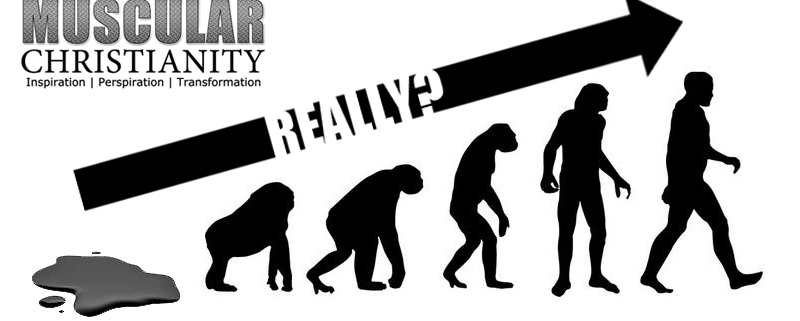
There Are Only Two Religions

While it might not be an original phrase, I heard “There are only two religions in the world” for the first time in a talk given by author Frank Peretti.

I though it was a very succinct and profound way of summarizing the various religions in the world and how they compare to the gospel. Basically, it boils down to one of two options: Either God is God or man is god.

In his book, “The God Delusion,” Richard Dawkins summarizes his atheistic disposition by stating that, “I am attacking God, all gods, anything and everything supernatural, wherever and whenever they have been or will be invented.”1

While Atheists want to be perceived as having an impartial approach to the various faiths represented by the American population by insisting on a “religion-less” perspective on morality, there is no such thing as a “religion-less” approach to anything, let alone morality. From a purely philosophical standpoint, “religion” is the way in which you answer four basic questions:

  • Origin – how did the universe come to be?
  • Destiny – what happens when you die?
  • Morality – how are you supposed to behave while you’re here?
  • Purpose – what’s the point of your existence?

These are not lofty, theological issues or advanced, philosophical themes that only academic types bother to engage. The way you process yourself and the world around you on a daily basis is based on the way you answer these questions and from that standpoint, you are a “religious” person regardless of how often you go to church, if you go at all. And from that standpoint, there’s no such thing as an atheist. You’re simply your own god – you’ve established yourself as your own religion.

So, when you hear critics of Christianity or social activists insist that they represent a more judicious approach to moral issues and social tensions by removing the Bible from the conversation, they’re not leveling the playing field as much as they’re giving priority to that “religious” school of thought that establishes the individual as his own deity.

If religion, at the bare minimum, is the paradigm upon which one bases his perspective on himself and the world around him, then atheism “fits” in the illustration Peretti proposes in that atheism is the belief that all things can be, and should be, assessed and determined by an intellect that is entirely human. So, rather than appealing to the God of the Bible, atheists instead appeal to the “god” of human reason and humanistic thinking. However they may balk at the notion of anything that even sounds remotely supernatural is attached to their philosophical infrastructure, it is nevertheless an apt way of comparing the two schools of thought. And with that comparison comes a more direct way of identifying the fundamental difference between Christianity and other supernatural thought processes, while simultaneously defining the one aspect of Christianity that, once proven, reduces all of what would otherwise be argument against the gospel to ash.

The empty tomb. H.P. Liddon put it very well when he said:

Faith in the resurrection is the very keystone of the arch of Christian faith, and, when it is removed, all must invariably crumble into ruin. 2

1. “The God Delusion”, Richard Dawkins, Bantam Press, Great Britain, 2006, p57 2. “Therefore Stand: Christian Apologetics”, Wilbur M. smith, Baker book House, Grand Rapids, MI, 1965, p577

G-R-A-V-I-T-Y

If you’ve never heard “Gravity” by James Brown, you need to check it out. That is some sanctified funk, right there!

So, here’s my thought: Darwin’s theory of evolution is based on the idea that the species that are in existence today originated from a single life form. He says as much in his book “Origin of Species:”

…all the organic beings which have ever lived on this Earth may be descended from some primordial form.

Now, before we go any further, let’s clarify a couple of things about the subject we’re about to engage: First off, those who subscribe to Darwin and his Theory of Evolution can be grouped into two distinct categories:

• the first group is purely scientific in that they don’t associate anything spiritual or metaphysical with this debate. They’re simply attempting to decipher what it is that constitutes the most plausible explanation for the origin of the cosmos and life as we know it. They’re not personally invested in any one theory to the point where if they’re confronted with evidence that elevates one theory over the other, they don’t perceive it as an intellectual assault or a personal affront. Rather, they’re just considering the different viewpoints that exist as though they were perusing the various food items at the local Farmer’s Market.

• the other group has a far greater stake in the discussion in that they recognize its philosophical essence. Should man be nothing more than the byproduct of random chemical and genetic interactions, then he is at liberty to define every aspect of his existence. There are no Absolutes, morality is relative and the quality of one’s life is defined based on whatever criteria best matches their personal preferences. Should the concept of a personal Creator be introduced into the mix, then you have accountability as well as a standard to consider.

Convinced that a supernatural explanation for the origin of life inevitably includes an uncomfortably limiting and intrusive dynamic, the disciples of Darwin resolve to refuse any notion of a god resulting in the boundaries of sound scientific reasoning sometimes being stretched and the rules governing a respectful, academic discussion occasionally being suspended.

But it’s needful to recognize that Evolution is not a sound scientific theory. However volatile a topic it may be for some, the ramifications are too significant to gloss over as inconsequential. The manner in which the curtain closes on this issue determines an individual’s philosophical disposition towards God – whether He is or isn’t. That being the case, let’s take a look at Darwin and consider three of the main shortcomings of Darwinian thought as well as the defense the advocates of Darwinism present as a rebuttal.

An Anglican Naturalist…

Charles Darwin lived from 1809-1882. The son of a medical doctor, Darwin started his formal education with an aim towards following in his father’s footsteps, but his interest in botany and natural history became so intense that his studies began to suffer. His father responded by sending him to Christ’s College in England where it was determined that he would become an Anglican priest. Darwin did well and graduated in 1831. Not long after, however, Darwin joined some friends aboard the HMS Beagle. The ship’s mission was to chart the coastline of South America. Darwin was to go on this two year voyage as an amateur naturalist and collect specimens and make observations.

The two year voyage became a five year enterprise. During this time, Darwin excelled. His copious notes and detailed observations were sent home and circulated among those who could appreciate his work. By the time the Beagle returned home, Darwin was already a popular figure within the British Naturalist community and any thoughts of pursuing the ministry were sidelined by, not only his passion for science, but also his ever increasing skepticism when it came to the accuracy of Scripture.

At Every Turn

Darwin’s experiences aboard the Beagle culminated in a theory he elaborated on in his book “Origin of Species.” Published in 1859, it caused a sensation both within scientific and theological circles. It challenged the accepted notion that the world was a created entity. And while much of his theory was conjecture, it became the primary intellectual foundation upon which atheists built their platform.

While Darwin refrained from elaborating on the theological implications of his ideas, there was no denying that if you extended his line of reasoning to its inevitable conclusion, the result was a “god-less” universe. This is why the Theory of Evolution inspires such passionate debate. At the end of the day, you have an amateur Naturalist with a degree in theology who proposes a credible sounding theory about the origin of life based on his extensive observations of the natural world. By itself, it’s not that significant. But because of the philosophical and theological machinations it put in motion, it’s a zealously guarded cornerstone in the mind of the individual who is decidedly secular and a heretical school of thought to the believer.

For the individual resolved to highlight the flaws in Darwin’s reasoning, they have before them a task that’s not as easy as it might appear. While there are flaws in his reasoning, his verbiage is compelling and his ideas resonate on the surface as sensible. And Darwin was thorough in his notes and observations. Even when he seemed on the threshold of conceding some scientific shortcomings, he was careful to provide for himself a theoretical escape that allowed him to keep his hypotheses intact. For example, in a letter to his friend Dr. Asa Gray in 1857 he says:

It is extremely kind of you to say that my letters have not bored you very much, and it is almost incredible to me, for I am quite conscious that my speculations run quite beyond the bounds of true science.2

Those who might jump on a comment such as this in order to “catch” Darwin doubting the authenticity of his theories will be quickly countered by the champions of Darwinian thought by saying he was referring to a specific idea that he had yet to solidify with sound scientific research – that it wasn’t directed to his theory as a whole.3

In another instance, Darwin referenced the complexity of the human eye as being so intricate, that to speculate it had evolved from a chaotic scenario into the precise instrument that is today was “absurd…”

To suppose that the eye with all its inimitable contrivances for adjusting the focus to different distances, for admitting different amounts of light, and for the correction of spherical and chromatic aberration, could have been formed by natural selection, seems, I freely confess, absurd in the highest degree.4

That would seem to be a dealbreaker right there. But then his advocates go on to point out that while Darwin may have appeared to be bordering on conceding an intellectual flaw, he was merely articulating a preface to his proposed resolution to said quandary:

Reason tells me, that if numerous gradations from a simple and imperfect eye to one complex and perfect can be shown to exist, each grade being useful to its possessor, as is certainly the case; if further, the eye ever varies and the variations be inherited, as is likewise certainly the case and if such variations should be useful to any animal under changing conditions of life, then the difficulty of believing that a perfect and complex eye could be formed by natural selection, though insuperable by our imagination, should not be considered as subversive of the theory.5

In other words, if you can perceive different types of eyes that represent varying theoretical stages of development and complexity, you have enough in the way of evidence to subscribe to the notion that the eye could have, in fact, evolved from the same primordial soup that all of life originated from.

At virtually every turn you will find Darwin has included a protective clause that prevents his theories from being dismantled. The absence of a fossil record to prove the existence of intermediary life forms is explained away as a result of an “imperfect geological record.

At one point, he says, “If it could be demonstrated that any complex organ existed, which could not possibly have been formed by numerous, successive, slight modifications, my theory would absolutely break down.6 But then he goes on to say that the early stages of said organs are simply not available to examine. In other words, although the evidence doesn’t exist today, his theory is sound enough to assume that it did exist at one point.

This is the nature of the Darwin debate. The objective evidence that can be studied and used to conclusively validate Darwin’s theory of evolution is very limited, yet his conclusions are zealously guarded with either a theoretical look to the future or a quick assertion that any opponent of Darwin is basing their objections on an incomplete analysis of his observations.

Over 150 Years Later…

We are now over 150 years removed from Darwin’s first edition of “On the Origin of Species” and it’s not so much that the same questions remain as much as it’s a situation where the same flaws persist and are even more glaring then they were in 1859. You would be hard pressed to find a scientist that would balk at the claim that any one species has not underwent some changes over the course of earth’s history. But you do, however, encounter a very sharp division, both in academic circles as well as in the lay community, when you propose the idea that all of life is related, even to the point where human beings can supposedly embrace apes as their predecessors and can look to a fruit fly as a distant cousin.

That is the core of Darwin’s theory – that is the foundation upon which Natural Selection is built. It’s not whether or not there have been changes within a particular species, but that every species is related having evolved from one common life form:

Analogy would lead me one step further, namely, to the belief that all animals and plants have descended from some one prototype. But analogy may be a deceitful guide. Nevertheless all living things have much in common, in their chemical composition, their germinal vesicles, their cellular structure, and their laws of growth and reproduction. We see this even in so trifling a circumstance as that the same poison often similarly affects plants and animals; or that the poison secreted by the gall-fly produces monstrous growths on the wild rose or oak-tree. Therefore I should infer from analogy that probably all the organic beings which have ever lived on this earth have descended from some one primordial form, into which life was first breathed…7

But if you theory is to have any merit, it has to be consistent with, not only the evidence that currently exists, it also has to conform to the way in which the laws of Nature effect the data you submit. If you’re having to re-tool the rules that govern the natural world in order for your theory to resonate as credible – if you have to contradict the testimony voiced by the artifacts we currently have – you don’t have a scientific theory, rather, you have a cultural myth.

Evolution: A Theory in Crisis
The universal experience of paleontology,,,[is that] while the rocks have continually yielded new and exciting and even bizarre forms of life…what they have never yielded is any of Darwin’s myriads of transitional forms. Despite the tremendous increase in geological activity in every corner of the globe and despite the discovery of many strange and hitherto unknown forms, the infinitude of connecting links has still not been discovered and the fossil record is about as discontinuous as it was when Darwin was writing the Origin. the intermediaries have remained as elusive as ever and their absence remains, a century later, one of the most striking characteristics of the fossil record. (Michael Denton, Evolution a Theory in Crisis (Chevy Chase, Md.: Adler and Adler, 1986, 162)

When Christopher Columbus asserted that the world was round, he was basing his hypothesis on anomalies that could be seen and measured. His proposed voyage was not founded on theories that contradicted the physical givens that could be observed, nor was it dependent upon outrageous claims that could not be validated.

Columbus is revered today, not because he went against the grain of true science, but because he had the courage to champion it. Advocates of Darwin like to position themselves as enlightened thinkers and jokingly refer to those who subscribe to Intelligent Design as IDiots. While there are some very educated and articulate Darwinians that can flood the debate with all sorts of biological and chemical minutiae, they are incapable of providing a plausible response to at least three fundamental questions. And the responses they do give, once the imaginary numbers and theoretical values are revealed, do little to convince the unbiased onlooker that theirs is the club consisting of the more intellectually advanced.

Let’s take a look at those three questions.

Those Three Questions

What is Your Starting Point?

In Mathematics a “set” is a group of values. A “Null Set,” or an “Empty Set” has no members. It doesn’t even have the value of zero within it, which makes it a little difficult to envision, but the bottom line is that with the “Null Set,” for lack of a better way of putting it, you have complete nothingness.

However the advocates of Darwin want to insist that the universe and all of life originated from a random collection of raw materials that, by pure chance, combined and interacted in a way that resulted in a single cell organism, they leave out one very important question that deserves an answer…

Where did the raw materials come from?

If your evolutionary theory is going to be perceived as having any substance, you can’t assume the pre-existence of the materials you’re going to need in order to construct a more complex life form. Furthermore, the laws that govern the way in which your raw materials combine and interact with one another do not exist if you start with the cosmological equivalent to the “null set.” If you start with absolutely nothing, not only do you not have the raw materials called for in your theoretical recipe, you’re also lacking the ordered manner in which they relate to one another.

Physics, gravity, biology, chemistry – none of these dynamics or their associative properties exist when your starting point is devoid of any kind of system or force that would dictate how that matter would behave. So, regardless of how you attempt to theorize how things may have begun, unless you can first explain the origin of your rudimentary matter as well as the existence of the natural laws that produce the changes you propose, your theory has no worth in that it’s founded on dynamics you can’t account for.

The defense that is made by the proponents of Darwinism is captured in an article that appeared in Discover magazine featuring MIT physicist Alan Guth:

Quantum Theory…holds that a vacuum…is subject to quantum uncertainties. This means that things can materials out of the vacuum, although they tend to vanish back into it quickly…Theoretically, anything – a dog, a house, a planet – can pop into existence by means of this quantum quirk, which physicists call a vacuum fluctuation. Probability, however, dictates that pairs of subatomic particles…are by far the most likely creations and that they will last extremely briefly…The spontaneous, persistent creation of something even as large as a molecule is profoundly unlikely. Nevertheless, in 1973 an assistant professor at Columbia Univeristy named Edward Tryon suggested that the entire universe might have come into existence this way…The whole universe may be, to use [MIT physicist Alan] Guth’s phrase, ” a free lunch.8

At first glance, this looks like a possible explanation as to how the universe could’ve literally “popped” into existence as a result of purely random forces. But there are flaws in this argument on two fronts.

First of all, the subatomic particles referenced in the article are theoretical entities and it’s not even clear that they actually exist.

Secondly, and even more importantly, a quantum vacuum is not “absolute nothingness.” It’s actually a sea of fluctuating energy – “…an arena of violent activity that has a rich physical structure and can be described by physical laws.”9

So, you still have this huge gap in the Darwinian model in that you have no starting point and can therefore not theorize that matter, let alone a life form, can be initiated without first being able to convincingly explain the origin of your raw materials as well as the laws that dictate the manner in which they relate to one another.

How Do You Account for the Difference Between the Mind and the Brain?

Darwin attempts to explain the origin of a human being as nothing more than a series of physical mutations that, over time, resulted in not just the evolved physique / figure of a person, but also all of the intangibles that make that person who they are; their personality, their will – their conscious self.

To fully appreciate what’s being discussed here, pause for a moment and consider what the human experience would look like if it were defined in nothing other than materialistic terms. First off, you would have no free will. If a human being was nothing other than just a conglomeration of “stuff” – his flesh and nothing more – than the manner in which he or she would interact with their surroundings would be entirely predictable. Just like you can observe a cloud on a windy day – the way that it moves and dissipates according to the gusts of air that blow it about – it has no say in the direction it goes, it simply responds to the forces that influence it.

Morality
But morality is more than just a matter of engaging in social mathematics. Just like the mind is more than the brain, not everything about morality can be quantified and if you extend Darwin’s line of reasoning to its inevitable conclusion, you have scenarios such as Hitler’s approach to the Jewish race being accepted as a reasonable response to a desire to see the German people flourish and a supposedly inevitable progression of a more advanced human being overwhelming his weaker counterpart.

The human mind is more than just the physical and chemical output of the brain. A computer synthesizes information and outputs an accurate result based on that data, and that is what you have in the context of a human being when you limit his capacity to what a Darwinian model proposes.

But when a person is presented with a situation, it’s more than just a suite of problem solving faculties that is brought to bear. The manner in which that situation is addressed is effected by that person’s feelings, their personality and their will. Whereas digital intelligence is limited to whatever lies within the scope of purely objective information, a human being doesn’t just process data. Everything that makes that person unique not only influences their response, but attaches a quality of “right” or “wrong” to that decision which often exceeds the scope of that which is nondiscriminatory as well.

A computer does not know compassion, a hard drive doesn’t experience joy, and a CPU isn’t conscious of itself. These are intangible entities that cannot be quantified and yet they are very much a part of the human experience.

Some scientists maintain that consciousness and the subjective elements of the mind came into being once the human brain reached a certain level of complexity. The problem with that, however, is that they’re declaring that matter has within it the capacity to become both material and non-material. At that point, they’ve redefined the essential constitution of matter and while panpsychism is not a new theory, it borders on the absurd given the lack of evidence to support it.

As an aside, the concept of morality is also among those things that Darwin proposes as something that has evolved based on a process where the common good becomes the standard for defining the difference between wrong versus right. The moral sense, Darwin claimed, “first developed, in order that those animals which would profit by living in society, should be induced to live together.”10 He goes on in his book “Descent of Man” to say that, “No tribe could hold together if murder, robbery, treachery... were common; consequently such crimes within the limits of the same tribe ‘are branded with everlasting infamy’; but excite no such sentiment beyond these limits.”11

In other words, everything we regard as a society to be fundamentally right and / or good is the result of simply having identified what is best for the community at large.

But morality is more than just a matter of engaging in social mathematics. Not everything about morality can be quantified, and, again, if you extend Darwin’s line of reasoning to its inevitable conclusion, you have scenarios such as Hitler’s approach to the Jewish race being accepted as a reasonable response to a desire to see the German people flourish and a supposedly inevitable progression of a more advanced human being overwhelming his weaker counterpart.

Vernon Lyman Kellogg was an accomplished biologist and Professor of Entomology at Stanford University. He served as Director of Hoover’s Humanitarian American Commission for Relief in Belgium from 1915-1916 during the height of World War I. Kellogg had the opportunity to frequently dine with members of the German Supreme Command as well as some of the more celebrated intellectuals within the German academic community. He published a book entitled “Headquarters Nights,” which was an account of his conversations with these individuals. His shock and disbelief are well documented as he heard and processed the “scientific” basis for the German resolve to conquer and dominate.

At one point, he expounds on his encounter with Professor von Flussen, a biologist whose academic credentials he admired, but with a worldview he found repulsive. About Flussen, he says:

Professor von Flussen is Neo-Darwinian, as are most German biologists and natural philosophers. The creed of the Allmacht of a natural selection based on violent and fatal competitive struggle is the gospel of the German intellectuals; all else is illusion and anathema.12

Kellogg goes on to say:

The danger from Germany is, I have said, that the Germans believe what they say. And they act on this belief. Professor von Flussen says that this war is necessary as a test of the German position and claim. If Germany is beaten, it will prove that she has moved along the wrong evolutionary line, and should be beaten. If she wins, it will prove that she is on the right way, and that the rest of the world, at least that part which we and the Allies represent, is on the wrong way and should, for the sake of the right evolution of the human race, be stopped and put on the right way — or else be destroyed as unfit.13

What’s interesting is that the wheels of Darwinian thought that Kellogg was observing during the time of World War I  had been spinning at a lethal tempo for some time prior to 1915. In 1903 the Herero tribe in South West Africa staged an uprising against their German taskmasters who had set up a colony in that area. The Herero disposition was understandable given the cruel and inhumane way in which the Germans treated them based on their feeling of racial superiority.

In response, the German government deployed General Lothar von Trotha along with 14,000 troops to not only defeat the Herero tribe, but to exterminate them completely. Von Trotha was ruthless, but what made his actions even more heinous is the Darwinian doctrine he used to justify his actions.

In a local newspaper article, General von Trotha expressed how much of his thinking had been influenced by Darwin by saying, “At the outset, we cannot do without the natives. But they finally have to melt away. Where the climate allows the white man to work, philanthropic views cannot banish Darwin’s law ‘Survival of the Fittest.'”14

And Von Trotha was not some isolated case of non-sensical extremism. He was in the company of a great many people who had bought into the Darwin doctrine of racial supremacy which was an extension of moral evolution. Bear in mind that the original title of Darwin’s book “On the Origin of Species” was “On the Origin of Species by Means of Natural Selection, or the Preservation of Favoured Races in the Struggle for Life.” Add to that the bestselling commentaries on Darwin’s work such as the one authored by Friedrich Hellwald, a member of Germany’s “Society for Racial Hygiene,” and you have a very compelling and a very popular mantra.

In his 1875 bestseller, “The History of Culture in its Natural Evolution,” Hellwald said:

Science has no “natural right.” In nature, only one right reigns, which is no right, the right of the stronger, violence. But violence is the highest source of law…properly speaking the right of the stronger has also been valid at all times in human history…[science has proven] that just as in as in nature the struggle for existence is the moving principle of evolution and perfection, in that the weak are worn away and must make room for the strong, so also in world history the destruction of weaker nations through the stronger is a postulate of progress.15

Some will attempt to defend the notion that Darwin’s perspective on morality as being a flawed interpretation of his phrase “survival of the fittest.” While the phrase was not coined by Darwin himself, he did use it in his fifth edition of “Origin of Species” and deployed it as a way to illustrate the way a species either improves or dies according to its vitality and ability to adapt.

This preservation of favourable individual differences and variations,and the destruction of those which are injurious, I have called Natural Selection, or the Survival of the Fittest. 16

At this point, Darwin isn’t referencing anything that could be construed as an obvious justification for genocide. But later, he contrasts the way Natural Selection processes and filters those species that are authentically superior to the way in which man tends to administrate and care for livestock.

He seldom exercises each selected character in some peculiar and fitting manner; he feeds a long and a short-beaked pigeon on the same food; he does not exercise a long-backed or long-legged quadruped in any peculiar manner; he exposes sheep with long and short wool to the same climate; does not allow the most vigorous males to struggle for the females; he does not rigidly destroy all inferior animals, but protects during each varying season, as far as lies in his power, all his productions.17

Make a mental note of his comment “…he does not rigidly destroy all inferior animals.” There’s an implication, here, that says man’s approach to living things is sometimes contradictory to the way in which Nature would weed out inferior members of a species. Now look at this comment made towards the beginning of Chapter Four:

No country can be named in which all the native inhabitants are now so perfectly adapted to each other and to the physical conditions under which they live, that none of them could be still better adapted or improved; for in all countries, the natives have been so far conquered by naturalised productions that they have allowed some foreigners to take firm possession of the land. And as foreigners have thus in every country beaten some of the natives, we may safely conclude that the natives might have been modified with advantage, so as to have better resisted the intruders. 18

In other words, the natives that have been forcibly removed or subjugated by European nations were already destined for destruction by the laws of Nature simply because they were not as well “modified” as their foreign conquerors. Now look at Darwin’s comment that he makes in his book “Descent of Man”:

At some future period, not very distant as measured by centuries, the civilised races of man will almost certainly exterminate, and replace, the savage races throughout the world. At the same time the anthropomorphous apes, as Professor Schaaffhausen has remarked, will no doubt be exterminated. The break between man and his nearest allies will then be wider, for it will intervene between man in a more civilised state, as we may hope, even than the Caucasian, and some ape as low as a baboon, instead of as now between the negro or Australian and the gorilla.19

What’s significant about this comment is that Darwin defines the Australian and African natives as being inferior to the Caucasian. This isn’t taken out of context, nor is it some outrageous interpretation of a Darwinian statement. From Darwin’s scientific perspective, he sees certain races as inferior to others.

Finally, consider this statement, again coming from Darwin’s “Descent of Man”:

The surgeon may harden himself whilst performing an operation, for he knows that he is acting for the good of his patient; but if we were intentionally to neglect the weak and helpless, it could only be for a contingent benefit, with a certain and great present evil. Hence we must bear without complaining the undoubtedly bad effects of the weak surviving and propagating their kind; but there appears to be at least one check in steady action, namely the weaker and inferior members of society not marrying so freely as the sound; and this check might be indefinitely increased, though this is more to be hoped for than expected, by the weak in body or mind refraining from marriage.20

The essence of what Darwin is saying here is that human sympathies, in the context of benevolence and medical care, can sometimes run contrary to the positive and inevitable direction of Natural Selection. And while we can’t, in good conscience,  refrain from extending aid to the sick and inferior, we can at least hope that they will refrain from marrying and propagating their kind.

Did Darwin ever explicitly endorse or commend genocide? No. But while he may not have started the fire, he most certainly provided the match and the fuel by establishing a “scientific” basis for racial supremacy as well as a quasi-clinical sounding justification for expediting the demise of the weak and infirm based on the predetermined elimination that would occur at the hands of Natural Selection.

Just as it is an exercise in futility to suggest that the human mind is nothing more than a data processor comprised of flesh, it is just as futile to try and distill morality down to a mere formula. There is an intangible nobility that characterizes true morality that is neither defined nor experienced by engaging in a cold analysis of purely objective criteria. Darwin’s approach to morals begins and ends with a calculation as opposed to an aspiration and for that reason, not only does his theory fail, but it can, and often does, lead to a moral disaster.

How Come the Cell Comes in a Box Marked “No Assembly Required?”

In 1859, Darwin did not have access to the molecular world like we do today. It was assumed that as we were able to view more and more the cellular landscape, the less complex the data would become. In fact, it’s the exact opposite.

A typical cell requires ten million atoms to construct. In his book, “The Way of the Cell,” Franklin M. Harold describes the cell as a high tech enterprise, complete with…

…artificial languages and their decoding systems, memory banks for information storage and retrieval, elegant control systems regulating the automated assembly o parts and components, error fail-safe and proof -reading devices utilized for quality control, assembly processes involving the principle of prefabrication and modular construction…[and] a capacity not equaled in any of our own most advance machines, for it would be capable of replicating its entire structure within a matter of hours.21

Pause for a moment and ponder the biological pecking order of what we’re talking about. While an atom can be broken down into its nucleus and the electrons that orbit around it, the atom is considered the smallest and most basic building block of life and matter. When atoms combine, the result is a molecule. For example, when two Hydrogen atoms combine with one Oxygen atom, the result is a molecule of water.

A cell is an ordered system of molecules that runs via a horrendously complicated collection of micromachines that must have the right shape and operate at the right strength and in the right manner. The thing that makes the cell so problematic to Darwin’s theory of evolution is that there’s no possible way in which its detailed functionality can begin at a point that’s any less intricate. In other words, in order for a cell to function, it has to have all of its parts, there is no “less evolved” option available.

Michael J. Behe, PhD is Professor of Biochemistry at Lehigh University. He illustrates the above anomaly using a mousetrap. He shows how each of the parts of a typical mousetrap – the wooden platform, the spring, the metal bar that does the mouse in – all of these parts are arranged in a very specific way in order for the trap to function. Remove any of those parts, and you no longer have a working mousetrap. You may have a great paperweight, perhaps, but you don’t have a working mousetrap.

The same is true with a cell. Remove any of the components of a cell and you don’t have a less efficient cell, nor do you have a partial cell. What you have is a non-functioning cell. And what’s true for the cell as a whole is also true for the components that comprise the cell itself.

A great example is the flagellum (pronounced flah-GEL-uhm) The flagellum is a picture of astounding efficiency. Discovered in 1973, it’s much like a propeller in that it propels the bacterial cell through its environment. Its approximately 2 microns long. A micron is 1/20,000 of an inch. Most of its length is represented by the actual propeller. The other element of the flagellum is the motor which is pictured to the right. While the flagellum is a couple of microns long, the actual motor is about 1/100,000th of an inch. Its size is significant given the fact that it spins at 10,000 revolutions per minute and can stop spinning within a quarter turn and instantly begin spinning in the opposite direction. Harvard Biophysicist Howard Berg called it “the most efficient motor in the universe.”

Dr. Behe coined the phrase “irreducible complexity” in his book “Darwin’s Black Box” to describe the scenarios referenced above, as far as the existence of functionality that cannot be arrived at gradually. In other words, you either have a working flagellum with all of its intricacies or you don’t. There’s no such thing as a “flagellum lite.”

According to Darwin, this is a deal breaker based on his comment that if any complex organ existed which could not possibly have been formed by numerous, successive, slight modifications, his theory would completely break down. The cell and the flagellum are examples of those kinds of “complex organs.”

Dr. Kenneth Miller is a Professor of Biology at Brown University. He disagrees with Behe and defends his argument by saying:

Stated directly, the TTSS does its dirty work using a handful of proteins from the base of the flagellum. From the evolutionary point of view, this relationship is hardly surprising. In fact, it’s to be expected that the opportunism of evolutionary processes would mix and match proteins to produce new and novel functions. According to the doctrine of irreducible complexity, however, this should not be possible. If the flagellum is indeed irreducibly complex, then removing just one part, let alone 10 or 15, should render what remains “by definition nonfunctional.” Yet the TTSS is indeed fully-functional, even though it is missing most of the parts of the flagellum. The TTSS may be bad news for us, but for the bacteria that possess it, it is a truly valuable biochemical machine.22

TTSS (Type III Secretion System) is like a biological syringe in that it senses, probes and injects its toxins into its target cell. You can see by looking at the diagram to the right that the TTSS has certain similarities to the flagellum. Indeed, when you look at its composition and overall shape, it looks like a precursor to the flagellum and that’s what the proponents of Darwin submit as a rebuttal to the claim that the flagellum represents an case of irreducible complexity.

There are two problems with Miller’s argument however in that while you have a “truly valuable biochemical machine,” you don’t have a flagellum, you have a completely different apparatus. It’s like removing the spring from a mousetrap and celebrating the fact that you now have a fully functioning paperweight. You still have an outrageously improbable scenario before you as far as that mousetrap being able to perform according to the way it was designed apart from a starting point where there’s “no assembly required.”

In addition, Miller’s assertion overlooks the findings that have been recently published which states that the TTSS is not a precursor to the flagellum, rather the flagellum is a precursor to the TTSS. This is completely contrary to the theme of evolution which positions the more complex organism at the tail end of an ever improving process. In this instance, the flagellum comes before the TTSS, not the other way around which disqualifies it from being a part of the flagellum’s supposed evolutionary process.

Conclusion

There is a strong disdain among some proponents of evolutionary theory for those who would attempt to substantiate Intelligent Design on the basis of science. In their mind, anyone who references life as a supernaturally initiated enterprise is an irresponsible steward of scientific methodology in the way they substitute “faith” for true “analysis.”

Yet, it is profoundly obvious that while the evolutionist regards himself as rational and firmly rooted in empirical scholarship, in actuality his foundation is comprised almost entirely of fictitious conjecture and outlandish forecasts. With the wave of an academic looking hand, complex functionality simply emerges and whatever is needed in order to remain consistent with the givens that characterize the material world is simply excluded from the debate and replaced with irrational predictions that their claims will one day be validated.

Darwin put that strategy on the map when admitting how the then fossil record failed to authenticate his theory. Today, the fossil record is far more advanced and while some will be very quick to state that we have numerous examples of transitional life forms, the fact is we don’t have fossils as much as we have fossil fragments.

“Java Man” – an icon that is very familiar, given the way that it has been published and touted as “proof” of our common heritage with monkeys – consists of a partial skull, three teeth and a femur. It was later determined that the femur didn’t belong with the skull cap and today there is a now a huge amount of skepticism, even among evolutionists, that doubt Java Man is credible evidence that man evolved from apes.23

In 2001, another skull was found in Africa. Sahelanthropus proved to be problematic however, in that it seemed more human like despite the fact that it was seven million years old as opposed to other fossils that were five million years old. If Darwinian thought is accurate, there should be a progression, not a regression as far as how a species evolves.

So, in addition to the creative imagination that had to be deployed in order to associate a human being with the lone skull of an oversized monkey, the fact that it was more evolved than its younger counterparts further weakened Darwinian theory.

Henry Gee, the chief science writer for Nature magazine in 1999 summed it up well when he said:

New fossil discoveries are fitted into this preexisting story. We call these new discoveries “missing links,” as if the chain of ancestry and descent were a real object for our contemplation, and not what it really is: a completely human invention created after the fact, shaped to accord with human prejudices…Each fossil represents an isolated point, with no knowable connection to any other given fossil, and all float around in an overwhelming sea of gaps. 24

And while the archaeopteryx (pronounced ar-key-OPT-er-ix) unearthed in 1859 is a fully formed skeleton and initially heralded as a transitional life form that bridged the gap between birds and reptiles, it has since been determined that is an extinct species of bird based on its bone structure, breeding system, lungs and the distribution of their weight and muscles.25 In addition, the archaeopteryx is another case of an older yet more evolved life form than the younger fossils its typically associated with. Again, the gospel of Darwin is revealed as less than conclusive.

But regardless of how some want to debate the details of evolution, the bottom line is that evolution is founded on the pre-existence of certain materials and the laws of Nature which govern them. Regardless of how dogmatic the champions of Darwin may be, their arguments will always be tainted by an imposing insufficiency in that their starting point requires an entity that is both uncaused and possesses the capability to institute the manner in which the natural world operates. In other words, their theory is ultimately predicated on something eternal and supernatural.

In a recent court case, a Pennsylvania school system was handed a ruling from a judge that said the discussion of evolution in the classroom was not to include any mention of Intelligent Design on the basis that evolution is “science” and Intelligent Design is “religious.” Yet, when you look at the inexplicable force that is exquisitely ordered and continuously advancing the quality and intricacy of life, as well as the initialization of the cosmos requiring a dynamic not limited to time or space, evolution is revealed as a theory that is inadmissible without first addressing that which authored the parameters in which evolution could conceivably operate –  and that is a “religious” conversation.

The bottom line is that evolutionists are not engaging in a noble effort to find a truth that has yet to be discovered as much as they’re refusing to embrace the Truth that’s already been revealed. Romans 1:20 says:

For since the creation of the world God’s invisible qualities—his eternal power and divine nature—have been clearly seen, being understood from what has been made, so that people are without excuse. (Rom 1:20)

Whether you’re a believer or a disciple of Darwin, your paradigm is based on your response to the above verse. It is a “religious” issue and the fact of the matter is when you remove God from the equation, the result is scientific confusion, moral disaster and, ultimately, spiritual death.

G-R-A-V-I-T-Y.

That’s how you spell perhaps the most succinct and effective rebuttal to the doctrine of evolution. Explain the origin of the universe and not just the origin of species, account for the materials and laws that govern Darwin’s processes, name the uncaused and unlimited entity that initiated gravity and everything else his theories are founded on, and perhaps then we can discuss not only the One Who spoke into being the universe you study, but more importantly the God Who offers you the life you desire.

1. “On the Origin of Species,” wikipedia, http://en.wikipedia.org/wiki/On_the_Origin_of_Species, accessed February 7, 2015
2. “Darwin Correspondence Project”, http://www.darwinproject.ac.uk/letter/entry-2109, accessed February 7, 2015
3. “Darwin Correspondence Project”, http://www.darwinproject.ac.uk/six-things-darwin-never-said, accessed February 7, 2015
4. “What Did Charles Darwin Say About the Human Eye?”, Christian Apologetics and Research Ministry, https://carm.org/charles-darwin-on-the-human-eye
5. Ibid
6. “On the Origin of Species”, Charles Darwin, Penguin Classics, London, England, 2009, p173
7. “Darwin Online”, http://darwin-online.org.uk/Variorum/1859/1859-484-c-1860.html, accessed February 9, 2015
8. Brad Lemley, “Guth’s Grand Guess,” Discover (April 2002)
9. Dr. William Lane Craig quoted by Lee Strobel in his book “The Case for a Creator”, Zondervan, Grand Rapids, MI, 2004, p101
10. “Page:Descent of Man 1875.djvu/121”, “Wikisource”, https://en.m.wikisource.org/wiki/Page:Descent_of_Man_1875.djvu/121, accessed July 20, 2025
11. “Page:Descent of Man 1875.djvu/133”, “Wikisource”, https://en.wikisource.org/wiki/Page:Descent_of_Man_1875.djvu/133, accessed July 20, 2025
12.”Archive.org”, “Full text of “Headquarters Nights; A Record of Conversations and Experiences at the Headquarters of the German Army in France and Belgium”, http://archive.org/stream/headquartersnigh00kell/headquartersnigh00kell_djvu.txt, accessed February 27, 2015
13. Ibid
14. “Forgotten Genocides: Oblivion, Denial, and Memory”, edited by Rene Lemarchand, University of Pennsylvania Press, Philadelphia, PA, 2011, p65
15. “Merchants of Despair: Radical Environmentalists, Criminal Pseudo-Scientists and the Fatal Cult of Anti-Humanism”, Robert Zubrin, Encounter Books, New York, NY, 2012, p47 (https://books.google.com/books?id=KOUgwdA3BWgC&pg=PA47&lpg=PA47&dq=just+as+in+nature+the+struggle+for+existence+is+the+moving+principle&source=bl&
ots=yDlJRSvRTC&sig=l6NbArTKEp962lNknqqBPvEObs4&hl=en&sa=X&ei=4djxVL6yEdDjsATvgYGABQ&ved=0CB8Q6AEwAA#v=onepage&
q=just%20as%20in%20nature%20the%20struggle%20for%20existence%20is%20the%20moving%20principle&f=false)
16. “On the Origin of Species – Sixth Edition”, Charles Darwin, https://www.andrew.cmu.edu/user/jksadegh/A%20Good%20Atheist%20Secularist%20Skeptical%20
Book%20Collection/Charles%20Darwin%20-%20The%20Origin%20of%20Species%20-%206th%20Edition.pdf, accessed March 4, 2015
17. Ibid
18. Ibid.
19. “Descent of Man” https://www.andrew.cmu.edu/user/jksadegh/A%20Good%20Atheist%20Secularist%20Skeptical%20Book%20Collection/(e-book)Darwin%20-%20THE%20DESCENT%20OF%20MAN%20(1).pdf, accessed March 3, 2015
20. Ibid
21. Franklin M. Harold, The way of the Cell (Oxford: Oxford University Press, 2001) 329
22. “The Flagellum Unspun”, http://www.millerandlevine.com/km/evol/design2/article.html, accessed March 10, 2015
23. “The Case for a Creator”, Lee Strobel, Zondervan, Grand Rapids, MI, 2004, p62
24. “In Search of Deep Time”, Henry Gee, Simon and Schuster, New York, NY, 1999, p5
25. “The Case for a Creator”, Lee Strobel, Zondervan, Grand Rapids, MI, 2004, p57


What is Truth?

Truth, according to the dictionary, is “that which is in accordance with fact or reality.” But if the world you live in is a manufactured reality where you are the gauge by which all things are measured than all the boundaries that are otherwise established by logic, the rule of law, and even common sense are completely abolished and the only thing that remains is what best promotes the idea that no one can tell you what to do.

Bear in mind, the question isn’t whether or not you have a choice, as much as it’s whether or not you have the authority to redefine the difference between right and wrong. Your “right to be happy” is now the clause you use to justify stripping the concept of Truth of all its original meaning and power and reducing it to nothing more than a word you use to certify yourself as your own absolute.

Listen to the way a Liberal attempts to defend the way they think.

You can’t force your beliefs on me

If there is no fixed point of reference, then the Truth is nothing more than what you want to believe. You can’t point out the flaws in a Liberal’s argument because, in the absence of a standard that exists independently of a way you want to think or behave, there is nothing to correct.

You have no evidence

However irrefutable your proof may be, it can be dismissed simply by declaring it to be either unreliable or irrelevant. Not because of its lacking in substance, but because of the way a Liberal has empowered themselves with the ability to acknowledge only what they want to see.

White Supremacist / Nazi / Right Wing Extremism / Fascist

When a Liberal is confronted with a platform that threatens to reveal both the philosophical and practical dead ends represented by the way they think, they attack the character of the one who is speaking in order to distract from the substance of what’s being said.

Constitutional Crisis / Rule of Law

The law is only as good as the truth and a court is only as good as the law. If the Truth has been drained of all of its meaning and objectivity, than a crime doesn’t have to be committed, it can simply be spoken into existence. And what is illegal can be exonerated simply by changing the way in which it’s evaluated.

You can’t change the way a Liberal thinks in the context of a debate, because there is a philosophical investment represented by the way they process themselves and the world around them. That investment is not something you overcome with an argument. That’s not to suggest you shouldn’t be prepared to defend what you believe, but you want to be aware of the territory that you’re in because there’s more to this than statistics and subject matter experts.

You can always find someone to tell you what you want to hear and a Liberal can rightfully accuse you of being no different than those you would criticize if you come across as someone whose principles are nothing more than personal preferences.

The key is to focus on the authentic definition of Truth.

“…that which is in accordance with fact or reality.”

The Greek word for Truth as it’s used in Scripture is alethia (uh-LEH-thee-uh) which means “…cannot be hidden.”

The Truth can’t be hidden. Regardless of how it either resonates with your preferences or irritates your sensibilities, the Truth simply “is.”

You ask those questions that can only be answered in a way that acknowledges the Truth.

  • If you have an abortion, does your baby get a chance to live?
  • Do you have the right to give away other people’s money?
  • Can you enter the US legally without going through Customs?

That’s the way Christ did it in the New Testament and it’s an effective way of circumventing all the tactics that are otherwise deployed for the sake of keeping the conversation focused on what’s what’s preferred as opposed to what’s True.

It’s not what you think, it’s not how you feel, and it’s not necessarily what you heard.

What’s the Truth?

And before you try to answer that question, how to you define Truth?

Start there and then you’ll have a better idea of who you’re talking to and what’s going to make an impact.

Ten Questions for Atheists

Here’s my thought:

You remove God from the equation and the questions that are otherwise answered according to a biblically based dynamic are now responded to with horrendous probability values, concepts that bend the laws of Nature rather than explain them, and philosophical arguments that do not match what we know about the human experience. In short, you’ve got to do a lot of intellectual scrambling to make up for the lack of substance that characterizes an atheist’s perspective on life.

Take a look at the following questions and you tell me…

1) Where did you get your gravity from?

The origin of the cosmos, from the standpoint of the atheist, comes about as a result of a lucky collision of random elements. Then, thanks to the properties of gravity, physics, chemistry and so on, the elegant intricacies of life begin to surface. But where did you get your gravity from? Everything about your explanation is predicated on the preexistence of ordered systems within which your raw materials can combine and form into more complicated life forms. But you never attempt to explain who or what put the science in place that produces your end result.

2) How does a vacuum cleaner become a drummer?

If the starting point for life was something basic that then evolved into a thinking organism with a unique personality and capable of artistic expression, then at some point your “matter” is no longer a mere collection of molecules. It has somehow become both material and non-material and you’ve redefined the essential composition of what matter is. “Panpsychism” is not a new theory, but it borders on the absurd given the lack of evidence there is to support it.

3) Where is your fossil record?

When Darwin first published his theory of evolution, he admitted that the fossil record that was needed in order to substantiate his theory was sorely lacking. Chapter Nine of his book “Origin of Species” is dedicated to what constitutes the most glaring discrepancy of his theory. He says “Geology assuredly does not reveal any such finely-graduated organic chain; and this, perhaps, is the most obvious and serious objection which can be urged against the theory.”1

He goes on to explain that it’s not his theory that is flawed, rather it’s the geological record. “Origin of Species” was published in 1859. The fossil record is no more conclusive now as it was 150 years ago. “Java Man,” the iconic image of man’s supposed distant ancestor, is a creative extrapolation based on three teeth, a skull cap and a femur.2 It is not even remotely close to a complete skeleton, nor are the other hypothetical half man / half ape intermediaries that fill the textbooks of biology classes throughout the nation.

The archaeopteryx (ar-key-OPT-er-icks), the fossil remains of a bizarre looking bird discovered in 1861, is unreservedly embraced by many proponents of Darwin’s theories as a conclusive example of a transitional life form, bridging the gap between reptiles and birds. The problem, however, is that birds are very different from reptiles in terms of their breeding system, their bone structure, their lungs and their distribution of weight and muscles. The fact that you have a reptilian look bird doesn’t qualify it as a reptile when it is fundamentally a bird.3

Michael Denton, in his book, Evolution: A Theory in Crisis, sums it up by saying:

…[T]he universal experience of paleontology…[is that] while the rocks have continually yielded new and exciting and even bizarre life forms of life…what they have never yielded is any of Darwin’s myriads of transitional forms. Despite the tremendous increase in geological activity in every corner of the globe and despite the discovery of many strange and hitherto unknown forms, the infinitude of connecting links has still not been discovered and the fossil record is about as discontinuous as it was when Darwin was writing the Origin. The intermediaries have remained as elusive as ever and their absence remains, a century later, one of the most striking characteristics of the fossil record.4

4) What’s the point of your existence?

That may sound kind of abrupt, but think about it: If the fact that you have a pulse is due to nothing more than a fortuitous and altogether random pileup of chemical materials, then you have no real role to play. Your presence in the cosmos is entirely inconsequential – you don’t matter to the storyline because there is no storyline and you’re just an insignificant bump in the road.

You might respond with a noble sentiment that says you’re here to do as much “good” as you can do, or you might feel liberated to be as self serving as you can possibly be. But, again, if there’s nothing intentional behind the structure of the universe, then even the very definition of what’s “good” becomes subjective.

In the absence of a definitive standard, what resonates as a positive to one person is perceived as a problem to another. In short, it’s all pointless. There’s nothing truly worthwhile that endures and you are nothing more than dust on a windy street.

5) How would you defend Darwin’s regard for Africans?

This is a little awkward:

At some future period, not very distant as measured by centuries, the civilised races of man will almost certainly exterminate, and replace, the savage races throughout the world. At the same time the anthropomorphous apes, as Professor Schaaffhausen has remarked, will no doubt be exterminated. The break between man and his nearest allies will then be wider, for it will intervene between man in a more civilised state, as we may hope, even than the Caucasian, and some ape as low as a baboon, instead of as now between the negro or Australian and the gorilla.5

Darwin saw Africans as being inferior to Caucasians. In his mind, from a scientific standpoint, Negroes were similar to gorillas in that they were an evolutionary precursor to Europeans. Given Darwin’s prestige as the iconic champion of Evolutionary Theory, no doubt this is something you agree with.

6) What makes your definition of “moral behavior” superior to mine?

While Hitler’s approach to the Jewish people today is regarded as unconscionable, in the late 1930’s and early 1940’s many perceived it as scientifically sound.

Germany’s “Society for Racial Hygiene” was Darwinian as far as its philosophical foundation and the ruthless acts committed in the context of the Holocaust were endorsed by some of the greatest German minds of that time as being a reasonable compliment to the forces of Natural Selection.6

Hitler’s approach worked for him and those who were like minded because they weren’t Jewish. But what if Adolf Hitler had been born a Jew? Would he have been as passionate in his belief that his race was inferior to those with blond hair and blue eyes?

Probably not.

But how would he have pleaded his case? If he was on the short end of Darwin’s evolutionary stick, how would he have convinced Germany’s scientific think tank that his brand of “moral behavior” was superior to their clinical justification for murder?

In the absence of an Absolute moral standard, the basis for one’s behavior is now more about what’s preferred as opposed to what’s right, and the code of ethics that is established for the community is established by those who are more persuasive rather than those who are more wise.

7) At what point do you admit that your theories are based on impossible scenarios?

Scientists have concluded that the chances of a single protein molecule coming together by chance is 1 in 10450 power. These are the sort of probability values upon which you build your entire approach to life, morality and all the intangibles that constitute the human experience. Is that your idea of a credible philosophical foundation?7

8) What makes your explanation of the origin of the cosmos any less “faith based” than mine?

You believe that something can come from nothing, that order can proceed from chaos and, given enough time, a plant can develop a personality. In other words, you subscribe to a doctrine that transcends the natural world as we know it, which is the essence of the term “supernatural.”

In the absence of the concrete evidence required to substantiate your theories, like Darwin, you have “faith” that science will one day vindicate your convictions. Regardless of how you attempt to veil your paradigm in academic sounding verbiage, your arguments are ultimately founded on a metaphysical platform and not an empirical one.

When it comes to the origin of the cosmos, you believe in processes and forces that don’t exist. If your aversion to including a Judeo-Christian perspective in the conversation pertaining to the creation of the universe is due to the fact that one must have “faith” in order to subscribe to such a thing, then what prevents you from disqualifying yourself given the fact that your approach is no less subjective?

9) Why does the tone of the conversation change anytime the name “Jesus Christ” is mentioned?

You can talk about any religious figure that has ever graced the world stage and the tone of the conversation remains comfortably academic. But mention the name Jesus Christ and something changes. People start getting a little uncomfortable.

Why?

If Christ is nothing more than either a ridiculous fairy tale or a self-serving promotion designed to advance the fortunes of charlatans posing as pastors, then why does the very mention of Jesus’ Name reverberate in a manner that makes people look down and take a sudden in interest in their shoes?

10) If the Bible is nothing more than a massive PR campaign, then why make Peter a coward, Moses a murderer and Jacob a liar?

Why include all of the flaws and shortcomings belonging to the principal characters of Scripture?

If Christianity is nothing more than a massive PR campaign, then how do you explain what is obviously a nonsensical decision as far as discrediting the heroes of the Bible by detailing their weaknesses and bad decisions? Peter denied that He even knew Christ while talking to a servant girl. He wasn’t even conversing with someone of stature. He caved in the face of talking with a girl that was probably young enough to be his daughter (Matt 26:69-70). Moses was guilty of murder (Ex 2:11-12) and Jacob was a liar (Gen 27:19). Compare that to the way even Muhammad’s fingernail clippings and hairs were fought over by his followers.8

Scripture presents human beings as they are and not the way in which an intentionally misleading commercial would attempt to play down the undesirable characteristics of its main characters. Furthermore, the Bible invites questions and acknowledges its absurdity should its central theme prove false (Is 1:18, 1 Cor 15:19, 2 Pet 1:16).

In short, this is hardly the verbiage of a text attempting to mislead its reader.

Conclusion

No doubt, there will always be those that simply refuse to believe. At the end of the day, it’s a spiritual dynamic that’s being engaged, which doesn’t always fit neatly within the confines of a box defined by purely empirical parameters.

But…

The existence of God can be recognized (Rom 1:20), the Reality of Christ can be observed (Acts 26:25-27) and His Gospel can be understood (Jn 6:65; 1 Cor 2:12; Jas 1:5). The only thing that’s illogical about the Bible is why God would go to the lengths that He does for the sake of humanity.

To dismiss the Bible and Christianity in general based on the notion that it has no basis in fact is not an assessment founded on evidence, rather it’s a choice inspired by preferences. What is it that possesses a human being to look at the stars – to consider the elegant intricacies of the created order – and respond with an explanation that contemptuously dismisses God and replaces Him with horrendous probability values, questionable time frames and theoretical processes that mock the boundaries of legitimate science? Moreover, what drives an individual to spit upon the notion of a sinless Savior who lays aside His right to condemn and sacrifices Himself in order to redeem?

Typically, atheists proudly promote themselves as enlightened thinkers that tolerate followers of Christ as fools that refuse to accept the obvious and instead cling to antiquated myths that are ultimately revealed as limiting and intolerant.

Here’s my thought: I see you at the foot of the cross either sneering at your God as He dies for you or dismissing it as a pointless fiction. I hear you dismiss the depths of the ocean, the expanse of space and the exquisite complexity of our planet as crossword puzzles that can be solved, it’s just a matter of time. And finally, I watch you passionately cling to a terminal existence where significance and happiness are built upon a foundation comprised entirely of things that are destined to die, quit or change at any given moment.

Christ brings a lot to the table – more than what you might’ve been lead to conclude based on whatever bad experiences you’ve had with “religion” in the past. Don’t evaluate a system according to the way that it’s abused and don’t dismiss your King according to the way He’s been distorted.

I’ve got no further questions…

1. “Origin of Species”, Charles Darwin, Penguin Classics, New York, NY, 2006, p250
2. “The Case for a Creator”, Lee Strobel, Zondervan, Grand Rapids, MI, 2004, p61
3. Ibid, p57
4. Ibid p56
5. “On the Origin of Species – Sixth Edition”, Charles Darwin, https://www.andrew.cmu.edu/user/jksadegh/A%20Good%20Atheist%20Secularist%20Skeptical%20Book%20Collection/Charles%20Darwin%20-%20The%20Origin%20of%20Species%20-%206th%20Edition.pdf, accessed March 4, 2015
6. “Darwinism and the Nazi Race Holocaust”, Jerry Bergman, http://creation.com/darwinism-and-the-nazi-race-holocaust, accessed August 28, 2015
7.”Probability and Order Versus Evolution”, Henry Morris, PhD., Institute for Creation Research, http://www.icr.org/article/probability-order-versus-evolution/, accessed May 11, 2015 (see also http://www.icr.org/article/mathematical-impossibility-evolution/)
8. “Muhammad: A Very Short Introduction”, Jonathan A.C. Brown, Oxford University Press, New York, NY, 2011, https://books.google.com/books?id=9JafXLrLiwYC&pg=PT48&lpg=PT48&dq=Muhammads+fingernail+clippings+&source=bl&ots=9yZoCsiR2G&sig=SGuWORW8dxaD9P_gOeAc9MqB3U0&hl=en&sa=X&ved=0CCIQ6AEwAGoVChMIvNesz_DVxwIVCjI-Ch0HRg3t#v=onepage&q=Muhammads%20fingernail%20clippings&f=false, accessed September 1, 2015

Ten Questions Christians Can’t Answer | Part III

7) If you believe the creation account in Genesis is allegorical, they why don’t you treat Paul’s epistles in the same way since he references the creation account in Genesis as historical?

Paul uses the fact of creation throughout his epistles. Here are some examples:

For since the creation of the world God’s invisible qualities—his eternal power and divine nature—have been clearly seen, being understood from what has been made, so that people are without excuse. (Romans 1:20)

By faith we understand that the universe was formed at God’s command, so that what is seen was not made out of what was visible. (Heb 11:3)

Since the person posing the question in this instance isn’t specific about which verses he’s referencing, it’s difficult to know what exactly he’s referring to. Typically, however, the difficulty with the Creation account is whether or not God completed everything in six literal days. Did He create the heavens and the earth in less than a week, or is a “day” nothing more than a literary device describing a timeframe that may have been significantly longer than 24 hours?

Fact is, there’s a great deal of compelling evidence that suggests the earth is not as old as some in the scientific community would have you believe (click here for more reading on that topic). The bottom line is that carbon dating and other traditionally accepted methods of dating fossils etc. are based on the assumption that the observable conditions of the earth have remained unchanged since the very beginning of time.

Indeed, the atmospheric conditions were not necessarily the same, which means that carbon dating is not necessarily absolute. While some calibration can be made in order to accommodate the atmospheric anomalies that may have been present at the time, those kind of distinctions can only be identified by whatever may have been documented. In other words, outside the context of recorded history, you have a very subjective landscape to navigate when it comes to dating articles of antiquity beyond a certain point.

On the other hand, when you compare Genesis 1:27 which says that God created both Adam and Eve on the sixth day, to Genesis 2, it looks like the sixth day either had a great deal of activity packed into the daylight hours, or you have more time built into the term “day.”

Our culture is steeped in the notion that we inhabit a planet that is billions of years old. It’s a convenient thought in that you now have a theoretically comfortable timeframe to accommodate natural selection and the fortuitous evolution of life as we know it. While there is a fascinating amount of research that’s been done in terms of dating the earth according to a purely biblical model, which suggests that the earth is nowhere near as old as the champions of evolutionary theory would have our grade school classrooms believe, for the sake of this conversation the only pertinent Truth that needs to be affirmed is the fact that God did, in fact, create the universe. However one wants to interpret Genesis and the age of the earth, the priority here, as far as the way in which Paul refers to creation, is to simply reinforce the fact that God was the Creative Force behind the origin of the cosmos and that is not allegory, that is the literal Truth.

8) How many donkeys did Jesus ride in His triumphal entry in Jerusalem? Was it one like Mark, Luke and John say, or was it two donkeys like Matthew says?

Matthew 21:2 says:

saying to them, “Go to the village ahead of you, and at once you will find a donkey tied there, with her colt by her. Untie them and bring them to me.

Mark 11:2, Luke 28:30 and John 12:14-15 only mention one donkey. Jesus wasn’t straddling two donkeys as much as it was Matthew simply mentioning what constituted a complete picture of the prophecy articulated in Zechariah 9:9:

Rejoice greatly, Daughter Zion!  Shout, Daughter Jerusalem! See, your king comes to you, righteous and victorious, lowly and riding on a donkey, on a colt, the foal of a donkey. (Zec 9:9)

Chances are excellent since the foal had never been ridden before, let alone paraded around in front a large and noisy crowd, having the mother lead the foal for the sake of psychological support would’ve been a logical move. Dr. Gleason Archer says as much:

The Zechariah passage does not actually specify that the parent donkey would figure in the triumphal entrance; it simply describes the foal as “the son of a she-ass” by way of poetic parallelism. But Matthew contributes the eyewitness observation (and quite possibly neither Mark nor Luke were eyewitnesses as Matthew was) that the mother actually preceded Jesus in that procession that took Jesus into the Holy City. Here agin, then, there is no real contradiction between the synoptic account but only added detail on the part of Matthew as on who viewed the event while it was happening.1

So, the gospel writers do not conflict with one another as much as Matthew is simply providing more detail.

9) Based on the genealogies for Matthew and Luke, who was Joseph’s father?

Luke follows the genealogy of Mary whereas Matthew follows the genealogy of Joseph. Jesus was the legal descendant of Solomon (Matthew’s genealogy [Joseph]) and a blood relative of Nathan (Luke’s genealogy [Mary]). The confusion is clarified when you take the verbiage of Luke 3:23 into consideration.

Now Jesus himself was about thirty years old when he began his ministry. He was the son, so it was thought, of Joseph, the son of Heli, (Lk 3:23)

Luke is qualifying the list he’s getting ready to enumerate by stating up front that, while it was customary to trace a person’s lineage through the line of the father, the virgin birth represents a special situation. Hence the emphasis on Mary. That fact is further reinforced when you consider the original Greek and notice how Luke doesn’t say that Heil “begat” Joseph. Rather, he was Joseph’s father in law.

Joseph was begotten by Jacob, and was his natural son (Matt 1:16). He could be the legal son of Heli, therefore, only by marriage with Heil’s daughter (Mary) and be reckoned so according to law. It does not say “begat” in the case of Heli.2

10) Was Jesus crucified on the first day of Passover, like the gospel of John says? Or the next day like the other three gospels say?

The confusion stems from John 19:14 where it says:

Now it was the day of preparation for the Passover; it was about the sixth hour. And he *said to the Jews, “Behold, your King!”  (Jn 19:14 [NASB][emphasis added]) 

Matthew 27:62-63 says:

The next day, the one after Preparation Day, the chief priests and the Pharisees went to Pilate. “Sir, ” they said, “we remember that while he was still alive that deceiver said, ‘After three days I will rise again.’ (Matt 27:62-63)

Mark 15:42-43 says:

It was Preparation Day (that is, the day before the Sabbath). So as evening approached, Joseph of Arimathea, a prominent member of the Council, who was himself waiting for the kingdom of God, went boldly to Pilate and asked for Jesus’ body. (Mark 15:42-43)

Luke refers to the day that Jesus died in the 24th chapter when he says:

It was Preparation Day, and the Sabbath was about to begin. (Lk 23:54)

“Preparation Day” was the day before the Sabbath, which was a Saturday. The Feast of Unleavened Bread was often  referred to as “Passover” because of the way the Passover meal served as the opening ceremony for the Feast.3 So, when John uses the term “day of preparation for the Passover,” he’s not referring to the day before the Passover meal, he’s referring to the day before the Sabbath of Passover week (Feast of Unleavened Bread).

The NCV rendering of the verse makes that fact more evident:

14It was about noon on Preparation Day of Passover week. Pilate said to the crowd, “Here is your king!” (Jn 19:14 [NCV][emphasis added])

In addition, John uses the Greek word “paraskeue” to define the day, which by that point was a technical term that referred to the “day of preparation” for the Sabbath.4

Remember, the Sabbath for the Jew is Saturday and not Sunday. Sunday would later be embraced as the “Lord’s Day” in that it was the day Jesus rose from the grave. So, given everything we’ve now considered, John’s account is consistent with all of the other gospel writers. Jesus was crucified on a Friday and the Last Supper happened on the evening before which was Thursday.

Conclusion

G.K. Chesterton once said, “Christianity has not been tried and found wanting; it has been found difficult and not tried.” Many of the critics that circulate their jabs at Christianity on the internet occupy a philosophical position that refuses to concede the Reality of a Power and an Intellect that they cannot understand and / or agree with.  Their attacks are necessary in order to maintain a distance between themselves and a worshipful demeanor which they refuse to buy into. They have found it “difficult” and decided to deny its substance.

It’s healthy to be able to respond to questions and attacks, but the nature of these kind of conversations goes beyond a mere intellectual exchange. It is a spiritual contest that has to be engaged in a way that’s consistent with Scripture:

The weapons we fight with are not the weapons of the world. On the contrary, they have divine power to demolish strongholds. (2 Cor 10:4)

Know what you believe and why you believe it. Pop the hood on the Word of God and be capable of defending it (1 Pet 3:15). And remember too, that oftentimes there’s a bigger picture that you want to expose.

Squabbling over the number and the identity of the women who were at the tomb on the morning of Christ’s resurrection is subordinate to the fact that the tomb was empty. Arguing over the amount of time it took for God to create the heavens and the earth is secondary to the fact that God did, in fact, create the heavens and the earth. Dismissing the whole of Scripture because Matthew references both the donkey and its foal, whereas the other gospel writers mention only the foal, is like arguing over whether or not someone paid a ten dollar invoice using exact change or a twenty dollar bill.

The fact is, the debt was paid.

The details of Scripture are important, but you don’t ever want to become so absorbed in the minutia of the gospel that you overlook the fact that there’s a tomb out there that was occupied at one point that is now empty. And that empty grave is the Signature of One Who didn’t claim to be a mere messenger of God, but God Incarnate.

There will always be a critic and there will always be a situation where, regardless of how sound your reasoning may be, the spiritual elements that are involved will always see to it that “revelation” will remain seemingly inconsistent with logic (1 Cor 2:12). That’s not a cue to be less than compelling with your argument. But it’s not an argument that will influence a soul, it’s only the Power and the grace of God that makes the difference (John 6:65; 1 Cor 1:18).

Again, you don’t want to hide behind a “faith based perspective” that comes across as a decision made despite the facts, but rather as a decision made in light of the facts. Be ready to either answer the question being posed, or be ready to direct them to the myriad of resources that provide the science and the literary tools that address their quandary. But be sensitive to the fact that the moment the Name of Jesus is spoken, you’re no longer contending with purely academic themes. The parameters have been expanded and the stakes have been dramatically increased. You can be as compelling and as accurate as you want and still be found wanting. Not because of the substance of your argument, but because of the implications represented by your argument.

Should God be perceived as credible, it’s no longer a debate. Now it’s a soul-altering encounter and the forces referenced in Ephesians 6:12 will do everything they can to prevent that kind of dynamic.

So, be ready, but be wise and not just smart. It’s the Power of God in you that makes the difference and ensures that the outcome of your exchange is not just a willingness to agree with what’s in the Bible, but a desire to submit to the One Who authored it.

1. “Encyclopedia of Bible Difficulties”, Zondervan Publishing House, Grand Rapids, MI 1982, p334
2. “The Companion Bible”, E.W. Bullinger, http://www.heavendwellers.com/38%20Luke%201427-1509.pdf, accessed on May 19, 2015
3. Feast of Unleavened Bread..Passover. “Passover” was used in two different different ways: (1) a specific meal begun at twilight on the 14th of Nisan (Lev 23:4-5), and (2) the week following the Passover meal (Eze 45:21), otherwise know as the Feast of Unleavened Bread, a week in which no leaven was allowed (Ex 12:15-20; 13:3-7). By NT times the two names for  the week-long festival were vitally interchangeable. (NIV Text Note: “NIV Study Bible”, Zondervan Publishing House, Grand Rapids, MI, 1985, p1582)
4. “Encyclopedia of Bible Difficulties”, Zondervan Publishing House, Grand Rapids, MI 1982, p375

Ten Questions Christians Can’t Answer | Part II

This is Part II of “Ten Questions Christians Can’t Answer” – a response to a video on youtube that suggests that the questions being posed can’t be adequately responded to by believers. This article demonstrates that such is not the case. To access Part I, click here.

6) When Jesus rose for the grave, how many women went to the tomb and which ones?

The gospel writers reference several women, both at the tomb as well as at the foot of the cross. Matthew 27:55 says that there were “many women” standing at a distance from the cross as Jesus was dying. Luke doesn’t ever name any of the women, he just refers to them as “the women” (Lk 23:49, 55). And with the exception of Mary Magdalene, Matthew, Mark and John reference either different women or use different descriptions to identify those who were there.

If Matthew’s “mother of James and Joses” is John’s “wife of Clopas” and the woman John describes as “Mary’s sister” is the woman Mark calls “Salome,” you’ve got a total of four women and it looks like this:

 The Women at the Cross (each color represents one particular woman that’s described differently by the gospel writers)
verse Mary (Jesus’ mother) Mary Magdalene Mary, wife of Clopas Mary, mother of James and Joses Mary’s sister mother of Zebedee’s sons Salome
Matt 27:56
Mk 15:40
Jn 19:25

While you have four different accounts, at no time does Matthew or John state that the women they reference were the only ones present, they simply chose to acknowledge a particular person or persons. Same thing with Mark. He only lists three, but he doesn’t qualify his trio to the point where he rules out the possible presence of other women.

Bottom line is we don’t know for certain who all was there, all we can do is connect the dots as they appear in Scripture. We can be confident that Mary’s mother was there along with Mary Magdalene. As far as the other two Mary’s and Salome, all we do is speculate as to whether or not the wife of Clopas was the mother of James and Joses and Salome was Mary’s sister. You’ve got the same kind of dynamic at the empty tomb.

Again, Luke refers to them as “the women” (Lk 24:1). Matthew, Mark and John again highlight certain personalities that were present:

 The Women at the Empty Tomb
verse Mary Magdalene Mary, the mother of James the other Mary Salome
Matt 28:1
Mk 16:1
Jn 20:1

Thanks to having looked at the way the same writers referred to “the women” at the foot of the cross, it’s not unreasonable to speculate that Matthew’s “other Mary” is the woman he described as “Mary, the mother of James and Joses” in chapter 27. That means that he and Mark are probably referring to the same woman in their respective accounts, as far as the “other Mary.”

Matthew doesn’t mention Salome and John only references Mary Magdalene. So, of “the women” that were present, we know of three for certain, although there might’ve been others. Mary Magdalene is a definite as well as “the other Mary” and another woman named Salome.

Over the years, several great minds have tried to more specifically identify the players that were present. Again, we’re looking at a situation where the Bible doesn’t clarify things as well as we might like, but there are two things we want to avoid in these kinds of situations:

#1 – fail to appreciate the big picture

#2 – attempt to edit Scripture in order to manufacture a scenario that’s easier to process

Dr. James D Tabor does a great job of presenting a case for Mary, the wife of Clopas, to being the mother of Jesus based on the fact that Joseph, Jesus’ father, is conspicuously absent from the New Testament shortly after his having brought his young family back to Nazareth from Egypt (Matt 2:19-23). It would’ve been customary for the brother of the deceased husband to marry the widow based on Jewish law. When you couple that with the fact that Clopas was the father of James and Joses and Jesus had two brothers named James and Joses, it becomes fairly obvious that Mary, the mother of Jesus and Mary, the mother of James and Joses (wife of Clopas) are actually the same person.

Should that prove to be accurate, the women at the tomb, based on Dr. Tabor’s theory and a comprehensive snapshot of Scripture would be:

  • Mary Magdalene
  • Mary – the mother of Jesus, James and Joses
  • Salome

That sounds downright compelling right up to the point where he suggests that the book of John has been edited.1

Regardless of how “logical” a particular explanation may be, if it involves having to change the content of the Bible in order for it to work, at that point the Bible is no longer inerrant and you no longer have the Word of God, rather  you have a flawed text.

Granted, what we have with the gospel writers is not conclusive in terms of the women that were there at the empty tomb. It’s not that they contradict one another as much as their decision to reference certain women in lieu of others results in a list of characters that’s speculative.

But it’s not who was at the tomb, it was the fact that no one was in the tomb – that’s the point the gospel writers are making. It could very well be that there was a whole congregation of women at the tomb which would mean that neither Matthew nor Mark nor John chose to document everyone that was present. But that doesn’t mean that their respective accounts are contradictory, nor should it distract from the fact that Christ had risen from the grave.

So, the short answer to our critic’s question is three, based on what we have in Scripture coupled with some speculation. But in the end, the emphasis should not be on who was not AT the tomb, rather the issue is Who was not IN the tomb!

Click here to read Part III!

1. “Something seems to be going on here. John knows something that either he, or those who later edited his gospel, chose to veil.” This is a portion of the post made by Dr. James D. Tabor entitled “Sorting Out the Jesus Family: Mother, Fathers, Brothers and Sisters at http://jamestabor.com/2012/12/27/sorting-out-the-jesus-family-mother-fathers-brothers-sisters/, accessed May 31, 2015

Ten Questions Christians Can’t Answer | Part I

I) Popping the Hood on Scripture

The critic bangs his hand on the desk and insists that unless he can break down the Word of God to the point where it can fit comfortably within the boundaries of his intellectual preferences, his skepticism will remain intact and the condescending tone he uses when he addresses believers in Christ will also remain decidedly sarcastic.

When confronted with a situation in Scripture that doesn’t make sense, the believer responds as a diligent student does when they are challenged by something in the classroom they don’t understand. They don’t accuse the professor as being flawed, nor do they doubt the integrity of the curriculum. Rather, they proceed as someone who needs to learn as opposed to someone who wants to critique. It’s the philosophical starting point that distinguishes the cynic from his Christian counterpart.

The atheist needs to keep the Reality of God at an arm’s distance and therefore keeps the curtains drawn in order to maintain the illusion that man’s ability to reason is subordinate to the One Who gave him that ability to begin with. The Christ-follower, on the other hand, recognizes the limitations of the human perspective and, in the face of something seemingly illogical, labors to understand in the light of God’s Identity and Authority.

Still, you can’t simply say “If the Bible says it, then I believe it” and not come across as academically anemic. The passages cited by critics as evidence that the Bible is less than credible, can be resolved, you just have to be willing to pop the hood on Scripture and do some digging.

Dr. Gleason Archer

The problems and questions dealt with in this volume have been directed to me during the past thirty years of teaching on the graduate seminary level in the field of biblical criticism.

As an undergraduate at Harvard, I was fascinated by apologetics and biblical evidences; so I labored to obtain a knowledge of the languages and cultures that have any bearing on biblical scholarship. As a classics major in college, I received training in Latin and Greek, also in French and German. At seminary I majored in Hebrew, Aramaic, and Arabic; and in post-graduate years I became involved in Syriac and Akkadian, to the extent of teaching elective courses in each of these subjects.

Earlier, during my final two years of high school, I had acquired a special interest in Middle Kingdom Egyptian studies, which was furthered as I later taught courses in this field. At the Oriental Institute in Chicago, I did specialized study in Eighteenth Dynasty historical records and also studied Coptic and Sumuerian. Combined with this work in ancient languages was a full course of training at law school, after which I was admitted to the Massachusetts Bar in 1939. This gave me a thorough grounding in the field of legal evidences. Additionally, I spent three years in Beruit, Lebanon, in specialized study of modern literary Arabic. This was followed by a month in the Holy Land, where I visited most of the important archaeological sites. 1

Dr. Gleason Archer (see callout to the right) says as much in the preface to his book “Encyclopedia of Bible Difficulties.”

As I have dealt with one apparent discrepancy after another and have studied the alleged contradictions between the biblical record and the evidence of linguistics, archaeology, or science, my confidence in the trustworthiness of Scripture has been repeatedly verified and strengthened by the discovery that almost every problem in Scripture that has ever been discovered by man, from ancient times until now, has been dealt with in a completely satisfactory manner by the biblical text itself – or else by objective archaeological information.2

And when it comes to one’s approach to apparent discrepancies in Scripture, he says:

Be fully prepared in your own mind that an adequate explanation exists, even though you have not yet found it. The aerodynamic engineer may not understand how a bumble bee can fly; yet he trusts that there must be an adequate explanation for its fine performance since, as a matter of fact, it does fly! Even so we may have complete confidence that the divine Author preserved the human author of each book of the Bible from error or mistake as he wrote down the original manuscript of the sacred text.3

At the end of the day, it’s not just what the Bible says, it’s what the Bible is. That’s what makes this exchange both significant and distinctive. We’re not merely gauging the authenticity of an ancient text. The question on the table is whether or not God exists and is the Word of God, in fact, His Message to us? Or, is it merely a religious comic book without the pictures?

The critic needs it to be the latter in order for their worldview to remain intact. But however fortified their defenses may be – regardless of the rapid abundance that characterizes their rhetoric – their stance needs to be countered with something compelling and in a way that points them to the Truth (Jn 14:6).

The following ten questions are posed in a video on youtube entitled Ten Questions Christians Can’t Answer.” The questions are not the sort that break new ground as far as Bible difficulties are concerned and like the objections that have been raised in the past, there are rebuttals and explanations, it’s just a matter of referencing books like Dr Gleason’s “Encyclopedia” or any one of a number of other similar resources, not to mention Scripture itself.

The final frame of the video states that the “silence is deafening.” We want to make sure we can break that silence with something that not only addresses the questions, but more importantly provides an approach to God and the Message of that gospel that’s intellectually sound – unobstructed by questions that seemingly have no answer. In that way, it’s not only their intellect that’s satisfied, it’s their soul as well.

Here we go…

1) When Noah’s ark landed, how did the Kangaroos make it back to Australia?

There’s an article you can access by clicking here that elaborates on a time when the continents as we know them today were actually one solid land mass. That would give both animals and people the ability to migrate without having to contend with the insurmountable obstacle of an ocean between them and where they would ultimately make their home.

2) If the ark was covered in pitch, it also made it air tight. How did they survive for 40 days and 40 nights since Noah couldn’t open the window?

Probably because the areas that were covered in pitch were those that came in direct contact with the water as opposed to the airtight coffin you interpret the ark to be.

3) Why were Adam and Eve punished for eating from the Tree of the Knowledge of Good and Evil when they didn’t / couldn’t understand what they were doing?

They did understand what they were doing in that they had been told not to eat from that particular tree (Gen 2:17).

4) Why would God place the Tree of the Knowledge of Good and Evil so close to His innocent creation, then allow Satan to tempt them and all the while stand back and do nothing?

Love and obedience go hand in hand (Jn 14:21) and love isn’t love unless its voluntary. In the absence of a choice, you don’t have love as much as you have a calculated reaction. Dr Ravi Zacharias explains it this way:

What would it take to create a loving world void of evil? A world in which love is capable of meaningful expression and experience would also imply a world in which there is choice. If someone tells you that they love you, those words mean something because they are freely given. If you learned that someone had told you they loved you but that they had been forced to say it, their words would not mean very much. Thus, if we want to speak of a loving world, we must also speak of a world in which choices are exercised. And in such a world, there is also the possibility of choosing a course of action that is not loving, i.e. evil.

5) When the women went to Jesus’ empty tomb, was the stone already rolled away, or did an angel roll it away after the women got there?

When looking at the four gospel accounts, Matthew 28:2 is worded in a way that’s distinct from Mark 16:1-5, Luke 24:1-2 and John 20:1. Matthew reports the scene of the empty tomb in a mannerthat makes it sound as though the stone was rolled away upon the arrival of the women that had come to care for Jesus’ body as opposed to it happening prior to their arrival. The NIV Text Note elaborates on the Greek verbiage used in the text as being past tense so there’s no inconsistency between the four accounts, even though there might appear to be.4 See also James 1:13. To continue on to Part II, click here.

1. “Encyclopedia of Bible Difficulties”, Zondervan Publishing House, Grand Rapids, MI 1982, p11
2. Ibid, p12
3. Ibid, p14
4 .There was. The sense is “Now there had been.” It is clear from the parallel accounts (Mk 16:2-6; Lk 24:1-7; Jn 20:1) that the events of vv. 2-4 occurred before the women actually arrived at the tomb (NIV Text Note on Matthew 28:2) NIV Study Bible, Zondervan Publishing House, Grand Rapids, MI 1985. p1489

Pharisees Doubt the Resurrection of Christ – an Example of Fake News

“Fake News” is a sinister mechanism. Reason being is that you can be both ethical and accurate without telling the whole truth with the result being all of your subscribers walking around believing that they have an accurate perspective on the issues when, in fact, they’re clinging to a lie that has a much bigger and more diabolical purpose attached to it.

The following is a great example of “fake news.” I’ve got the passages that are being either distorted or referenced cited in parenthesis. As you read, consider how this same approach can be used to falsify the way in which our nation’s politics and culture are being presented, yet all the while appear completely ethical.

Pharisees Doubt The Resurrection of Christ

All of Israel is caught up in the rumors pertaining to the supposed resurrection of Jesus of Nazareth, a religious and political criminal that was recently put to death. While some are insistent that he is, in fact, alive, there are many others who dismiss it as yet another attempt being made on the part of his followers to validate his claims that he was the Son of God. We sat down with several high ranking officials, both from the Jewish and the Roman institutions that championed what was a very difficult, yet just, decision to get their thoughts.

From the very beginning, the Nazarene who referred to himself as the Son of God, was a problem in the way he incited many Jews to question the Law and their own heritage. His exploits weren’t curious as much as they were damaging, though many of those who heard him speak were unaware of just how toxic his perspective was. Thankfully there were steady and c

ommitted hands ready to prevent his corrosive effect from spreading by publicly questioning him and revealing his true colors.

“We challenged him,” said Simon, one of our more prominent Pharisees. “We demanded that he validate his testimony concerning himself and he wasn’t able to do it. (John 6)”

“His illegitimacy is no secret,” says Reuben, an associate of Simon and with him while they were questioning Jesus. “His mother was a disgrace and to see him now trying to assert himself as being equal to Jehovah is not only ludicrous, it’s almost sad to see someone so desperate to cover up the scandalous and unlawful aspects of his birth. (Mk 6:3)”

Clavius, a familiar tribune who serves Rome and has been an advocate for our Jewish traditions on many occasions, has no trouble being critical of Jesus.

“I remember a servant who lived in the household of one of my centurions who was deathly ill,” said Clavius. “He asked the Christ to come and heal his servant and this Jesus, who is supposedly compassionate, never even came to his home. I remember hearing that and from that moment forward, I was convinced that he was a problem and a fraud. (Matt 8:5-13)”

Atticus is yet another distinguished Roman, having served in the Roman army for two decades and a veteran of many conflicts. He was one of the guards who were stationed at the site of the Christ’s tomb (Matt 27:62-65).

“It’s insane!” he said. “I’ve been around death more than once.  Jesus died. He’s dead. It might make you sad, but that doesn’t change the fact He’s gone. And I know what it is to grieve, but to see this rabble refuse to accept the death of their cause and their champion by inventing this ridiculous story that he ‘rose from the grave’ is nothing more than a crazy effort to not accept the fact that your Christ is no more and you need to move on.”

When asked about the way in which the Pharisees were accusing the disciples of having stolen Christ’s body in order to give the appearance of Jesus having risen, Atticus said, “Your readers need to know that the disciples are lying! There is no resurrection. They broke the seal, they violated the sovereignty of Rome, they’re a stench among their own people…they’re insane! (Matt 28:11-15)”

Among those who insist that he rose is a former small business owner named Peter. As a fisherman, your fortunes are limited by default. Perhaps that’s why the prospect of becoming one of the Christ’s followers appealed to him to the point where he abandoned his craft and his family (Matt 8:14-18; 1 Cor 9:5). Maybe in the context of aligning yourself with someone who challenges the governing authorities could lead to a more prominent and financially sound position. Whatever his motivation was, his resolve to promote the fantasy of a risen “Messiah” is still very much intact.

“I’ve seen him!” said Peter. “I’m ashamed to admit that during his arraignment and trial, I denied even knowing him – I was that determined to put as much distance between myself and my former teacher as possible (Matt 26:73-75).”

“But that all changed when I saw him,” Peter said. “He’s alive and I’ll stake my life on it (Acts 4:18-19).”

Peter’s passion is admirable, but does that passion negate the testimony of hundreds of eye witnesses let alone the sworn statements coming from established and reputable Roman officials and Jewish authorities?

“There is something both healthy and beneficial in retreating from emotionally charged declarations and instead cling to the certainty of one’s spiritual heritage,” said Simon. “We obey the political authorities that God has instituted and we revere the Law He gave to Moses. This is my stance and I hope it is one that our people will adopt as well.”

The God Delusion vs the God Conclusion | Part I

There are three kinds of “data.”

Facts

“Facts” are accurate statements. Think of them as headlines.

For example:

  • Headline #1: Jesus Rises From the Grave
  • Headline #2: Pharisees Accuse Christ Followers of Stealing Corpse of Christ

Both of these statements are accurate. While we know Christ did, in fact, rise, the Pharisees also paid the guards that were guarding the tomb a large sum of money to back up the story that the disciples had stolen the body (Matt 28:11-15).

What’s significant is that for someone who’s just glossing over the headlines, the verbiage, albeit very brief, can still shape conclusions for those who don’t take the time to consider the full account. That leads us to the second category:

Information

“Information” is the “facts” in the context of a limited perspective.

A journalist could build a compelling yet misleading article by strategically citing the chief priests, the guards who had been bribed and any one of a number of like minded people.

Can you see the article in your mind’s eye (click here to read “Pharisees Doubt the Resurrection of Christ – an Example of Fake News” to see an example)?

By steering clear of any testimony that differs from the accounts of the judiciously selected individuals compiled by the hypothetical journalist, you’ve got an article that’s legitimately accurate (facts) and informative (limited perspective). But because the perspective of the article is limited, while there’s nothing directly stated, there is nevertheless an implication that says Christ is dead and unless the reader is inspired to seek out a more comprehensive perspective, assuming he’s even aware that one is available, he’s waking around sporting a very cynical outlook on the first Easter morning.

Information.

Limited perspective.

Finally, the last category of “data” is…

Truth

Truth is an accurate statement that’s been elaborated on in the context of a full perspective. This is the well you want to be drawing your conclusions from. Here is where the right questions are being asked and full disclosure is the norm.

In the absence of “truth,” you risk formulating convictions that are fundamentally flawed. This is why you want to ensure that you’re aggressively and intentionally seeking out the “truth,” and not just the “facts.”

You don’t even want to be content with “additional information.” The truth, the whole truth and nothing but the truth.

The Treaty of Tripoli

If you’re familiar with the words of the “Marines Hymn,” then you’re familiar with the phrase, “…the shores of Tripoli.” That phrase refers to the “War with the Barbary Pirates” where Lieutenant Presley O’Bannon lead an exceptionally daring assault as part of the Battle of Dema. Prior to that war President John Adams issued a statement in an effort to assure the radical Muslims that comprised the Barbary Pirates that our country should not be perceived by them as a religious target in that we were not a Christian theocracy. He said:

Art. 11. As the Government of the United States of America is not, in any sense, founded on the Christian religion; as it has in itself no character of enmity against the laws, religion, or tranquility, of Mussulmen (Muslims); and as the said States never entered into any war or act of hostility against any Mahometan (Mohammedan) nation, it is declared by the parties that no pretext arising from religious opinions shall ever produce an interruption of the harmony existing between the two countries (Treaty of Tripoli).

Most of those who try to take Adams words to mean that he was declaring that the United States was not based on Christian principles are required to leave out some context that is both obvious and crucial. But that is nevertheless the methodology that is often used by the person who has something to hide more so than they have something to say. Thomas Essel, despite being among those who seemingly do not see God as central to our nation’s founding, wrote a great piece in 2016 entitled, “Secularists, Please Stop Quoting the Treaty of Tripoli” that elaborates on how citing that statement is irresponsible both academically and practically.

Consider this quote from John Adams:

“This would be the best of all worlds if there were no religion in it!”

On the surface, you have, what appears to be, a very valid piece of evidence that says our nation’s second President and a founding father was an atheist. Or, at least, a very cynical individual when it came to religion. John Adams did say it. It’s part of a letter he wrote to Thomas Jefferson. When you consider the statement in its proper context, you arrive at a much different conclusion:

“Twenty times in the course of my late readings, I have been on the point of breaking out, ‘This would be the best of all worlds if there were no religion in it!’ But in this exclamation I should have been as fanatical as [Adams’ former pastor Lemuel] Bryant or [his former teacher Joseph] Cleverly. Without religion, this world would be something not fit to be mentioned in polite company — I mean hell.”

In other words, Adams is exasperated when he ponders the way in which organized religion has resulted in so much tension. He says, tongue in cheek, that the world would be better without any “religion” in it. But then he’s very quick to say that the world would be, literally, hell on earth.

Hardly the musings of a man who views religion with a contemptuous sneer.

Yet, this is the way in which atheists and progressives sometimes frame their “facts” and “information” when it comes to the religious disposition of America’s founding fathers (see also “The Treaty of Tripoli” on sidebar).

Richard Dawkins categorizes John Adams as a cynical deist, to the point of him being used by Dawkins as evidence of a collective disdain for religion shared by virtually all the founding fathers.

He quotes Adams as saying:

As I understand the Christian religion, it was, and is, a revelation. But how has it happened that millions of fables, tales, legends, have been blended with both Jewish and Christian revelation that have made them the most bloody religion that ever existed?”1

But he fails to reference another statement made by Adams:

The Christian religion is, above all the Religions that ever prevailed or existed in ancient or modern Times, the Religion of Wisdom, Virtue, Equity, and humanity, let the Blackguard [Thomas] Paine say what he will; it is Resignation to God, it is Goodness itself to Man.2

Facts. Information. Truth. You want to know the truth, you want to be aware of the facts, but more than anything else, you want to understand the truth.

A Toddler and a 285 lb Bench Press
As a quick aside, don’t allow yourself to think that being obedient to God’s commands is a laborious drudgery. It’s not. When you’ve got the Holy Spirit living in and through you, you’re not flying solo when you’re confronted with a temptation to make compromises (1 Cor 10:13). When the lights aren’t on (aka, the Holy Spirit is not living in you), you’re approaching temptation the same way a toddler approaches a 285 pound bench press. It’s not going to end well. But when it’s God’s Strength and His Truth that is allowed to animate your actions and your outlook, you now have more than you need to successfully negotiate the challenge that lies before you. Bear in mind, it’s a choice. You can run the red light and plow head on into traffic if you want and God grants you the freedom to make those decisions (Josh 24:2, 15; Rom 8:12-13). As someone who doesn’t have a relationship with Christ, you don’t have the Spirit of God living in you (Rom 8:9), you’re on your own and you’re that overwhelmed toddler. But when it’s God’s Spirit being deployed in the context of those situations, it’s one victory after another.

The Book of Proverbs

Scripture admonishes us to do as much. Proverbs 4:7 says:

Wisdom is supreme; therefore get wisdom. Though it cost all you have, get understanding. (Prove 4:7)

And wisdom begins with a reverence for God. That’s the top button.

The fear of the Lord is the beginning of wisdom, and knowledge of the Holy One is understanding. (Prov 9:10)

Understand that wisdom, from a biblical standpoint, is more than just knowledge. It’s the “ability to judge correctly and to follow the best course of action, based on knowledge and understanding.”3

While this “ability” is based in part on one’s discipline in the context of academic pursuits, it derives it’s true accuracy and application from an intentional pursuit of God’s Power and Perspective.

In short, it’s a Divine Perspective properly applied (1 Cor 2:16; Col 1:29; Jas 1:5-8).

Here, then, is where you see the real distinction between having access to the directions and actually following the directions –  the difference between Facts, Information and Truth.  Anytime you buy something that requires some assembly, you can gloss over the instructions, believing that your intuition can more than make up for a careful study of the manufacturer’s counsel. More often than not, however, those instructions prove invaluable in being able to put your new resource together correctly. And however prudent it may be to follow the instructions in the assembly of your nephew’s new swing set, it’s absolutely crucial that you follow God’s Instructions when it comes to the whole of life (Jn 14:21; Rom 8:11).

When you’re listening to people like Richard Dawkins, or people who think like him, use the same technique. Recognize the difference between Facts, Information and Truth. Don’t let a carefully crafted platform based on an intentionally watered down perspective replace the full perspective and the truly accurate convictions that flow from that approach.

1. “The God Delusion”, Richard Dawkins, Bantam Press, Great Britain, 2006, p65
2. John Adams, The Diary and Autobiography of John Adams, ed. L.H. Butterfield (Cambridge, MA: The Belknap Press of Harvard University Press, 1962), 3:233-34
3. Nelson’s Illustrated Bible Dictionary, Thomas Nelson Publishers, 1986, Nashville, TN

COEXIST

COEXIST.

It sounds great and it’s a necessary and healthy thing to get peoples of different faiths to cooperate and to peaceably live alongside with one another and respect each other’s convictions.

As an organization, it’s a powerful force for good. But there’s an underlying message being promoted that says every religion is fundamentally the same and we’re all just travelers opting for different paths to a common destination.

That’s not true.

And while those differences don’t have to be processed as justifications to war with one another, it is important to recognize the essence of each religious school of thought, especially in those instances where the creed in question is being used to support acts of violence and terror.

I) We’re All Different

Here’s the thing: Not everybody thinks the same way. Two well read and educated individuals can look at the same issue and come up with two completely different viewpoints. We are all different. Those differences can, and should, create a dynamic where, because we’re working together, our distinctive perspectives can compliment one another and the resulting effort is far more comprehensive and effective than it would be otherwise.

That’s the premise behind the “COEXIST” organization that you can read more about at coexist.org. You’ve probably seen the bumper sticker they publish and it truly is a noble effort. There’s one particular story about how one community, racked by violence as a result of religious differences, came together in the context of a cooperative effort to produce coffee. It’s hard to argue with success, it really is. A neighborhood, that was nothing short of a war zone, has been transformed into a situation where people of different faiths are working side by side and creating a successful product.

II) Slander No One

From a Christian’s perspective, this resonates with Titus 3. The idea is that we’ve got a great Truth that we want to communicate to people and we do that by living lives that draw people in. It says in verse 2 “…to slander no one, to be peaceable and considerate, and to show true humility toward all men.” The process of going from a  spiritual corpse to someone with a spiritual pulse is not going to be facilitated through an argument or the tip of a sword. It’s God Who does that and our role is to be a witness to all that Solution entails and not a mere protester of all that is bad in the world.

That’s not to say there isn’t a time to take up arms and defend what is right (Ecc 3:8; Lk 22:36-38; Rom 13:4), but when it comes to championing the gospel, that’s a spiritual war and we’re obligated to use spiritual weapons if we want to be both obedient and effective (2 Cor 10:3-5).

III) Be Vigilant

The fact that it’s a spiritual battle is a cue to be that much more vigilant, as far as popping the hood on spiritual issues and ensuring that what may appear harmless and even noble, doesn’t have a sinister dynamic as its basis. That’s not being overly critical or even pessimistic, rather it’s being wise (Matt 7:15; 1 Pet 5:8). The notion of being able to peaceably coexist with people of other faiths is biblical and therefore entirely appropriate, as seen in Titus 3. But many perceive the “coexist”campaign as an encouragement to process all faiths as fundamentally the same and that’s where you get into things that are not appropriate, let alone logical. Let’s take a look at that for a minute.

IV) The Symbols of COEXIST
The “C” in COEXIST is the crescent moon that represents Islam. According to islam.about.com, the crescent moon was actually a symbol that had been adopted by the emperor of Constantinople to represent his empire. When the Seljuk Turks conquered the city in 1453, they adopted the city’s existing flag and symbol and, over time, the crescent moon became the symbol of Islam.
The “O” represents “peace.” In 1958, Gerald Holtom designed a symbol that was to be used as part of a march organized for the purpose of promoting nuclear disarmament. The letters “N” and “D,” which stood for “nuclear disarmament,” were superimposed on top of one another in the context of semaphore symbols. Holtom’s design would later be adopted by the anti-war movement and by the end of sixties, the “peace sign” had crossed several cultural and international boundaries and was widely recognized as an icon that stood for the promotion of a non-violent approach to conflict.
The “E” is an artistic embellishment of the letter “e” with the symbols that represent male and female. To the left, the first symbol is the female symbol which is derived from the astrological sign that represents Venus. Below that is the male symbol which, again derives from the astrological community. In this instance, it is the sign for Mars. This element symbolizes cooperation and peace between the sexes.
The “X” is the “Star of David” which represents “Judaism” The “Star of David” is not referenced in the Bible or any authoritative Jewish religious resource. But while its origins are unclear, it has been in use for centuries. Some were not especially keen on it being representative of Israel, let alone the Jewish faith, because of the way its shape has been associated with pagan religions. But its use has become cemented as a result of the things such as the Holocaust when Jews were required by their Nazi counterparts to wear a Star of David that identified them as Jews as well as the Zionist movement that established the design of the Israeli flag to be blue and white with the Star of David positioned in the middle.
The “I” is dotted with a pentagram which represents witchcraft. While the pentagram is used to represent more than just witchcraft (it’s also used as a symbol in Mormonism and the Bahai’ faith), it’s traditionally associated with magic and the occult. The five points of the star represent the five classical elements in Wicca; earth, wind, fire, air and spirit.
The “S” is the “yin-yang” symbol which comes from Chinese Philosophy that states that the universe consists of opposites that interact and compliment one another. This as opposed to the more base perception that says opposites conflict with one another. The symbol itself is difficult to define in terms of its origins in that no one has ever claimed to be the sole author. Still, there is substantial evidence that points to a classical approach to Chinese Philosophy that strove to create visual representations of fundamental patterns that govern the phenomena of the universe. It was this 15th century effort that produced the graphic that we now know as the “yin yang” symbol.
The “T” is the cross of Christ which represents Christianity. Because the cross was recognized as a gruesome form of execution and not the the sort of visual symbol that inspired pleasant thoughts, there was a fair amount of hesitation on the part of early Christians to adopt the crucifix as an icon. But by the second century the symbol of the cross was so associated with followers of Christ that Clement of Alexandria, an early Christian theologian, could use the phrase “the sign of the cross” without fear of ambiguity.

The “O,” the “E” and the “S” are not necessarily religions per se. While Chinese Philosophy does include Buddhism, the “yin-yang” dynamic isn’t really emphasized as something that is central to their doctrine. So, for the most part, those three letters are symbolic of different types of cooperation and coexisting peaceably.

Islam, Judaism, Witchcraft and Christianity, however, are religions and when you pop the hood on these three doctrines you have three very different ideologies serving as the foundation for each of these creeds. Getting the followers of these different religious schools of thought to cooperate with one another is one thing, but it’s another thing entirely to suggest that the fundamentals of what they believe are the same.

V) Islam
A) Unstable Eternity – the Nature of Allah

What separates these three religions right away is the nature of the “god” that serves as the principle deity. At the core of Islam is the doctrine of tawhid. It is documented in Quran 112:1-4 and basically means that Allah is one. He is one, central god that cannot be known and is completely distinct from all that’s been created. That in and of itself is distinct from Christianity where God is a personal God and desires a personal relationship with His creation (Is 43:1; Rev 3:20).

Allah is just (Quran 4:40) but it’s here where things get a little confusing. While Allah is just and is therefore obligated to punish all sin, he is also forgiving, but his forgiveness is reserved for those who ask (Quran 4:110). On the surface that doesn’t sound so bad, but should you die before you’ve sought forgiveness for all your sins, you have a potential problem on your hands. In addition, Christianity doesn’t simply advocate an increased effort being put forth on the part of the believer in order to avoid wrongful behavior. Instead, God offers His Holy Spirit to teach and to guide (Jn 14:26). You are made new when you accept His gift of Redemption and it is through the Strength He provides that you’re able to think and perform in a manner that’s pleasing to Him (Jn 14:26; 2 Cor 5:17; Phil 2:13)

In short, your status in the eyes of Allah fluctuates according to your behavior. You’re responsible for seeking the grace of Allah. Should you have anything outstanding at the moment of your death, your eternal security is unstable. In addition, your earthly existence is unassisted. It’s not Allah working in and through you, as is the case with a follower of Christ. Rather, it’s you laboring to please Allah according to your own sense of resolve and discipline.      

B) Who is Christ?

A good Muslim is going to discipline himself to be moral by keeping the Quran on his lips and and his behavior in check. It’s entirely up to him, as far as how he appears before Allah. Christianity, on the other hand, is based on God sending His Son to atone for the shortcomings of humanity and making available His Holy Spirit to strengthen an otherwise weak and uninformed resolve (Is 41:10; Jn 14:26; Phil 4:13; 2 Tim 1:7; 1 Jn 4:4). It’s not so much you working to get to God, rather it’s God pursing you and equipping you with what you need to access Him.

This is all represented in the Person and the Ministry of Christ. It is the Identity of Christ that defines Christianity and if any religion claims to be similar than it will follow that their regard for Jesus will be the same. If, on the other hand, they deny Christ as being God Incarnate, than you have all that you need in order to conclude that their doctrine is distinct from a Christian creed (1 Jn 4:3). Islam regards Jesus as a good Muslim and nothing more. The Qur’an doesn’t record the words of acts of Christ, it simply attempts to assert that Scripture is corrupted by saying that: Jesus was never crucified…

And [for] their saying, “Indeed, we have killed the Messiah, Jesus, the son of Mary, the messenger of Allah.” And they did not kill him, nor did they crucify him; but [another] was made to resemble him to them. And indeed, those who differ over it are in doubt about it. They have no knowledge of it except the following of assumption. And they did not kill him, for certain. (sura 4:157)

Jesus was / is not the Son of God…

The Messiah, son of Mary, was not but a messenger; [other] messengers have passed on before him. And his mother was a supporter of truth. They both used to eat food. Look how We make clear to them the signs; then look how they are deluded. (sura 5:75)

The Jews call ‘Uzair a son of Allah, and the Christians call Christ the son of Allah. That is a saying from their mouth; (in this) they but imitate what the unbelievers of old used to say. Allah’s curse be on them: how they are deluded away from the Truth! (sura 9:30)

The Identity of Christ, as far as Him being the Son of God, is central to the Christian faith and it is the resurrection that Christ Himself identified as proof of Who He was.

He answered, “A wicked and adulterous generation asks for a miraculous sign! But none will be given it except the sign of the prophet Jonah. For as Jonah was three days and three nights in the belly of a huge fish, so the Son of Man will be three days and three nights in the heart of the earth. (Matt 12:39-41)

H.P. Liddon, an accomplished British theologian who lived during the 19th century said:

Faith in the resurrection is the very keystone of the arch of Christian faith, and, when it is removed, all must inevitably crumble into ruin.1

Should you deny the resurrection, then you’re denying the fact of Christ’s deity and you’re reducing Him to a mere teacher that died a tragic death. By doing so, you categorize yourself under the heading of 1 John 2:22 where the apostle John says:

Who is the liar? It is whoever denies that Jesus is the Christ. Such a person is the antichrist—denying the Father and the Son.     (1 Jn 2:22)

In other words, you can’t be more at odds with the Christian doctrine than by declaring that Jesus didn’t rise from the grave. It’s not a matter of simply questioning a historical occurrence as much as it’s denouncing His being God Incarnate.

VI) Judaism

While Jews and Christians share a great deal in terms of the Old Testament, the similarities cease after the book of Malachi. The deal breaking issue is the Identity of Jesus as being the Messiah. Jews do not subscribe to the Truth that Christ is the “Anointed One.”

The reasons behind the Jewish platform for not believing in Jesus as the Son of God are varied, but the one thing they conveniently sidestep is the Resurrection of Christ. This is, and always will be, the bottom line as far as whether or not Christ was all that He claimed to be.

Paul says in 1 Corinthians 15:19-20:

If we hoped in Messiah in this life only, we are of all men most to be pitied. But now Messiah has been raised from the dead, the first fruits of those who are asleep. (1 Cor 15:19-20)

In effect, what he’s saying is that if Christ didn’t rise from the grave, all Christians are pathetically deluded and are clinging to a school of thought that’s more trouble than it’s worth.

Jews and Christians have disagreed since the very beginning, starting with Christ Himself who infuriated the Jewish religions authorities with His claim to be God Incarnate (Jn 10:33). In Acts 4, Peter and John are brought before some of the same authorities that had condemned Christ to death (Annas and Caiaphas [Matt:26:57; John 18:13; | Acts 4:5-6]) and with several threats demanded that they stop speaking about Jesus despite the fact that they themselves could not deny that Jesus had risen from the grave (Acts 4:16).

The resolve of the Hebrew nation continues to this day, as far as insisting that the Messiah has yet to arrive. It’s because of their unwillingness to accept Jesus as the Son of God that they fall under the heading of 1 John 2:22 and their doctrine is totally different from that of the Christian creed where it matters most.

VII) Wicca

Thus far we’ve been able to determine that, despite some harmless sounding similarities, Islam and Judaism differs dramatically from Christianity in that their view of Christ falls short of His being Divine.

The same thing applies with Wicca. While Wicca doesn’t claim to be a religion, it references religious ceremonies in its “13 Principles of Wiccan Belief.” Their ceremonies and rites involve a poly-theistic approach in that there’s not one God, but rather multiple gods.

Portraying them as sinister looking people dressed in black clothing with pointy hats is neither appropriate nor accurate. Their “Rule of Three” encourages the idea of reciprocity. In other words, what you contribute, be it positive or negative, will be returned to you three fold. Hence, being kind and friendly is encouraged.

Where Wicca differs from Christianity is in the way Jesus is marginalized as a great teacher and an extraordinary human being. He is not the “Son of God” and any notion that He represents the only way to God is dismissed as absolutely wrong.

Here again, you see a dramatic fork in the road as far as two religions being revealed as very distinct from one another. While you can compare and contrast the details of Christianity with different religions to the point of mental exhaustion, the bottom line is and always will be, “Who is Jesus?” If the answer to that question is anything other than God Incarnate, you’ve got something that is totally distinct from the Christian doctrine.

VIII) Sanctified Violence

Depending on what resource you reference, Islam is touted as being the fastest growing religion in the USA. Given the Islamic foundation for the acts of terror that have been perpetuated around the world for last three decades, it’s difficult to understand how a creed that is apparently so supportive of violence against “infidels” can resonate so strongly among so many.

A) Is Islam a Peaceful Religion? Yes?

Some will say that Islam is generally a peaceful religion that doesn’t seek to promote violence and they’re correct as long as they restrict their intake of the Quran to specific verses, such as:

There shall be no compulsion in [acceptance of] the religion. The right course has become clear from the wrong. So whoever disbelieves in Taghut and believes in Allah has grasped the most trustworthy handhold with no break in it. And Allah is Hearing and Knowing. (sura 2:256)

and sura 15:94:

Then declare what you are commanded and turn away from the polytheists. (sura 15:94)

B) Is Islam a Peaceful Religion? Not So Much…

The problem is that these verses were written before other texts which, in the minds of some Muslims, nullify their relevance. In other words, the texts you need to revere are the ones that were “revealed” most recently. That being the case, you how have a different approach to violence as seen in verses from the Quran such as:

And kill them wherever you overtake them and expel them from wherever they have expelled you, and fitnah is worse than killing. And do not fight them at al-Masjid al- Haram until they fight you there. But if they fight you, then kill them. Such is the recompense of the disbelievers. (sura 2:191)

and..

And fight them on until there is no more tumult or oppression, and there prevail justice and Faith in Allah; but if they cease, let there be no hostility except to those who practise oppression. (sura 2:193)

So while some Muslims can accurately say that Islam is a religion of peace, they can only say that if they ignore other verses in the Quran which are passionately embraced as justification for the outrageous acts of terror  perpetuated by organizations such as Al Qaeda and ISIS (Islamic State of Iraq and Syria).

These organizations are not having to engage in a series of theological calisthenics in order to arrive at a “holy” foundation upon which to build their zeal and depravity.

C) The Reality of “Abrogation”

Muhammad ash-Shawkani was a respected Islamic cleric who lived from 1759 to 1834 who is considered an authority on Islamic doctrine and law. Among his writings is a book entitled, “Alsaylu Jarar” which states:

Islam is unanimous about fighting the unbelievers and forcing them to Islam or submitting and paying Jiziah (special tax paid only by Christians or Jews) or being killed.   [The verses] about forgiving them are abrogated unanimously by the obligation of fighting in any case. (“Beyond Jihad: Critical Voices from Inside Islam” [p63])

THE FATWAH’S OF AL-QAEDA

The ruling to kill the Americans and their allies — civilians and military — is an individual duty for every Muslim who can do it in any country in which it is possible to do it, in order to liberate the al-Aqsa Mosque and the holy mosque [Mecca] from their grip, and in order for their armies to move out of all the lands of Islam, defeated and unable to threaten any Muslim. This is in accordance with the words of Almighty Allah, “and fight the pagans all together as they fight you all together,” and “fight them until there is no more tumult or oppression, and there prevail justice and faith in Allah.” (click here to view entire text)

Given that sort of disposition, the directive authored by Osama bin Laden and endorsed by five Islamic caliphates which ordered the killing of all Americans, is not a nonsensical interpretation of Islamic thought. It’s simply a practical application of the Quran.

D) The Violence of Christianity

Some critics will assert that Christianity is just as violent as Islam as demonstrated by the Crusades and the military campaigns of Charlemagne.

Rome was not very accommodating when it came to Christianity prior to February 313 when Emperor Constantine issued the “Edict of Milan” which ordered all of Rome to treat Christians benevolently. Up to that point, Christians were viewed as enemies of the state because of the way their creed directed worship towards God as opposed to Caesar. Under Constantine, that dynamic was eliminated and while it allowed Christians to practice their faith without fear of persecution, it introduced the idea that heads of state were also leaders in the church and were responsible for the spiritual health of their subjects.

1) Wealth and Power Over Truth and Worship

This deteriorated into a situation where an accurate interpretation of Christian doctrine gave way to political agendas and economic strategies. In 392 Emperor Theodosius I made Christianity the only “legal” religion. In 785, Charlemagne issued a decree that dealt with the way in which his administration was to handle the conquered Saxons by saying:

If any one of the race of the Saxons hereafter concealed among them shall have wished to hide himself unbaptized, and shall have scorned to come to baptism and shall have wished to remain a pagan, let him be punished by death.2

And then of course, was the Crusades. The thing that’s significant about the Crusades is that while you had knights brandishing shields emblazoned with the symbol of the cross, it’s wrong to assume that their inspiration was nothing other than the liberation of the Holy Land in that it ignores the fact that the Muslims had occupied Jerusalem for almost 400 years prior to the first Crusade.

Consider this: In 638, Omar took Jerusalem from the Jews. It wouldn’t be until 1096 that the Pope would call upon the people of Europe to liberate the Holy Land. If it was the Islamic control of Jerusalem that was the central reason behind the Crusades, then it follows that a military effort would’ve been launched well before Urban II declared that Christ had commanded it.

The Pope’s Call to Arms

I, or rather the Lord, beseech you as Christ’s heralds to publish this everywhere and to perse all people of whatever rank, foot-soldiers and knights, poor and rich, to carry aid promptly to those Christians and to destroy that vile race from the lands of our friends. I say this to those who are present, it is meant also for those who are absent. Moreover, Christ commands it.

(Fulcher of Chartres recollection of Pope Urban II’s call to arms)

But the Muslims’ control of the Holy Land was never an issue to the Pope until the Seljuk Turks made it clear that they were planning on expanding their influence to include Constantinople. At that point, Alexis I, the emperor of the Byzantine Empire humbled himself before the Pope and offers him the opportunity to assume control over the Greek Orthodox Church (the respective popes of the RomanCatholic church and the Eastern Greek Orthodox church had excommunicated each other).3 This was an unprecedented act of submission and demonstrates the sense of urgency Alexis I felt as he looked over the horizon and saw the coming of the Turks. But it was the way they threatened his kingdom and not his worship that drove him to seek help from Rome, and it was Pope Urban’s quest for power that drove him to respond to Alexis’ request for a band of mercenaries with an immense host of  European soldiers.

In order to accurately determine what the true Christian disposition is towards combat, it’s not the way Scripture has been abused that needs to be considered as much as it’s Scripture itself. In other words, before you take up arms against an enemy because a church leader states that “Christ commands it,” you need to be able to locate the verse in the Bible that says as much.

The Old Testament contains a number of military campaigns, the most notable being the conquest of the Promised Land and the battles fought by King David. The question on the table is whether or not these scenarios constitute a biblical justification for the way in which certain historical figures have exacted acts of violence on their fellow man. The short answer is “No.” Whether the personality in question is Charlemagne, Pope Urban II, Alexis the First or Emperor Theodosius, the common denominator is a quest for control and power. The wars fought in Scripture were founded on God’s Purpose and were manifestions of His Justice.

2) The Difference Between a Cause and an Excuse

The land of Canaan was promised to Abraham in Genesis 17:8. The Canaanites were a vile people and engaged in the kind of idolatry that was nothing short of heinous and profoundly offensive in the eyes of God (Dt 18:9-12). It was because of the Canaanites’ outrageous immorality that they were singled out for punishment and it was that verdict that translated to the Israelites being empowered to utterly destroy them (Dt 9:5).

David’s exploits were similar. In his day, it was the Philistines that represented Israel’s most signficant threat. The Philistines were descendants of Ham, one of Noah’s three sons who distinguished himself by being especially disgraceful (Gen 9:18-25). Throughout the Philistines’ history, they were enemies of Israel and thus enemies of God. Jeremiah 47 details God’s final interaction with them in the form of total and complete destruction.

David’s successes were not merely the triumphs of a military tactitian. Rather, they were the manifestation of God’s Justice facilitated through a man who was humble and courageous enough to be obedient in the face of overwhelming odds (1 Sam 17:45-47; 23:1-6). 2 Samuel 8:6 sums it up best by saying “The Lord gave David victory wherever he went.” The point is that the victories that the Israelites won were not merely military triumphs as much as they were Divine Judgments exacted on those who chose to oppose God.

That is the litmus test for truly sanctified violence and unless an individual’s or a nation’s actions can line up with said test, theirs is an enterprise that cannot be cateogrized as holy let alone right. And that is the difference between a legitimate cause worth fighting for as opposed to a mere excuse to justify a violent pursuit of a self-serving agenda.

So, all that to say, that a proper interpretation of God’s Word does not result in a creed that’s even remotely similar to the Isalmic deployment of violence and prejudice. Islam is very distinct in that way and while it is our Christian duty to accommodate those of differing beliefs as articulated in Titus 3, it is just as important to be discerning and recognize what is true as opposed to what is false (1 Chron 12:32; 2 Pet 5:8; 1 Jn 4:1).

IX) Conclusion: The Bottom Line

Coexist? Absolutely! But do so beneath the umbrella of Truth. Otherwise, it’s not coexisting as much as it’s compromising things that cannot and should not be ignored let alone diluted.

1. “Evidence That Demands a Verdict”, Here’s Life Publishers, San Bernardino, CA, 1972 1979, Josh McDowell, p181
2. Munro, Dana Carleton (Trans.) (2004). Selections from the Laws of Charles the Great. ISBN 978-1-4179-6511-3
3. Williams, Paul (2002), Idiot’s Guide to the Crusades (Kindle DX Version) retrieved from amazon.com