
I) Trinity Missionary Baptist Church
When I was stationed in HI, I was a member of Trinity Missionary Baptist Church which was right outside the gates of Pearl Harbor. I was the only white person in the congregation. I played drums as part of their music ministry and it was an extraordinary experience!
There was never even the slightest hint of racial tension. It wasn’t about ethnicity, it was all about God’s grace. Yes, it was a little awkward when I first walked in. I was a guest of the organ player and when I determined to join that first morning, no one was especially sure what I was doing. But the first Wednesday night rehearsal that all changed when it became apparent that I could groove.
We made an album, we were nominated for an award that had us in tuxedos and evening gowns. We played all over the island and sometimes our Sunday morning worship services went beyond three hours. It was an amazing experience. And not just from the standpoint of the sweet, sanctified funk that we created. I had never eaten ribs before and I still remember the sound of a kettle of black eyed peas being poured into a serving bowl…
Nasty!

Signed copy of “My Life With Dr. Martin Luther King” Coretta Scott King was kind enough to autograph for me.
But can you see why I’m not just baffled but even frustrated how the flame of “race” is constantly being fanned by people who seem to thrive on division? They make these outrageous statements, they assert these realities that intentionally ignore the fact that racism exists primarily in the minds of those who can benefit by it – either by the acquisition of votes and power or the proliferation of the idea it’s not necessary to take responsibility for one’s actions.
Are there individuals out there that disgrace themselves by attempting to elevate themselves at the expense of another based solely on the pigmentation of their skin?
Sure.
Pride and ignorance are sicknesses that some make no attempt to remedy with the healing medicine of common sense and Truth.
But to cite injustice and bigotry as the primary reason why many minorities are poor and, in some cases, lawless requires an intentional dismissal of those statistics that reveal poor choices being made due to absence of character.
Choosing to drop out of High School, choosing to get pregnant out of wedlock, in some cases, even choosing to remain unemployed because of the government subsidies that can be obtained by remaining jobless, are choices and not situations that are forced upon you.
What is Racism?
Racism is defined as “the belief that all members of each race possess characteristics or abilities specific to that race, especially so as to distinguish it as inferior or superior to another race or races.” In up until the 1960’s and early 1970’s, the term “Racism” described the discrimination and the persecution represented by Jim Crowe laws, the KKK, segregation and the myriad of ways in which black people were excluded and prevented from being able to engage those opportunities that were otherwise available to everyone else. It wasn’t just unfair, in some instances, it was violent to the point of being lethal.
Today Racism is much different. In addition to things like the Civil Rights Act of 1964 and Affirmative Action which, taken together, make it illegal to discriminate on the basis of race, color, national origin, religion or sex, being racist is considered by most to be a dishonorable and an offensive mindset.
Still, there are some very vocal types who insist that racism is still very much alive and well in the form of job discrimination, housing discrimination, racial profiling, police brutality, the school to prison pipeline, the practice of “stop and frisk” as well as harsher prison sentences.
On the surface, some of these observations appear credible. But upon closer inspection, it’s evident that there are other factors that play a substantial role in producing the environments and the circumstances that some minorities lament as being solely the result of a system that is intent on persecuting and limiting the African American community.
Let’s take a look…
II) How Can You Argue That Racism is not a Driving Factor in Income Inequality?
How can you argue that racism is not a driving factor in income inequality? That was the question posed to Ben Shapiro in a recent round table discussion. He responded by saying, “Because it has nothing to do with race and everything to do with culture.” His response made the other two featured speakers laugh, as though what he was suggesting was ludicrous to the point of being comical (click here to view the video).
The thing is, it’s not just income inequality that drives the race issue. The underlying mantra of those who insist that the US is still a racist country is that if you’re black, you’re:
…and all this because of an prejudiced system that is resolved to oppress you simply because of your ethnicity.
III) A Deeply Racist Country
The first question on the table is: “Is poverty a result of racism?” Is it the pigmentation of one’s skin and the way in which some will unjustly attach a series of character flaws to a person’s ethnicity – is that what produces the community of minorities who struggle to generate enough revenue to put food on the table?
According to an article by Chris Arnade, America is still a deeply racist country. He says:
We tell the stories of success and say: see anyone can pull themselves up by their bootstraps, further denigrating those who can’t escape poverty. It plays into the false and pernicious narrative that poverty is somehow a fault of desire, a fault of intelligence, a fault of skills. No, poverty is not a failing of the residents of Hunts Point who are just as decent and talented as anyone else. Rather it is a failing of our broader society.
In another article, he compares a New York City prostitute named Takeesha and a Wall Street trader named “Mr. One-Glove.”
Takeesha was raped by a family member at 11, and pimped by another family member at the age of 13. She ran away and is now supporting herself and her drug habit by charging men $50.00 a pop for having sex with her. At the time of the article, she was serving in time for prison for possession.
Meanwhile, Mr One Glove, who, while he is not guilty of anything illegal, his practices are often unethical. Yet, because of the world he lives in, with the right lawyer, he won’t go to jail. If anything, he’ll profit all the more. Arnade goes on to say that we have built two separate societies: One is characterized by privilege and opportunity, the other is impoverished and doomed to a lifetime of limited options.
And because most of these poverty-stricken neighborhoods are predominantly black, the conclusion is that Racism is the cause of poverty and the “have’s” and the “have-not’s” are divided according to ethnicity and nothing more.
But while Arnade articulates an eloquent summary of what many feel to be a brand of racism that mirrors the sixties – but in a more sinister and subtle way – there are others in the black community who feel very differently.
IV) If All Whites Were to Move to Canada and Europe
Robert Woodson is the founder and president of the Center for Neighborhood Enterprise. He says, “I tell people, what is your solution? If all whites tomorrow were to move to Canada and Europe, tell me how it would affect the black on black crime rate, how would it it affect the out-of-wedlock births, how would it affect the spread of AIDS? How would it affect those issues?”
“What I’m saying to Black America, we must stop victimization. We must stop complaining about what white folks have done to us in the past. We must go into ourselves, as Dr. King said, and find indelible ink — our own emancipation proclamation.”
CNN’s Don Lemon offered some commentary that inspired all kinds of negative reaction on social media when he claimed that the black community needed to clean up their act and that much of what they claimed to be a result of racial prejudice was, in fact, a collection of financial and social burdens of their own making.
Morgan Freeman added to Lemon’s perspective in an interview with Mike Wallace. At one point he says that he doesn’t want a “Black History Month” – that Black History is American History. When Wallace responds by asking, “How are we going to get rid of Racism?”, Freeman answers by saying, “Quit talking about it.” He goes on to say that he’s going to stop calling Wallace a “white man” and he expects Wallace to quit calling him a “black man.”
The idea being that we stop emphasizing the differences in order to better appreciate the commonalities.
V) What Happens at a Traffic Light
But what are the commonalities? From a positive point of view, we’re all human beings and bear the Fingerprint of our Creator. With that comes dignity, value and a capacity to do extraordinary things.
“…it’s your responsibility”
We’re responsible for our actions in:
We’re all also responsible for our actions. Think about this: When a motorist approaches a traffic light, they’re obligated to stop if it’s red. It doesn’t matter whether it’s a man or woman driving the car, nor is their ethnic background relevant. In that moment, the only thing that matters is the fact that they’re responsible for stopping their car.
Should they choose to not stop, the laws of physics do not delineate according to gender, income or race. Don Lemmon’s commentary focused on five issues, one of them being the number of unwed mothers in the black community.
Should you conceive a child as an unwed mother, you are:
- more likely to grow up in a single-parent household
- experience unstable living arrangements
- live in poverty, and have socio-emotional problems
As these children reach adolescence, they are more likely to:
- have low educational attainment
- engage in sex at a younger age
- have a birth outside of marriage themselves
As young adults, children born outside of marriage are more likely to:
- be idle (neither in school nor employed)
- have lower occupational status and income
- have more troubled marriages and more divorces than those born to married parents
The above statistics are not true for just one particular people group. Rather, they’re true for everyone. Just like the aforementioned traffic light, should you choose to disregard the boundaries that constitute moral behavior, the repercussions that ensue are not partial to any one ethnicity.
Regardless if you’re black or white, the unwed mother is obligated to travel a road fraught with financial difficulties and professional hardships. And what’s tragic is that she also places her child on a fatherless path that provides fertile soil for all kinds of rebellious behavior.
In 2013, 72% of all black babies were born to unwed mothers. In speaking with a source who has over 25 years experience in law enforcement, he reinforced the above numbers by adding the fact that the child born to an unwed mother is typically raised by the grandmother until they’re old enough to attend school. By that point, they’re coming home to a situation that’s unsupervised and, in the absence of a strong father figure, they’re enticed by the sinister characters in their neighborhood that have the money and the car – all of which were obtained in the context of vice.
These are the individuals that are revered as role models. Meanwhile, their hormones inspire them to seek out intimate encounters with the opposite sex and, in the absence of an individual who’s either willing, or at least capable, of teaching them the advantages of moral behavior, the cycle perpetuates itself.
Recognize that the decisions being made in the context of the above scenarios are not a result of a “system,” nor is it a situation where one is being forced to engage in a collection of activities that are neither wise nor moral. Rather, it’s a matter of the will.
In 2013, 72% of the African American couples who engaged in an illicit sexual encounter chose to do so knowing full well they were running a red light.
VI) You Need Money to Pay the Bills
Imagine the situation confronting a young, unwed mother with a newborn. Whatever aspirations they may have had for furthering their education are now superseded by the need to get a job in order to support her child. Her marketable skills are typical of her age group which translates to a minimum wage paying position. Even the most basic of living conditions often require more than what can be paid for with that kind of an hourly salary. It’s about then that the choice to run that red light nine months ago begins to resonate as the life altering choice that it truly was.
Consider the world as it looks to one of the 41% of black students that dropped out of High School according to a 2012-2013 report.
 Without a High School diploma, their options are extremely limited. Speeding through that particular red light might’ve looked liberating at first, but now confronted with having to purchase your own toilet paper, the reality of your financial future is revealed as limited at best.
It’s these kinds of dilemmas that drive people to apply for government assistance. But it’s not because of their skin color that they’re having to contend with a minuscule bank account, again, it’s because of the choices they’ve made.
And bear in mind, these individuals are not necessarily lazy or corrupt. One third of those who are being assisted by the government are employed as can be see by the diagram to the right. But when you look at the jobs that are listed, you can understand why there’s still a shortfall in that they’re employed in the context of a minimum wage paying positions – few of which were ever intended to be full time careers.
Some want to argue that those who employ minimum wage workers should increase their wages.
Perhaps.
But if it can be determined that the skillset being brought to the table by these employees is an extension of the consequences precipitated by the red lights they chose to disregard, then it’s no longer an injustice on the part of the system that needs to be addressed, as much as it’s the lack of morals and wisdom on the part of the individuals who are now insisting it’s the government’s job to alter the marketplace.
VII) Poverty = Crime
Charging a person with having a deficiency in their moral character is a bold accusation. It’s easier and far less confrontational to assert that poverty represents a natural segue into a life of crime. Hence the need for more education, government programs and a greater awareness of how Racism and Capitalism represent the principal forces that cause our nation’s prison population to swell.
In some ways, it’s easy to imagine how a person’s moral resolve may falter in the face of starvation and destitution. But when you pop the hood on the true financial status of those who are receiving government aid, while their situation might appear meager, it’s not necessarily what you would imagine.
In a National Review article, Dennis Prager writes:
According to the U.S. Department of Energy’s Residential Energy Consumption Survey for 2005…among all poor households: Over 99 percent have a refrigerator, television, and stove or oven. Eighty-one percent have a microwave; 75 percent have air conditioning; 67 percent have a second TV; 64 percent have a clothes washer; 38 percent have a personal computer. As for homelessness, one-half of 1 percent living under the poverty line have lost their homes and live in shelters. Seventy-five percent of the poor have a car or truck. Only 10 percent live in mobile homes or trailers, half live in detached single-family houses or townhouses, and 40 percent live in apartments. Forty-two percent of all poor households own their home, the average of which is a three-bedroom house with one and a half baths, a garage, and a porch or patio. According to a recent Census Bureau report, 80.9 percent of households below the poverty level have cell phones. When the Left talks about the poor, they don’t mention these statistics, because what matters to the Left is inequality, not poverty.
The fact that you have a microwave and a personal computer doesn’t mean that you’re comfortable or content. But it does diminish, if not completely eradicate the idea, that the crime being committed in the projects is driven by an empty stomach or the need for shelter.
VIII) Why Do This?
If it’s not the basic necessities of life that inspire a young person to adopt the mindset of a criminal, then what?
According to a source that serves on the local police force, should you take the time to listen to a police scanner, the majority of calls that come in are black on black and black on white episodes.
Why?
Black people constitute 14.3% of the total population based on 2014 statistics. Yet, despite they’re being the minority in terms of the American citizenry, they represent the largest percentage of those who are incarcerated (37% black inmates, 32% white and 22% Hispanic).
According to a local black police officer, who also served with distinction in the Armed Forces, the problem is not financial. Again, it’s symptomatic of a fatherless community. Regardless of how some want to dismiss that as a contributing factor, let alone a principal cause, consider the fact that 70% of long term prison inmates grew up in broken homes.
However you want to uncoil the rope that represents the mindset of the troubled minority, in the vast majority of cases it’s the emotional and psychological void left by an absentee father that drives their rebellious appetites.
IX) What About Takeesha?
Remember Takeesha? She was the woman earlier referred to in the article by Chris Arnade. According to Arnade, she represents the flawed foundation upon which our system is based. It’s a result of bigotry and a system of capitalism overseen by prejudiced Caucasians that restrict her existence to a life of prostitution, incarceration and drug abuse.
But what about the family member who sexually assaulted her when she was 11?
What about the other family member that forced her into a life of prostitution?
Why is it that the most obvious and powerful emotional influences aren’t being held accountable?
Capitol Hill is not going to raise or rescue Takessha.
It can’t.
It’s not a program or a fund that protects and nurtures minors, let alone prodigal adults. It’s the parents’ role to raise their children in a way where they can take responsibility for themselves and go on to not just survive, but to thrive. Should that paradigm not be in place, what then?
Can the government help?
Maybe.
But if that assistance translates to merely subsidizing the mindset that maintains a status of immunity when it comes to taking responsibility for your actions, then you’re no longer talking about “assistance,” you’re simply financing a perspective that insists others should do for them what they need to do for themselves. That’s not an absence of compassion. That’s compassion extended in the company of wisdom.
Norway is often held up as an example by those who want to fault our nation for being less than attentive to the plight of those who are unemployed and struggling to make ends meet. But unlike the US where you can conceivably stay on some sort of government assistance indefinitely, Norway gives you boundaries. To receive unemployment benefits, you have to register as an unemployed citizen and you are expected to be actively looking for work. Depending on your previous position, the length of time you can receive unemployment is a
year. After that, you’re on your own. There may be some extenuating circumstances that will allow for a longer period of time, but the premise upon which you’re able to receive aid is that your scenario is a temporary one and you’re going to get back in the job market.
X) Does Racism Exist?
Does Racism exist?
Yes.
There are moral cowards out there that use ethnic slurs and jump at every opportunity to elevate themselves over another based on nothing other than their ethnicity.
Does Racism exist to the point where you can say that it constitutes a legitimate barrier between you as a minority and what you’re capable of?
Absolutely not.
- We have a black President, who won both the electoral and popular vote in 2008 and 2012.
- We have a black Attorney General (Loretta E. Lynch).
- 74% of the basketball players in the NBA are black.
- In 2014, the NFL consisted of 64% black athletes.
- In 2015, the pop music charts were dominated by artists of color.
- In January of 2015, the 114th Congress was reported as the most diverse congress in history with 20% being non-white.
- Dr. Ben Carson is a celebrated neurosurgeon and he’s black.
- You have African Americans in the police force (25%), there are black professors (5%) and black CEO’s (1%).
You have black professionals scattered throughout the marketplace.
Why are there not more?
Could it have anything to do with the 41% that drop out of High School? How about the percentage of unwed mothers who are compelled to forgo higher education in order to raise their baby? Does that not limit the number of minorities who would otherwise be in a position to work in a professional role?
According to NAACP.org, based on 2001 statistics, it’s conceivable that today, one of every three black males will be incarcerated. Does that not make a difference, as far as diversity in the workplace?
Of course it does.
But wait.
XI) Is the Judicial System Flawed?
The same source that elaborates on the current trends of the arrest rate for black males also insists that blacks are unfairly treated in the courtroom – that their sentences are often far more severe then their white counterparts. Again, the implication is that the social and economic shortcomings that exist in the black community are a result of a prejudiced infrastructure that is determined to persecute minorities.
But in speaking with a local judge, he made it clear that things in the courtroom are now always as they appear on the surface. “Possession” is viewed differently depending on the drug – recreational drugs versus narcotics. The same thing can be said for dealing. Repeat offenders and those who are frequently appearing before the bench can receive sentences that appear overly harsh without being privy to the defendant’s history.
Is it possible that the judge in question is being especially severe?
Possibly.
But generally speaking, you’ll find that same judge to be hard on everyone and not just minorities. Of course the fact that you’re having to appear in court at all raises some questions. You wouldn’t be concerned about the disposition of the bench if hadn’t been arrested to begin with. Perhaps your concerns would be laid to rest if you resolved to stay out of trouble.
While that sounds like an obvious solution, the response from those who insist that the black race is often targeted by abusive and racist police is that blacks are frequently arrested for no real reason and when they are arrested, it’s not uncommon for the police to assault them physically.
But here again, in order to assure a truly accurate analysis of the situation, you need to hear from those who are tasked with responding to the calls coming from the dispatcher on the police radio. In speaking with a law enforcement professional with over two decades of service to his credit, he pointed out that those in the squad car are responding to the description given by the victim and not a description they would concoct on their own.
When the assailant is described as a black male, approximately 200 pounds and 5’9″, that’s who they’re going to be looking for. It’s not bigotry that determines who’s being questioned, it’s the physical characteristics of the accused that defines the nature of the search.
Imagine a squad car pulling into an area close to the scene of the crime. A man is seen that fits the description given by the victim. The officers approach the man with the mindset that this could be the individual they’re looking for, if for no other reason than his appearance matches the description of the suspect.
Should that individual be belligerent in the way he responds to the officers’ questions, he’s not taking a stand against Racism, rather he’s making the job of the police officers that much more difficult. The police aren’t there to prosecute a racist agenda, they’re attempting to solve a crime. Should your actions or your attitude qualify you as someone who merits further questioning, prepare to be treated as a suspect.
That’s not Racism, that’s common sense.
Are the police guilty of missteps?
Certainly.
But is that the prevailing tone of the entire system?
Before you answer that, make a point of asking a black police officer for their input. You’re going to find a perspective that doesn’t reinforce the venom spewed by the activists bent on charging law enforcement with abusive tactics.
Not even close.
XII) Riots in the Streets
Michael Brown, Jr. was a 6’4″, 292 pound, 18 year old that was stopped by Police Officer Darren Wilson on August 9, 2014 after Brown had robbed a nearby convenience store in Ferguson, MO. An altercation ensued where Brown reached into the police car, assaulted Officer Wilson and attempted to wrestle control of Wilson’s firearm away from him. The gun went off resulting in Brown being wounded in the hand, at which point he ran from the scene.
Wilson chased after Brown, who at this point is guilty of robbery and aggravated assault with a deadly weapon. Brown stopped running and started towards Officer Wilson. Wilson, who at this point, having no reason to suspect that Brown has had a change of heart, as far as his resolve to assault an officer of the law, proceeds to shoot Brown. Brown continues moving towards Wilson and when he seemingly reaches for something that could very well be a weapon, Officer Wilson fires the shot that would end Brown’s life.
The uproar that ensued was significant. Here again was yet another instance where a white police officer supposedly killed a black suspect for no real reason.
Police Brutality.
White Supremacy.
The Ugly Specter of Racism.
It would take three weeks for the verdict that would determine whether or not Officer Wilson acted appropriately would be determined. Meanwhile, those who were determined to exploit any question as to whether or not Officer Wilson acted outside the line of duty seized every opportunity to make the death of Michael Brown a purely racial issue.
In speaking with an officer who was a part of the investigation, he was able to shed some light on the verdict that supposedly took three weeks to arrive at. In truth, it took three hours and twenty minutes. Witnesses that had come forward with testimony that called into question Officer Wilson’s conduct were revealed as unreliable and inconsistent (see page 44 of official Department of Justice report).
Forensics corroborated Wilson’s testimony and after a detailed and full investigation, Wilson was completely exonerated. It took three weeks to release the verdict, however, because until the additional riot control gear that had been ordered was available for the Ferguson Police Force, the decision makers felt it prudent to wait until they were sufficiently equipped to stand up to the mob that was poised to riot should the verdict not be to their satisfaction.
What’s interesting is that the “mob” that was lingering in the streets weren’t even residents of Ferguson. Rather, they had been bused in by Al Sharpton and Jesse Jackson for the sole purpose of creating a spectacle. And it was a spectacle thanks to other public personalities such as Attorney General Eric Holder who joined the chorus by characterizing the events in Ferguson that, according to Milwaukee County Sheriff David Clarke, maliciously threw law enforcement officers under the bus in the name of political expediency.
Is this Racism?
According to Sheriff David Clarke, absolutely not! Rather, it’s a campaign to maintain the illusion that racism exists on a grandiose scale to the point where it can solicit votes, money and power. 
XIII) Answer These Questions
There’s a video out that shows a young, black man walking on the American flag as part of a demonstration, insisting that the flag is the “new swastika.” He goes on, in the context of a string of foul superlatives, to denounce America as a racist enterprise.
His tirade is ludicrous on several levels.
First of all, if you’ve ever had the opportunity to visit Auschwitz, you would know for certain that to compare the US with Nazi Germany is as outrageous as it is nonsensical. But as you watch this young man taking selfies as he belligerently steps on the Stars and Stripes, you can’t help but notice that he’s not alone. There are others that condone and endorse his rhetoric and his actions as expressions of a persecuted ethnic group that is justified in condemning the United States, even to the point of walking on the same symbol that was raised over the rubble of 9/11 and hoisted at the peak of Mt Suribachi at the expense of the lives of several Marines.
Yet another video shows a young, black thug knocking out a white, homeless woman. It was filmed by one of his associates and posted on youtube as though the entire episode was entertaining and even justified due to the way racism is often circulated as the social cancer that drives destitute young minorities to acts of violence. After all, racism causes poverty and poverty causes crime.
Well… 
Let’s start with the guy walking on the flag. Answer the following questions:
- What was your Grade Point Average in High School?
- Did you have to ask off from work in order to be able to be demonstrate today?
- When was the last time you did any kind of volunteer work?
- How did you score on your SAT / ACT?
- What sort of scholarship programs do you qualify for?
- What are your professional goals?
- Have you ever served in the military?
What are you doing in terms of a diligent work ethic, a professional disposition and a selfless determination to realize your dreams?
God put you on this planet to make a difference and not just an appearance. What have you done with what He’s given you (Ex 35:30; Eph 2:10)? Who are you working to become and how are you leveraging the opportunities that are yours by default?
If your platform has any credibility, then these question will be easily responded to with transcripts, referrals and recommendations that validate the individual cussing and walking across the flag as a responsible person who has indeed been shortchanged.
But, on the other hand…
If the majority of your time has been spent turning in lackluster performances as a student and as an employee. If it’s evident that your focus is more on what you can get by complaining than what you can earn by achieving – then it’s not the system that need to be corrected, rather, it’s your perspective on yourself and the world around you that needs to be adjusted.
As Ivy White, a black wife, mother of four and a recent graduate of the Georgia State University Law School said as part of her address at her own graduation ceremony, “The dream is free, but the hustle is sold separately.”
Bottom line: If your desecration of the American flag and your denouncement of the nation it represents as a racist country is to have any credibility, then you have to be prepared to match Ivy’s resolve, the work ethic of Ben Carson and the character of David Clarke with comparable virtues of your own. Otherwise, you’re simply hoping that a volatile sounding complaint will mask the lack of accomplishments and character traits that should be present on the resume as an adult who’s truly interested in succeeding.
XIV) Doing the Math
An article in US News and World Report said that…
Business owners also say that some job applicants want to get paid under the table, so they can continue to collect jobless benefits.”
A recent story by CNN Money highlighted a manufacturing firm in Wisconsin that has started to lock out job applicants it suspects of showing up just so they can say they looked for work—a requirement for anybody receiving jobless benefits.
Another business owner, in Illinois, said in the same story that her company needs to hire 45 to 50 new salespeople, but struggles with workers who quit after getting free training, or who try to get fired after a few months of work so they can re-qualify for unemployment insurance. The company has now hired a specialist to help weed out phonies and identify worthwhile applicants.
If 41% of your demographic are dropping out of High School, if 72% are getting pregnant out of wedlock and if it’s evident that some who are unemployed are manipulating the system in order to continue receiving benefits without having to work, how can it be concluded that the sole reason why minorities are, in many cases, poor is because of Racism?
As has been mentioned before, according to the NAACP, 1 in 3 black males will see prison time before the end of their life. Couple that statistic with the fact that 70% of all criminals come from broken homes and the perspective of the police officers cited in this article and you have a compelling reason for why the incarceration rate is what it is – and it’s not so much about bigotry as much as it is the conspicuous absence of engaged fathers.
When you consider the phrase, “war on minorities,” it’s often coupled with the “war on drugs.” Many insist that the arrest rate is disproportionate despite the usage being the same between whites and blacks. But when you take a closer look at the statistics that pertain to drug usage, the numbers can be misleading if they’re not processed correctly.
According to a 2012 research project done by Substance Abuse and Mental Health Services Administration, the percentage of whites using drugs compared to the percentage of blacks using drugs look roughly the same (9.2 for whites, 11.3 for blacks). But upon closer inspection, you realize that when you calculate the real difference, the gap between the two figures is far more dramatic. To calculate the difference, you don’t merely subtract 9.2 from 11.3. You begin by figuring out what percentage of 9.2 is 2.1 (the difference between the two figures). So, 2.1 divided by 9.2 times 100 equals 22.8 or 23%.
Another way to look at is if I’ve got an item that’s usually sold for $5.00 and it’s on sale for $4.00, that’s a 25% difference.
Do you see where all of this is going?
An article by attorney Roger Clegg brings this to light in his article published in the National Review. He elaborates on the statistical realities and concludes by saying that, “…the case has not been convincingly made that the war has been motivated and implanted with an eye on race.” His comment serves as an appropriate commentary on the way poverty and crime are often identified as the byproducts of Racism and a system that persecutes minorities. The topic of Racism, as far as the way that it’s championed by the liberal press and some of the more vocal activists, insists that the choice to quit High School, to be a teenage, unwed mother and to break the law are not choices as much as they are obligatory reactions to an infrastructure that’s determined to suppress any and every opportunity to succeed.
But when you look at the statistics – when you consider the impartial and limiting realities of the financial and social mathematics brought on by the choices made by the same individuals that insist it’s Racism and not their own decision making that’s responsible for their situation – the response from any rational human being with an eye to see and an ear to listen is…
…absolutely not.
Another voice that’s worth including in the conversation is that of Larry Elder, an attorney, a prolific writer and host of his own radio show on 790 KABC in Los Angeles.
He was recently interviewed on the Dave Rubin Show and expounds on several statistics that reinforce that “math” that you see above. Take a look:
Social Injustice – The Breakdown of the Family
- Democrat Party gets 95% of Black Vote because many blacks are convinced that the number one issue facing America today is social injustice
- Number one issue facing America today is the breakdown of the family. (Barack Obama)
- A kid without a dad is 5 times more likely to be poor and commit crimes, 9 times more likely to drop out of school and 20 times more likely to end up in jail
- 75% of black males are raised without fathers
- In 1890, according to census reports, a black child was more likely to be born into an intact family than they would be today. Even during slavery, the chance of a child being born into a home where the biological father and mother were married is greater than it is in the 21st century.
- In the sixties, Welfare was extended to women who could demonstrate that there was no man in the house. In 1965, 25% of babies born to the black community were born to unwed mothers. Today, that same statistic is 75%. And that damage is not limited to the black community. In 1965, 5% of babies born to the white community were born to a single parent household. Today, it’s 25%. Bottom line: Because of welfare and the government subsidies extended towards females as part of the “war on poverty,” we’ve provided an avenue in which men can abandon their responsibilities and sense of moral duty while simultaneously encouraged women to “marry” the government.
- Both the Brookings Institution (Liberal Think Tank) and the Heritage Foundation (Conservative Think Tank) both agree that there’s an obvious correlation between the breakdown of the family and every other problem that is traditionally associated with racism (crime, prison sentences, bad schools, increase in Welfare spending)
 Police Brutality
- In 2015, 965 people were shot and killed by policemen. 4% were while cops shooting unarmed blacks
- In Chicago in 2011, 21 people were shot and killed by cops. In 2015, there were 7
- In Chicago which is divided up evenly as 33% black, 33% white and 33% Hispanic, 70% of the homicides were black on black. 40 per month, 500 last year and 75% of them are unsolved.
- Half the homicides in this country are commited by black people (bear in mind, they occupy 13% of the total population). There was a total of 14,000 murders last year. Half of them were committed by black people, 96% of them were black on black.
- University of Washington did a recent study and discovered that police are more reluctant to pull the trigger when confronted with a black person than a white person. That means that under certain circumstances, a white person is more likely to be shot than a white person.
- The last 30-40 years, the percentage of blacks who have been killed by cops has decreased by 75%, while the percentage of whites has flat lined.
- Most of the fatalities in recent months / years (Erik Garner [New York City], Tamir Rice [Cleveland, OH], Michael Brown [Ferguson, MO]) involved the suspect resisting arrest
Violence in Baltimore (Freddy Gray case)
- City of Baltimore is 45% black
- City Council – 100% Democrat, the majority is black. The mayor is black, the Attorney General is black, the #1 and #2 Policemen in charge are both black
Education
- Because of Affirmative Action, a black student with a comparable GPA and SAT score is more likely to get into a college than a white person. If you’re going to argue that college provides the most direct route to the middle class, black have a better chance to succeed than whites.
- The poorer you are, the more accessible grants and students loans are.
Miscellaneous
- the #1 cause of death among young white men is car accidents. The #1 cause of death among young black men is homicides – committed by other black men.
- Rush Limbaugh is never accused of being racist for criticizing Hillary Clinton, but if a black conservative criticizes a black liberal, he is referred to as a racist if not worse
- blacks typically differ from liberal Democrat schools of thought when it comes to privatizing Social Security, education vouchers, abortion, same sex marriage, etc. The only thing that ties them to the Democrat party is the notion of racism and social injustice.
- The Democrat party has not won the white vote since 1964. The more successful liberals are in convincing black people that they are victims and Democrat candidates are going to “fix it,” the better chance Democrats have of getting elected.
XV) All of These Men Were White
Louis Farrakhan believes that all white people should die.
Jane Elliot says, “If you graduated from High School and you weren’t a racist, you weren’t listening and you should’ve gotten a “F” in Social Studies…We are conditioned to the myth of white supremacy from the moment of our birth, in fact, even before birth.”
Emory Professor of Philosophy, George Yancy, published an editorial in the New York Times on Christmas Eve 2015 where he asked all of white America to “open yourself up; to speak to, to admit to, the racist poison that is inside of you.”
Regardless of how some might want to argue that the Civil War was fought over economic tensions or states’ rights, given the way in which certain states seceded once Abraham Lincoln was elected, it’s obvious that it was the slavery issue that fueled most of what caused the South and the North to clash.
America on Racism…
The Declaration of Independence We hold these truths to be self-evident, that all men are created equal, that they are endowed by their Creator with certain unalienable Rights, that among these are Life, Liberty and the pursuit of Happiness…(The Declaration of Independence)
Abraham Lincoln Fundamental to Lincoln’s argument was his conviction that slavery must be dealt with as a moral wrong. It violated the statement in the Declaration of Independence that all men are created equal, and it ran counter to the intentions of the Founding Fathers. The “real issue” in his contest with Douglas, Lincoln insisted, was the issue of right and wrong, and he charged that his opponent was trying to uphold a wrong. (history.org)
Theodore Roosevelt …the only wise and honorable and Christian thing to do is to treat each black man and each white man strictly on his merits as a man, giving him no more and no less than he shows himself worthy to have. (wikiquote.com) Branch Rickey Some day I’m going to have to stand before God, and if He asks me why I didn’t let that [Jackie] Robinson fellow play ball, I don’t think saying ‘because of the color of his skin’ would be a good enough answer. (azquotes.com)
John F. Kennedy In a campaign very much like this one, one hundred years ago, when the issues were the same [Abraham Lincoln] wrote to a friend, ‘I know there is a God, and I know He hates injustice. I see the storm coming and I know His hand is in it. But if He has a place and a part for me, I believe that I am ready.’ Now, one hundred years later, when the issue is still freedom or slavery, we know there is a God and we know He hates injustice. We see the storm coming, and we know His hand is in it. But if He has a place and a part for me, I believe that we are ready. (Speech of Senator John F. Kennedy, Memorial Auditorium, NY | September 28, 1960)
It boiled down to how a human being was to be defined; whether by the color of their skin or by the fact that God had created all men equal. This was the same premise upon which the Declaration of Independence was crafted, it was the winning platform that Abraham Lincoln so eloquently articulated that ultimately earned him the Oval Office, it was what compelled Theodore Roosevelt to invite Booker T. Washington to the White House, it’s what inspired Branch Rickey to draft Jackie Robinson and it was the philosophical foundation that moved Kennedy to propose the Civil Rights Bill that would be signed into law by Lyndon Johnson in 1964.
All of these men were white.
And as a quick aside, while we’re talking about the Civil War, let’s not forget that there was a Union Army and not just a Confederacy. It’s not uncommon for activists to point to the Civil War and highlight the way in which the South so aggressively championed the institution of slavery, resulting in one more log on the fire of white supremacy and the KKK etc.
But the Union casualty list is right around 360,000. That’s over a quarter of a million people, most of which were Caucasian, that gave their lives in order to ensure that there could be a Rainbow Coalition, an NAACP and an Ebony Magazine.
Every one of these men recognized the same thing that all Americans must realize when it comes to the way we interact with one another.
Racism is wrong.
We are not rated any differently in the eyes of God.
We’re all in desperate need of grace and we all bear the Fingerprint of our Redeemer in terms of having been created to make a difference. That is our mandate, that is our birthright and that is our responsibility.
But to assert Racism not as an issue, but as a strategy in order to prevent certain questions from being asked in terms of High School dropout rate, teenage pregnancy, criminal behavior – these are manifestations of a fatherless constituency along with a collective refusal to take personal responsibility for the choices that are being made.
 This is not the sigh of the segregated. Rather, it is the indignation of the irresponsible.
XVI) In Conclusion
Activists need to stop cloaking their agenda using carefully Christian-esque sounding verbiage. To insinuate that something is flawed in your relationship with Christ unless you’re willing to support the platform of those who at least tacitly approve of any kind of violence done in the name of racism is a gross mishandling of God’s Word. In the absence of a specific chapter and verse, you’re doing nothing other than covering a crop of weeds with some godly sounding mulch. Not only does it not work, but you risk categorizing yourself as someone who’s using the Bible to advance your own agenda rather than God’s and that’s never wise (Acts 9:13-16; 2 Cor 2:17).
Dr. Martin Luther King, Medgar Evers, Rosa Parks, Vivian Malone Jones – these people are heroes in that they stood up to injustice by honoring the law and demonstrating character that was beyond reproach. There’s was a struggle that was nothing short of substantial given the prejudice and the violence that was directed towards them for no reason other than their ethnicity. They responded with a resolved grace and in so doing revealed their platform as both substantial and credible.
Is that the tenor of today?
Are opportunities fewer?
Are the voices we’re hearing the articulate and biblically based appeals for equality that resonated in the sixties, or are we hearing shots fired and demands being made by people who, in many cases, are revealed as being victims of their own decision-making more so than a prejudiced system?
There is such a thing as “righteous indignation,” but there’s nothing “righteous” about your indignation when your platform is revealed as an intentional effort to disregard those areas where personal responsibility is cast aside.
The greater the indignation, the more intense the violence, the louder the rhetoric – it becomes clear: This is a problem that emanates from a deficiency in role models which translates to a lack of character, ambition, respect and success.
Is it tragic?
Yes.
Is it racism?
Absolutely not!


 The question being asked was, “Is MAGA the New Nazi Party?“
 I) Intro: The Men of Issachar
 For example, “National Amusements” includes :
 For the last four years, you were convinced that regardless of what President Trump accomplished or said, he was a fool and a fiend. Therefore, anything he did was suspect and could be comfortably categorized as either irrelevant or detrimental…
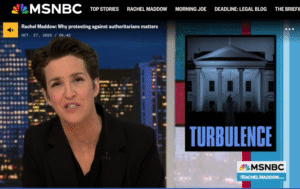

 There was a question posed on

 I) Trump / Pence 2016

 The New York Times is one of several news sources that have been almost entirely negative when it comes to President Donald Trump. Like many liberal leaning media outlets, during the campaign, they spent the better part of a year in a desperate attempt to convince the American public that Trump was not qualified to be President for any one of number of reasons.
 “Dirty Glacier” is an apt illustration of what happens when you’re considering a particular issue that’s being presented according to a collection of very judiciously selected facts. Or it could be something that’s weighing on you and, either because you’re too tired or you’re too emotional, rather than seeing your scenario in a way that’s founded on the Reality and Power of God, you restrict your perspective to only that which you can see and the end result is depressing.


